

Table of Contents
- The Three-Layer System for Winter Layering on Rural Work
- Best Fabrics for Cold Weather Work
- How to Prevent Overheating While Working Outdoors
- Layering for Variable Intensity: Chores, Hauling, and Long Sits
- Durability and Maintenance for Workwear Layers
- Budget-Friendly Winter Layering Systems
- Conclusion
- Frequently Asked Questions
Last Updated: September 17, 2026
The Three-Layer System for Winter Layering on Rural Work
A winter layering guide for outdoor rural work comes down to one principle: manage moisture first, trap heat second, block wind and weather third. Get that order wrong and you'll spend the day either shivering or soaked from the inside out. The layering system is the same one that works whether you're feeding cattle, hauling firewood, or sitting a fence line.
The three-layer system is a method of dressing in separate, removable layers so you can add or shed warmth as your effort level changes. Each layer has a job: the base layer moves sweat away from your skin, the mid layer holds heat, and the outer layer stops wind, rain, and brush.
That's the whole idea in one paragraph. The rest of this guide is about getting each layer right.
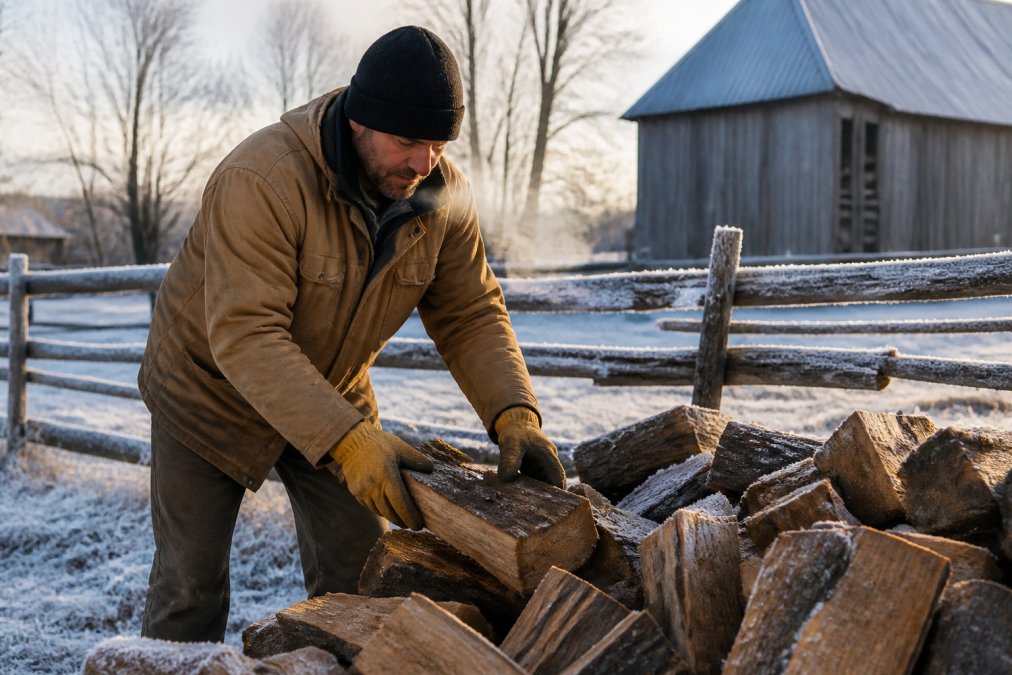
Base Layer: Moisture Management
Your base layer is the moisture-wicking foundation that touches your skin, and it decides whether you stay dry or get chilled. Cotton absorbs and holds moisture against your body and loses much of its insulating ability when wet. Synthetic fibers and merino wool both pull moisture toward the surface where it can evaporate, which keeps evaporation working for you instead of against you.
Fit matters as much as fabric. A base layer should sit close to the skin without binding across the shoulders, because restricted movement makes hard work harder. If you're doing manual labor all day, a fitted synthetic or merino crew beats anything loose.
Mid Layer: Insulation and Heat Retention
The mid layer traps body heat in the air pockets of fleece, wool, or synthetic insulation. This is your adjustable layer, the one you add when you stop moving and shed when you start sweating. Fleece is the workhorse: light, breathable, and quick-drying.
Down insulation offers the best warmth for its weight, but it loses heat retention when it gets wet. Synthetic insulation keeps working in damp conditions, which is why it usually wins for chores that involve snow, mud, and long hours—the kind of ground that also calls for waterproof boots.
Outer Layer: Weather Protection and Abrasion Resistance
The outer shell blocks wind and precipitation while letting some moisture escape. Look for a weather-resistant shell with a DWR coating for wet snow and a windproof face fabric for open ground. For rural work, abrasion resistance matters as much as waterproofing, because you're brushing against fence wire, tree limbs, and truck beds all day. Your footwear matters too, especially when you're choosing waterproof boots for muddy, wet ground.
A softshell handles dry cold and movement well. A hardshell earns its place in sleet and heavy wet snow. Many folks split the difference with a heavyweight duck cloth jacket that cuts wind and shrugs off brush.
Best Fabrics for Cold Weather Work
The best fabrics for cold weather work are merino wool and synthetics against the skin, fleece or synthetic insulation in the middle, and tightly woven cotton duck, softshell, or hardshell on the outside. Each one earns its spot for a different reason.
Here's how the main options stack up:
Fabric |
Best Layer |
Strength |
Weakness |
|---|---|---|---|
Merino wool |
Base |
Warm when damp, low odor |
Slower to dry, costs more |
Synthetic knit |
Base |
Fast drying, durable |
Holds odor over time |
Fleece |
Mid |
Breathable, cheap, quick-dry |
Little wind resistance |
Synthetic insulation |
Mid |
Works when damp |
Bulkier than down |
Down insulation |
Mid |
Best warmth-to-weight |
Loses loft when wet |
Cotton duck cloth |
Outer |
Abrasion resistant, wind-blocking |
Heavy, slow to dry |
Softshell |
Outer |
Stretches, breathes, cuts wind |
Limited in heavy rain |
Hardshell |
Outer |
Waterproof, windproof |
Less breathable, noisier |
How to Prevent Overheating While Working Outdoors
To prevent overheating while working outdoors, start cold and shed layers before you sweat. Strip down at the truck, not at the woodpile. If you're warm and dry standing still, you're overdressed for the work ahead.

A few habits that keep temperature control steady:
- Open your shell's pit zips or chest vents before you feel damp
- Remove your hat when you're working hard if you begin to overheat; uncovering your head can help release excess heat.
- Swap a heavy mid layer for a lighter one rather than removing it entirely
- Take short breaks in a windbreak instead of long ones in a warm cab
Ventilation is the tool most people ignore. A jacket with pit zips lets you dump heat without stopping to undress.
Rack & Ridge | Insulated Hooded Duck →
Layering for Variable Intensity: Chores, Hauling, and Long Sits
Layering for variable intensity means building a system you can change in seconds, because rural work swings between hard effort and near-stillness all day long. Feeding, hauling, and fence repair are high-output. Sitting a stand, watching a gate, or waiting on a tractor are low-output. The same system has to cover both, which is exactly what rugged hunting apparel is built to do.
The rule of thumb: dress for the work, not the weather report. If you'll be moving, wear less under your shell and carry the mid layer in a pack or the truck. When you stop, put it back on before you cool down.
Here's the part most layering guides skip. Rural work isn't one steady output level like a hike or a ski run. It's a cycle: hard effort, brief pause, hard effort again. Each cycle gives you two chances to manage moisture, and most people waste both.
Before the effort: shed early. Strip a layer at the truck, not at the woodpile. If you're warm and dry standing still, you're already overdressed for the work ahead. The goal is to start slightly cool so your body has somewhere to put the heat it's about to make.
During the effort: vent before you're wet. Open pit zips, unzip the chest, push up your sleeves, and pull your hat off before you feel damp.
Durability and Maintenance for Workwear Layers
Durability for manual labor comes down to fabric weight, reinforced stress points, and how you wash the gear. Heavyweight duck cloth, ripstop synthetics, and tightly knit fleece all hold up to repeated abrasion. Thin fashion layers do not.
Washing technical layers without ruining them.
- Use a mild, residue-free detergent made for technical fabrics. Regular detergents can leave behind additives that clog wicking fibers and dull a DWR finish.
- Never use fabric softener or dryer sheets. They coat the fabric and kill both wicking and water repellency.
- Wash fleece and synthetic insulation on a gentle cycle in cold or warm water, then air-dry or tumble on low. High heat can shrink fleece and break down synthetic insulation over time.
- Wash down insulation sparingly, with a down-specific cleaner, and dry it thoroughly on low with clean dryer balls to break up clumps and restore loft.
- Zip zippers, close Velcro, and empty pockets before washing so hardware doesn't snag the fabric.
Budget-Friendly Winter Layering Systems
A budget-friendly winter layering system comes from spending where abrasion happens and saving where it doesn't. Your outer layer takes the abuse, so that's where quality counts. Base and mid layers can come from everyday sources without giving up much.
A practical build looks like this:
- Base layer: two synthetic or merino crews, rotated and washed often
- Mid layer: one fleece and one packable synthetic puffy for still days
- Outer layer: one wind-blocking, abrasion-resistant jacket that layers over both
- Accessories: a knit skull cap and gloves, which do more for warmth than any single garment
Conclusion
Getting the layers right takes a season of trial and error, and the first cold snap usually teaches the lesson faster than any guide. Start with a moisture-wicking base, add insulation you can shed, and finish with a shell that can take a beating. That's the whole system, and it holds up whether you're hauling hay at dawn or watching a field go grey at dusk.

Frequently Asked Questions
What is the 3-layer rule for winter work clothing?
The three-layer rule means wearing a moisture-wicking base layer against your skin, an insulating mid layer over it, and a weather-resistant outer shell on top. Each layer does one job: the base moves sweat away, the mid traps body heat, and the outer blocks wind, rain, and abrasion. For rural work, the outer layer also needs to handle brush, wire, and repeated movement without tearing. Adjust by removing or adding the mid layer as your output changes through the day.
What are the best fabrics for cold weather work?
Merino wool and synthetic fibers like polyester and nylon work best for base layers because they wick moisture and dry fast. Fleece and synthetic insulation are strong mid-layer choices since they keep insulating when damp. For the outer layer, tightly woven cotton duck cloth and softshell or hardshell materials resist wind and abrasion. Avoid cotton next to your skin in winter, because it holds sweat and pulls heat away from your body once you slow down.
How do you prevent overheating while working outdoors in winter?
Start slightly cool and add layers as you warm up, rather than dressing for the coldest moment of the day. Vent by unzipping your outer layer or removing your hat during heavy exertion like hauling or splitting wood, then close back up before you cool down. Choose breathable mid layers and moisture-wicking base layers so sweat vapor can escape. If your base layer feels damp, change it before you sit still, since wet fabric speeds heat loss.
What are common mistakes people make when layering for winter?
The biggest mistake is wearing a cotton t-shirt as a base layer, which soaks up sweat and chills you once you stop moving. Others wear one heavy coat instead of layers, so they have no way to adjust as their activity level changes. Overdressing before hard work is another common error, along with skipping the outer shell on windy days. Finally, many people overlook their head, hands, and feet, which also need protection during long hours outside.