

Table of Contents
- Why Leather Work Boots Need Regular Cleaning and Waterproofing
- How to Clean Leather Work Boots: Step-by-Step Dirt and Stain Removal
- How to Remove Salt Stains From Leather Boots
- How to Waterproof Leather Work Boots With Wax and Silicone Products
- How to Dry Leather Boots Without Cracking Them
- How to Condition Leather Work Boots
- Boot-care routine
- Common Leather Boot Care Mistakes and How to Store Boots Long-Term
- Frequently Asked Questions
Last Updated: September 29, 2026
Why Leather Work Boots Need Regular Cleaning and Waterproofing
Leather work boots take a beating. Mud, salt, sawdust, moisture, and repeated wear can dry out leather over time. Without proper care, the leather can become stiff, crack, and lose some of its ability to repel water.
How to Clean Leather Work Boots: Step-by-Step Dirt and Stain Removal
Cleaning leather work boots starts with dry dirt removal before any water touches the leather. Rushing this step pushes grit deeper into the pores and scratches the surface.
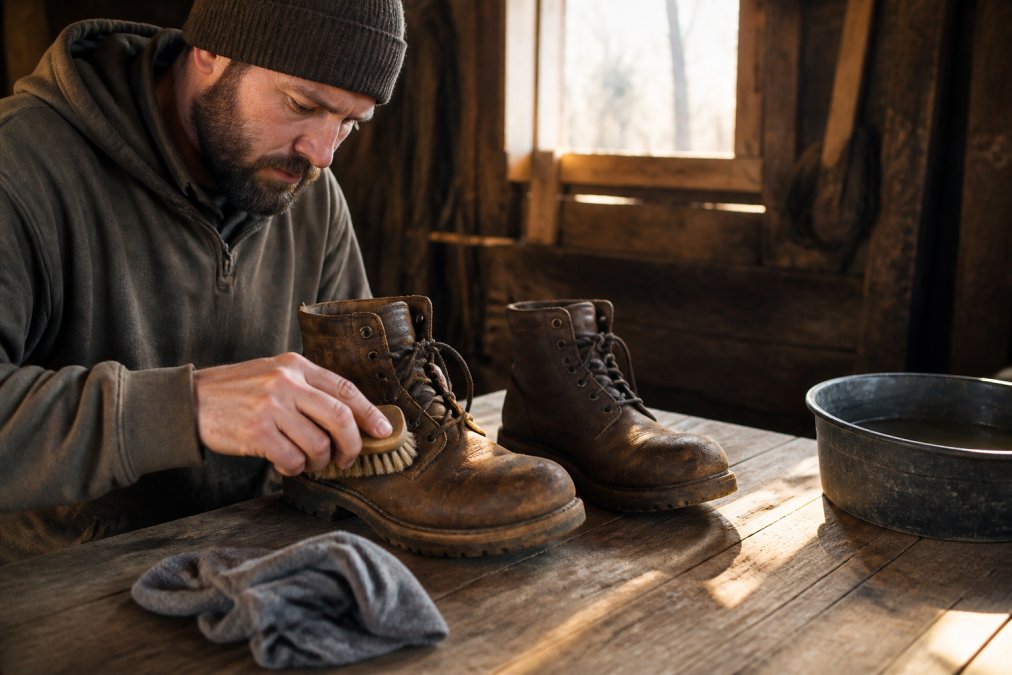
Here is the process:
- Knock off loose mud with a stiff brush or boot scraper.
- Let caked-on dirt dry, then brush it away.
- Wipe the whole boot with a damp microfiber cloth.
- Work a soft cleaning brush in small circles on stubborn spots.
- Wipe again with a clean, damp cloth.
- Let the boots air dry away from heat.
Tools and Supplies You Will Need
You do not need a cabinet full of products. A short list gets the job done:
- Soft and stiff cleaning brushes
- Microfiber cloths
- Leather cleaner or saddle soap appropriate for your boot's leather type.
- Leather conditioner
- Waterproofing wax or spray
- Clean water in a small bowl
Cleaning Full-Grain, Nubuck, and Suede Leather
Different types of leather require different care. Smooth full-grain leather can often be cleaned with products made for finished leather, while nubuck and suede generally require gentler cleaning methods and products specifically designed for their textured surfaces. Before applying any cleaner, conditioner, oil or waterproofing treatment, check the boot manufacturer's care instructions and test the product on a small, less-visible area.
How to Remove Salt Stains From Leather Boots
Salt stains often appear as white or chalky marks after exposure to winter slush and road salt. Start by brushing away dried residue and wiping the area gently with a damp cloth. For stubborn stains, use a cleaner recommended for your boot's leather type and follow the manufacturer's care instructions. Avoid soaking the leather or scrubbing aggressively.
How to Waterproof Leather Work Boots With Wax and Silicone Products
Waterproofing products come in waxes, creams, oils and sprays, but not every product is suitable for every type of leather. Some treatments may darken the leather, change its texture or affect breathability. Nubuck and suede require particular care because oils and waxes can permanently change their appearance.
Before applying a waterproofing treatment, check both the boot manufacturer's instructions and the waterproofing product label. Choose a product specifically recommended for your type of leather, test it on a small hidden area first, and follow the manufacturer's directions for application and drying time.
For boots regularly exposed to mud, wet grass, snow or slush, check the water repellency periodically rather than waterproofing on a fixed schedule. When water begins soaking into the outer leather instead of beading or shedding from the surface, it may be time to clean the boots and reapply an appropriate treatment.
How to Apply Wax Without Overdoing It
- Start with clean, completely dry boots and make sure the wax or waterproofing treatment is appropriate for your type of leather. Follow the product manufacturer's application instructions, since methods and drying times can vary.
When using a wax, apply a thin, even layer rather than a heavy coating. Pay attention to seams and areas that flex frequently, then remove any excess as directed by the product instructions. For sprays, apply in a well-ventilated area and follow the distance, number of coats, and drying time listed on the label.
Always test a new treatment on a small, less-visible area first, since some products can darken or change the appearance of leather.
How to Dry Leather Boots Without Cracking Them
Allow wet leather boots to dry gradually in a well-ventilated area at room temperature. Avoid placing them directly against heaters, wood stoves, fireplaces or other high-heat sources, since excessive heat can dry out and damage the leather.
How to Condition Leather Work Boots
Choose a conditioner recommended for your boot's specific type of leather and follow the manufacturer's care instructions. Some oils, waxes, and conditioners can darken leather or change its finish, so test a small, less-visible area before treating the entire boot. Apply a light, even amount rather than saturating the leather.
To apply:
- Wipe the boot clean and let it dry.
- Warm a small amount of conditioner in your hands.
- Rub it in with your fingers or a cloth.
- Focus on flex points and seams.
- Let it absorb for 15 to 20 minutes.
- Buff off any excess with a clean cloth.
Boot-care routine
A good leather boot care routine doesn't need to be complicated. How often your boots need cleaning, conditioning, or waterproofing depends on how frequently you wear them, the conditions they're exposed to, and the manufacturer's care recommendations.
After muddy or wet use, brush away dirt and allow the boots to dry naturally. Check them regularly for salt, stains, dryness, or areas where water is beginning to soak into the leather. Clean, condition, and reapply waterproofing as needed using products appropriate for your boot's leather type.
Try this schedule:
- After every wear: brush off dirt and let boots air out.
- Weekly: wipe down and check for stains.
- Monthly: clean and condition.
- Seasonally: reapply waterproofing.
Common Leather Boot Care Mistakes and How to Store Boots Long-Term
Leather boots are built for hard use, but improper cleaning, drying, and storage can shorten their useful life. A few simple habits can help protect the leather and keep your boots in better condition.
The Mistakes That Do the Most Damage
-
Harsh cleaners: Avoid household detergents and all-purpose cleaners unless the boot manufacturer specifically recommends them. Use a cleaner appropriate for the leather type.
Direct heat: Avoid drying leather boots against heaters, wood stoves, fireplaces, or other high-heat sources. Excessive heat can dry and damage leather.
Soaking the boots: Avoid intentionally saturating leather during cleaning. If your boots become soaked during use, allow them to dry gradually and follow the manufacturer's conditioning recommendations.
Too much conditioner or waterproofing: More product isn't necessarily better. Apply treatments according to the product directions and remove excess when instructed.
Leaving dirt and salt behind: Brush away dried mud and debris and address salt residue before storing your boots.
Storing boots while damp: Let boots dry completely before putting them away, and store them where they have adequate airflow.
If you've accidentally used the wrong cleaner or treatment, stop adding additional products until you know what the leather requires. Check the boot manufacturer's care instructions or contact the manufacturer for guidance, especially if the leather has become discolored, stiff, sticky, cracked, or affected by mildew.
Long-Term Storage Between Seasons
Before storing leather work boots for an extended period, clean off dirt, mud, and salt and allow the boots to dry completely at room temperature. Follow the manufacturer's care instructions for conditioning before storage.
Use boot shapers, shoe trees, or loosely crumpled paper if needed to help the boots hold their shape. Store them upright in a cool, dry, well-ventilated area away from direct sunlight and heat. Avoid sealing damp boots in plastic bags or airtight containers where moisture can become trapped.
If your boots are stored for a long period, check them occasionally for moisture, mildew, excessive dryness, or other changes before wearing them again.
Frequently Asked Questions
Is WD-40 good for waterproofing leather boots?
WD-40 is not designed as a leather waterproofing treatment. For leather work boots, use a cleaner, conditioner, or waterproofing product specifically recommended for your boot's type of leather. Always follow the boot manufacturer's care instructions before applying any treatment.
Can I use Dawn dish soap on my leather boots?
Household dish soap may be too harsh for some leather finishes and isn't the best choice for routine boot care. Use a cleaner made for your specific type of leather and follow the boot manufacturer's care instructions. If you're unsure, test any cleaner on a small, less-visible area first.
How often should I waterproof my leather work boots?
There isn't one schedule that works for every pair of leather boots. How often waterproofing is needed depends on the leather, the waterproofing product, how often you wear the boots, and the conditions they're exposed to. Check your boots periodically and follow the manufacturer's recommendations for cleaning and reapplying water-repellent treatments..
What should I use to condition leather work boots?
Choose a conditioner designed for your boot's specific type of leather. Oils, waxes, creams, and other conditioners can affect different leathers and finishes in different ways, including changing the color or texture. Check the boot manufacturer's recommendations and test a new product on a small, less-visible area before treating the entire boot.
Leather work boots take plenty of abuse from mud, moisture, salt, and everyday outdoor use. Regular cleaning, proper drying, and the right care products can help protect the leather and keep your boots ready for the next job, trip, or weekend outside. Follow the manufacturer's care recommendations, use products made for your type of leather, and give your boots a little attention before small problems become bigger ones.
If wet and muddy conditions are a regular part of your time outdoors, choosing the right boots matters just as much as taking care of them. Our guide to choosing waterproof boots for muddy fields covers waterproofing, traction, fit, and durability.
For more practical outdoor tips, gear guides, and everyday backwoods know-how, keep exploring The Ridge Journal from Rack & Ridge — Built for the Backwoods.