

Table of Contents
- Why Do My Leather Hiking Boots Squeak?
- How to Locate the Source of a Squeak Before You Fix It
- How to Stop Hiking Boots From Squeaking: A Step-by-Step Sequence
- Squeaky Boot Insoles: What to Check and How to Quiet Them
- Hiking Boot Sole Squeaking: When It's a Defect, Not Dirt
- How to Dry Leather Hiking Boots Without Wrecking Them
- Troubleshooting Table: Match the Sound to the Fix
- Prevention and Maintenance Tips for Quiet Leather Boots
- Frequently Asked Questions
Last Updated: October 18, 2026
Why Do My Leather Hiking Boots Squeak?
If your leather hiking boots squeak, the sound almost always comes from friction, moisture, or trapped air between moving parts of the boot. Leather rubbing leather, a heel sliding against a sole, or damp material shifting under your foot all produce that noise.
The trick is figuring out which cause you're dealing with before you apply anything. A squeak on every step is a different problem than one that only appears on wet days.
Friction Between the Tongue and Upper Leather
The tongue sits between your laces and the top of your foot. Every step, it shifts slightly against the upper leather. On a dry boot, that rubbing can create a squeak that sounds like it's coming from the laces area.
Loose laces make it worse. So does a tongue that's slightly off-center. Try adjusting the tongue so it sits flat, then re-lace snugly but not tight. If the squeak fades, you've found your source.
Friction Between the Heel and Sole
Leather uppers and rubber soles are glued and stitched together. Where the heel meets the sole, small movements can rub and squeak, often sounding like it's coming from under your foot.
A gentle flex test helps here. Bend the boot at the heel and listen. If the noise appears without any weight on it, the contact point between heel and sole is likely the culprit.
Moisture and Trapped Air Inside the Boot
Wet leather squeaks. So does a boot with trapped moisture between its layers. If you've hiked through rain, crossed a creek, or worked up a sweat, damp material can rub and make noise.
Trapped air works the same way: air pockets shift as you walk, and friction against damp leather produces that squeaky sound. Proper drying usually solves it.
Dry, Stiff Leather and New-Boot Break-In
New leather boots squeak because the material is stiff. The fibers haven't loosened up yet, so surfaces rub instead of flexing smoothly. This is normal and usually fades with a few weeks of wear.
Old boots can squeak for the opposite reason. Dried-out leather becomes stiff and brittle, and dry leather rubs louder than conditioned leather. A little leather conditioner, applied only if the manufacturer approves it, can soften things up.
How to Locate the Source of a Squeak Before You Fix It
Finding the squeak is half the battle. Walk slowly on a hard floor in a quiet room, note where the sound comes from, then try these checks:
- Walk on carpet, then on tile. If the squeak changes with the surface, it's likely a sole or heel issue.
- Flex the boot by hand. Bend the toe, then the heel. Listen for noise without any weight on it.
- Press the tongue and sides. Squeeze the upper leather to see if rubbing surfaces make noise.
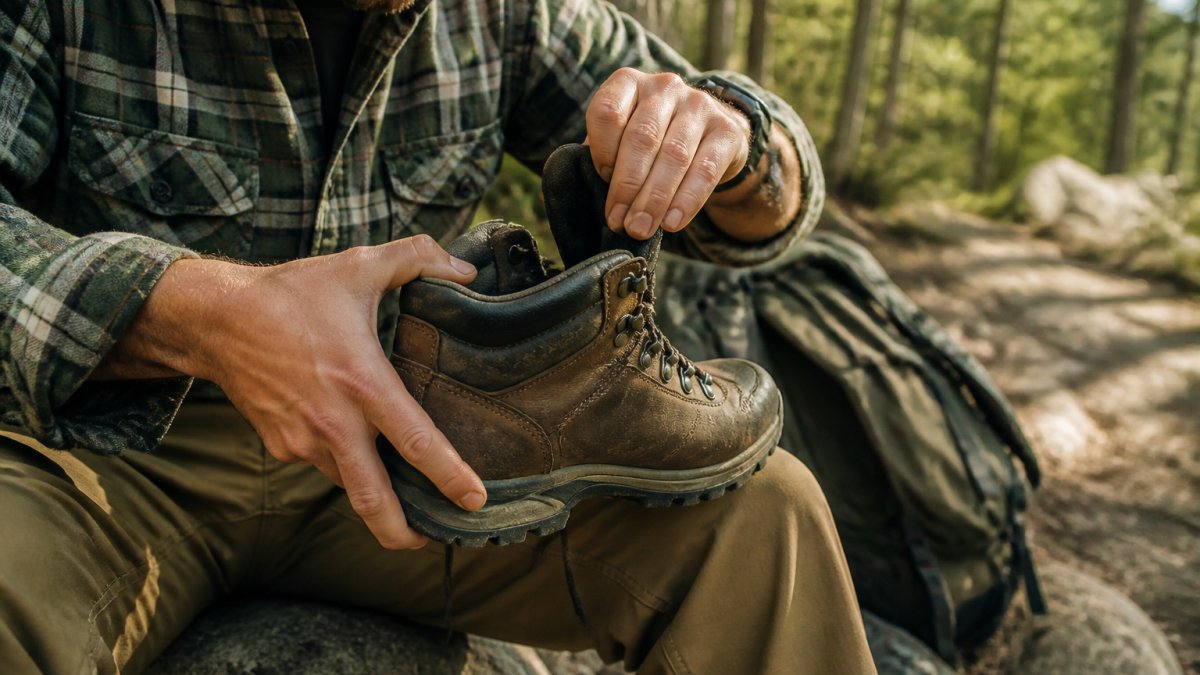
That last check matters more than people think. A squeaky boot insole is one of the most common causes, and the easiest to fix.
How to Stop Hiking Boots From Squeaking: A Step-by-Step Sequence
Learning how to stop hiking boots from squeaking comes down to a simple order of operations. Work from least invasive to most, stop as soon as the noise goes away, and test after every step so you know what worked.
- Clean the boots. Brush off dirt and grit around seams, the tongue, and the welt where the upper meets the sole. Debris causes friction. Use a soft brush and a barely damp cloth, then wipe dry. Don't soak the leather.
- Dry them naturally. Remove insoles and laces, open the tongue wide, and air dry away from heat. Never use a radiator, oven, fireplace, or direct sun. Heat stiffens leather and can soften adhesives and damage waterproof membranes.
- Inspect the insoles. Pull them out and look for wear, curling edges, or grit trapped underneath. Clean out debris and let everything dry. If the insole is worn thin at the heel or ball, replace it.
- Adjust the laces and tongue. Re-lace evenly and center the tongue so it sits flat. Snug is fine; cranked-down tight can press the tongue into the upper and create new rubbing.
- Condition dry leather, if approved. Follow the manufacturer's guidance and use a leather conditioner or lotion made for your boot type. Test a small hidden area first.
- Re-test after each step. Walk on a hard floor and listen. This tells you exactly what worked.
Which Products Are Safe for Which Materials
This is where most squeak advice goes wrong. A remedy that's fine for a plain leather boot can wreck a waterproof membrane, soften an adhesive, or stain a lining. Match the product to the material:
- Powders (baby powder, foot powder, dedicated friction powder): Best for dry friction between leather surfaces, under a removable insole, or between the tongue and upper. Keep powder away from waterproof membranes and breathable linings, where it can clump, clog pores, and turn into a paste when you sweat. A light dusting is enough.
- Leather conditioners and lotions: Appropriate for dry, stiff leather on boots whose manufacturer approves conditioning. Water-based conditioners are generally gentler than heavy oils. Avoid over-applying, which can leave leather tacky and increase rubbing.
- Oils and heavy waxes: These can darken leather, soften adhesives over time, and interfere with some waterproof-breathable membranes. Don't use them unless the boot maker specifically calls for them.
A Note on Hiking-Boot Construction
Hiking boots aren't simple shoes. Many have a waterproof-breathable membrane, a gusseted tongue, a shank under the footbed, and a layered sole. Each can contribute to noise:
- Gusseted tongues are attached to the upper to keep debris out, and that attachment is a common friction point. Powder or a tongue reposition often quiets it.
- Waterproof membranes sit between the leather and the lining. They don't need conditioning, and products that soak through the leather can affect them. If a squeak seems to come from inside the boot, suspect moisture trapped against the membrane and focus on drying.
- Shanks are stiffeners under the footbed. A loose or cracked shank can produce a click or squeak that no surface fix will cure.
Squeaky Boot Insoles: What to Check and How to Quiet Them
Squeaky boot insoles are usually the easiest squeak to fix. The insole rubs against the boot's inner sole or your foot, and the friction makes noise. Pull the insole out and check for three things:
- Wear and thinning in the heel or ball of the foot
- Curled or lifted edges that catch as you walk
- Grit or sand trapped underneath
Clean out any debris, let everything dry, and try a light dusting of powder under the insole. If the insole is worn out, a replacement is often the simplest cure. Test by walking with the insoles removed. If the squeak disappears, you've found your fix.
Hiking Boot Sole Squeaking: When It's a Defect, Not Dirt
Hiking boot sole squeaking isn't always a dirt or moisture problem. Sometimes it signals a structural issue, and the difference matters because DIY fixes can make a defect worse.
How Hiking Boot Soles Are Built
Most hiking boot soles are layered: an outsole with lugs, a midsole for cushioning, and the upper bonded and often stitched on top. Some add a shank for stiffness under the arch. Each bond line and layer is a place where movement can create noise. A bond-line squeak usually sounds like it's coming from under your foot and may change with the surface.
Signs That Point to a Defect
Watch for these signs that point to a defect rather than simple friction:
- The squeak started suddenly after a hard impact or a lot of miles
- You can see separation between the sole and the upper, or a gap at the welt
- The noise happens even when the boot is clean and dry
If any of these fit, stop trying home fixes. Powders and conditioners won't cure a bond-line or shank problem, and prying at the layers can void a warranty.
What to Do Next
Contact the manufacturer about a warranty claim, or take the boots to a qualified cobbler for an inspection. A good repair shop can tell you whether the boot is worth fixing or time to retire. When you contact the manufacturer, have a few things ready:
- The date and place of purchase, if you have the receipt
- Photos of any visible separation or damage
- A short description of when the squeak started and what you've already tried
Most warranties cover manufacturing defects rather than normal wear, so be honest about how much use the boots have seen. A cobbler can often re-bond a small separation, but a damaged shank or failed membrane is usually a factory matter.
How to Dry Leather Hiking Boots Without Wrecking Them
Knowing how to dry leather hiking boots the right way prevents squeaks and protects the leather. Heat is the enemy: direct heat from a radiator, fireplace, or oven dries leather too fast, stiffening it and damaging adhesives and waterproof membranes.
Here's the safe approach:
- Remove insoles and laces so air reaches every layer
- Loosen the tongue and open the boot wide
- Stuff the boot with newspaper or a dry cloth to soak up moisture
Never put wet boots in a plastic bag or a hot car. Trapped moisture is exactly what causes squeaks in the first place.
Troubleshooting Table: Match the Sound to the Fix
Use this table to match where the squeak comes from with the likely cause and the fix to try first.
| Squeak Location | Likely Cause | Suggested Fix |
|---|---|---|
| Tongue and lace area | Tongue rubbing upper leather | Center the tongue, re-lace snugly |
| Under the heel | Heel rubbing the sole | Flex test, check for separation |
| Under the foot | Squeaky insole | Clean or replace the insole |
| All over, worse when wet | Moisture or trapped air | Dry slowly at room temperature |
| Stiff new boots | Dry or unbroken leather | Break in gradually, condition if approved |
| Sudden, with visible gap | Sole defect or separation | Warranty claim or cobbler inspection |
Prevention and Maintenance Tips for Quiet Leather Boots
Keeping boots quiet is mostly about routine care. A few simple habits go a long way:
- Clean mud and grit off after every hike
- Dry boots fully before storing them
- Store them in a dry, ventilated spot, not a damp garage corner
Good gear care is part of the outdoor lifestyle we love at Rack & Ridge. Whether you're heading to deer camp or hitting a local trail, a little upkeep keeps your boots working quietly season after season. Built for the Backwoods means taking care of what takes care of you.
Frequently Asked Questions
Why do my leather hiking boots squeak when I walk?
Most squeaks come from friction, not damage. Leather rubbing against leather, an insole shifting under your foot, or moisture trapped between layers can all create noise with each step. New, stiff leather is a common culprit because it hasn't molded to your foot yet. Before you treat anything, press and flex the boot by hand to find exactly where the sound starts, then match your fix to that spot. If the squeak appeared suddenly after years of quiet use, check for a loose sole or stitching issue.
How can I tell where the squeak in my hiking boots is coming from?
Work through it in stages. Flex the boot by hand at the toe, then twist the sole, then press the heel. If the noise only happens while walking, try removing the insole and walking in the boot. If the squeak stops, the insole is the source. If it continues, lace the boot loosely and walk again. A squeak that changes with lace tension points to the tongue or upper. A squeak that stays constant regardless of lacing usually comes from the sole or midsole.
Should I use leather conditioner on squeaky hiking boots?
Only if the manufacturer's care instructions approve it for your specific boot. Conditioner helps when dry, stiff leather is rubbing against itself, but the wrong product can soften leather you need stiff, darken the color, or interfere with a waterproof membrane. Apply a small amount to a hidden area first, let it absorb, and walk around. Never apply conditioner to the outsole or use it to chase a squeak coming from the sole. Check the boot maker's guidance before you treat anything.
Can a squeaky boot sole mean the boot is damaged?
Sometimes. A squeak that started suddenly, comes from the sole, and won't respond to cleaning or drying can point to a separated midsole, a loose shank, or failing adhesive. Press along the sole edge and look for gaps or flexing where the layers should be bonded. If you find separation, stop wearing the boots on rough terrain and contact the manufacturer about a warranty claim or take them to a cobbler. Don't try to glue it yourself, since the wrong adhesive can make a proper repair harder.
A squeaky boot is annoying, but it's rarely a reason to give up on a good pair of leather hikers. Most squeaks come down to friction, moisture, or dry leather, and a little patience with the steps above usually solves them. When you're ready to gear up for your next trip outside, explore the Rack & Ridge collection and join our email list for more practical tips from The Ridge Journal.