

Table of Contents
- Quick Comparison: Top Rated Country Home Essentials
- Farmhouse Kitchen Essentials That Work as Hard as You Do
- Homesteading Must-Haves for Everyday Rural Living
- Cozy Living Room Decor Ideas with Rustic Warmth
- Vintage and Antique Accents That Tell a Story
- How to Choose Quality Country Home Essentials
- Small-Space Country Living and Sustainable Choices
- Frequently Asked Questions
Last Updated: September 13, 2026
Quick Comparison: Top Rated Country Home Essentials
Finding top rated country home essentials starts with knowing which pieces earn their place in a working rural home. This guide from Rack & Ridge covers items that hold up season after season, from kitchen to porch, and what separates genuine quality from decorative imitations.
Country home essentials are the durable, functional items that support daily rural living: kitchen tools, heating and lighting pieces, textiles, and outdoor gear built for real use. The best blend rustic character with materials that survive mudrooms, woodstoves, and long winters.
Below: the categories that matter most, how to judge quality before buying, and where small-space and sustainable choices fit in.
| Category | What to Look For | Why It Matters |
|---|---|---|
| Farmhouse kitchen | Heavy-duty sink, cup pulls, rolling pins | Daily use, high wear |
| Homesteading tools | Cast iron, sturdy storage, hand tools | Reliability off-grid |
| Living room decor | Soft blankets, reclaimed wood, textiles | Warmth and comfort |
| Vintage accents | Antiques, wall decor, lanterns | Character and story |
| Outdoor and porch | Lanterns, seating, weatherproof materials | Curb appeal and function |
Farmhouse Kitchen Essentials That Work as Hard as You Do
The farmhouse kitchen is where country living gets tested hardest. A heavy-duty sink, solid cabinetry with cup pulls, and a well-worn rolling pin are not decorative; they carry a household through canning season, holiday baking, and everyday meals.
Start with the sink. A deep, heavy-gauge basin handles stock pots and cast iron without chipping or denting. Pair it with open shelving or glass-front cabinetry so everyday dishes stay within reach.
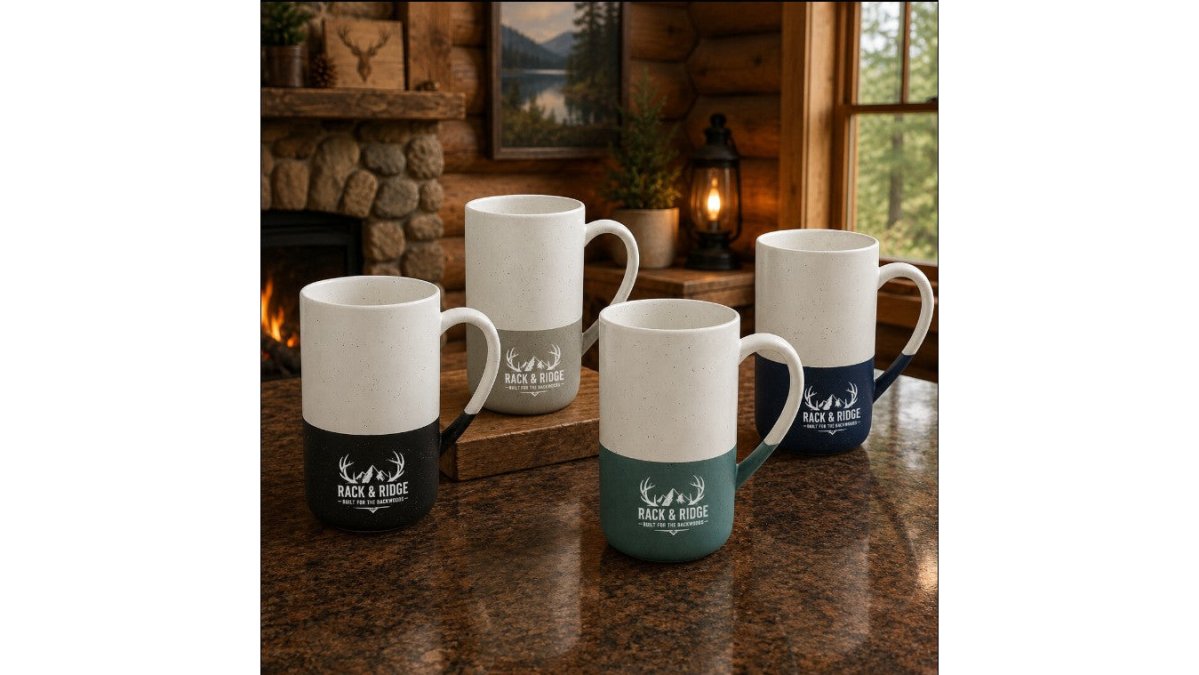
Smaller accents matter too. A speckled ceramic mug, like the Rack & Ridge Backwoods Coffee Mug, brings a rustic, earthy finish to the counter while standing up to daily use.

Homesteading Must-Haves for Everyday Rural Living
Homesteading must-haves are the unglamorous items that keep a property running: cast iron cookware, sturdy storage, hand tools, and reliable heat sources, pieces used daily and repaired rather than replaced.
A common mistake is buying decorative versions of functional tools. A lightweight cast iron skillet or thin-handled shovel looks the part but may not hold up to real use; weight and construction can be better indicators of durability than the finish.
For outdoor work, layered outerwear beats any single heavy coat. A duck cloth vest over a flannel handles cold mornings and warm afternoons better than one bulky jacket, because you can shed a layer as the day warms.

Cozy Living Room Decor Ideas with Rustic Warmth
Cozy living room decor in a country home comes down to texture and layering. Soft blankets, wool throws, and natural fiber rugs do more for warmth than any statement piece.
Layer textiles in three weights: a light cotton throw for summer, a wool blanket for fall, and a heavy quilt for deep winter, so you can adjust comfort without changing the whole room.
Reclaimed wood shelving and a stone or brick fireplace anchor the space. Keep the palette in earth tones and let one or two vintage pieces carry the character.
Vintage and Antique Accents That Tell a Story
Vintage and antique accents give a country home its sense of history. A well-chosen antique carries craft and patina that mass production cannot copy, and the difference between a room that reads as authentic and one that reads as staged usually comes down to sourcing and condition, not budget.
Where to actually find pieces
- Estate sales and farm auctions. Estate sales and farm auctions can be a good source for working antiques, as rural households often sold off tools, enamelware, and furniture that were used. Arrive early on the first day for furniture; returning on the last hour may offer markdowns on smaller items.
- Estate sale and auction listing sites. Regional auction houses post catalogs online, and you can often bid absentee. Read the condition notes carefully; photos hide hairline cracks in ceramic and wobble in chair joints.
- Flea markets and antique malls. Good for smalls and wall decor. Antique malls price higher but let you inspect in person, which matters for anything with a glaze or a hinge.
- Facebook Marketplace and local classifieds. Best for large furniture you can inspect before paying. Search terms like "barn wood," "enamel," and "cast iron" surface better results than "farmhouse."
- Inherited and hand-me-down pieces. Often the most authentic, and the cheapest. A grandmother's dough bowl beats anything you can buy new.
How to judge condition before you buy
Run through this before money changes hands:
- Wood: Look for tight joints and no active powderpost beetle frass (fine sawdust piles). A little patina is fine; soft, crumbling wood is not.
- Ceramic and enamel: Check for chips on rims and handles, and hold it up to light to spot hairline cracks. Crazing (fine surface cracks in the glaze) is cosmetic; a crack that goes through the body is structural.
- Metal: Surface rust is removable; deep pitting and thin spots are not. Test hinges and latches for smooth movement.
- Textiles: Hold quilts and rugs up to a window. Fading is expected; rot, musty smell, and dry, brittle fibers are not.
- Electrical items: Assume any pre-1970s lamp or appliance needs rewiring before use (cpsc.gov). Factor that cost in.
What to prioritize
Prioritize functional antiques over purely decorative ones. An old enamel basin, a hand-cranked coffee grinder, or a cast iron doorstop earns its place because it still does something. Wall decor follows the same logic: framed family photos, old tools, and a well-worn lantern near the door read as authentic rather than staged.
The trick is restraint. Two or three genuine pieces per room carry more weight than a wall covered in reproductions.
Caring for what you bring home
- Wood: Clean with a damp cloth and a mild soap, never a soaking wet rag. Re-oil cutting boards and bare wood with food-safe mineral oil or a linseed oil blend once or twice a year, more often in dry winter air (fsis.usda.gov).
- Cast iron: Re-season with a thin coat of oil and a hot oven if it looks dry or rusty. Never soak it.
- Enamel and ceramic: Hand wash. Avoid sudden temperature changes, which can crack old glaze.
- Textiles: Vacuum quilts on low with a screen over the nozzle, and store folded with acid-free tissue rather than hanging, which stresses old seams.
- Metal: A light coat of paste wax slows rust on iron and steel that lives indoors.
How to Choose Quality Country Home Essentials
Judging quality in country home essentials comes down to materials, construction, and repairability. If a piece cannot be repaired or maintained, it is not built for rural living.
Work through this checklist before you buy:
- Is the core material solid (cast iron, heavy cotton, solid wood) rather than veneer or plastic?
- Are stress points reinforced with rivets, stitching, or metal hardware?
- Can the item be repaired or re-finished rather than replaced?
- Does the finish wear gracefully (patina) or fail suddenly (peeling, cracking)?
- Is the weight appropriate for the job, not just the look?
A common mistake is judging by finish alone. A matte powder-coat or speckled glaze can hide thin construction, so check weight and joints before the surface.
Small-Space Country Living and Sustainable Choices
Most country style content assumes a farmhouse with a mudroom, porch, and barn, leaving out anyone styling a one-bedroom apartment, city row house, or small cabin. Country style is not about square footage; it is about materials, wear, and how things are used. Small-space country living and sustainable choices go hand in hand, because with less room, every item has to earn its place.
Country style in a small footprint
You do not need a porch or pantry to get the look, just the right signals in the right places.
- Entry: A wall-mounted coat rack with iron hooks, a boot tray, and one woven basket for keys and mail. This replaces a mudroom in about three square feet.
- Kitchen: Open shelving above the counter instead of upper cabinets, a hanging rail for cast iron and utensils, and a single crock for wooden spoons. Vertical storage reads as country and frees counter space.
- Living area: One reclaimed wood shelf, a wool throw, and a stoneware vase. Resist the urge to fill every surface; negative space is what makes small rooms feel calm.
- Bedroom: A quilt folded at the foot of the bed, a wooden stool as a nightstand, and a single vintage lamp. Three pieces, not ten.
- Bathroom: A galvanized bucket for rolled towels, a wooden stool, and a simple mirror with a wood or iron frame.
Multi-purpose pieces that earn their space
Choose items that do two jobs:
- A bench with storage under the seat doubles as seating and a place for boots and blankets.
- A drop-leaf or gateleg table folds down for daily life and opens up for canning season or holiday meals.
- A ladder-style shelf holds books, plants, and folded textiles in one vertical footprint.
- A blanket that works on the couch and in the truck means one textile instead of two.
Fewer objects, used more, is both practical and sustainable.
Sourcing sustainably without a farm
You do not need acreage to source the way a homestead does, just prioritize materials that are reclaimed, repairable, and locally available.
- Reclaimed and salvaged wood. Architectural salvage yards, Habitat for Humanity ReStores, and local demolition sales can be sources for barn wood, old doors, and flooring. Look for tight grain and no active insect damage.
- Secondhand and estate pieces. Solid wood furniture from estate sales can often be well-built, and choosing it can help keep material out of the waste stream.
- Natural fibers. Wool, cotton, linen, and jute biodegrade and wear well. Synthetic blends shed microplastics in the wash and pill faster (the EPA).
- Local makers and mills. A wool blanket from a regional mill or a cutting board from a local woodworker can carry a smaller shipping footprint and may be repairable.
- Simple construction. Traditional designs with visible joinery and standard hardware can be easier to repair than glued, proprietary assemblies.
Repair over replace
Repair is the other half of the equation, where small-space living and sustainability meet.
- Wood: Re-oil cutting boards and bare furniture with food-safe mineral oil or a linseed oil blend. Sand lightly and re-wax rather than replacing.
- Cast iron: Re-season with a thin coat of oil and a hot oven. A rusty pan is a maintenance problem, not a dead one.
- Textiles: Mend a flannel shirt or a quilt seam with a simple running stitch. Darning wool socks and sweaters can extend their life.
- Metal: Remove surface rust with fine steel wool and oil, then protect with paste wax.
- Hardware: Replace a worn hinge, latch, or handle instead of the whole piece. Standard sizes are widely available.
Frequently Asked Questions
What are the must-haves for a farmhouse style home?
Start with practical pieces that earn their place: a heavy-duty sink, open shelving for everyday dishes, and a few vintage accents like rolling pins or enamelware. Add soft textiles such as flannel throws or plaid pajama pants for warmth. A speckled ceramic mug or a durable travel tumbler from a country home essentials collection keeps the look grounded. Choose items you will actually use daily, not just display.
How do I choose quality country home essentials that last?
Look for materials that age well: 12 oz duck cloth, enzyme-washed cotton, and double-wall stainless steel. Check care instructions, hand wash for engraved ceramics, machine wash cold for flannels. Read the construction details, like metal rivets at stress points or leak-proof lids. Quality country home essentials often cost a bit more upfront, but they are designed to be durable.
What are some good farmhouse-style gifts for the home?
A 13 oz speckled ceramic mug with an engraved hunting logo ($19.19) suits coffee lovers. A 32 oz insulated water bottle ($51.20) works for anyone on the move. For cozy evenings, consider a buffalo plaid flannel shirt ($72.74) or flannel pajama pants ($61.34). These homesteading must-haves feel personal without being fussy, and they fit a country lifestyle year-round.
What are the top 10 home decor items for a rustic aesthetic?
Focus on fewer, better pieces: a reclaimed wood shelf, vintage lanterns, a heavy ceramic mug, soft flannel throws, antique wall decor, a durable work vest, canvas or leather accents, a woven basket, a cast iron skillet, and a cozy knit beanie. Each adds texture and function. The rustic aesthetic works best when every item has a purpose, not just a look.
What are the must-haves for a farmhouse kitchen?
A farmhouse kitchen needs a heavy-duty sink, open shelving, and durable mugs or tumblers for daily coffee. Add a speckled ceramic mug for slow mornings, a 15 oz travel tumbler for commutes, and a 32 oz insulated bottle for long days outdoors. Wooden spoons, cast iron, and a few vintage accents complete the look. Prioritize items that handle real use, not just photos.
Country living rewards patience and quality, but finding pieces that actually hold up takes time. Rack & Ridge curates home, kitchen, and outdoor essentials built for families who love the land, including the specialized Rack & Ridge collection and Sarah's Next Chapter Boutique. From the Backwoods Coffee Mug to the Insulated Hooded Duck Cloth Work Jacket, every piece is chosen to work as hard as you do. Join our email list and get first access to new arrivals built for country life.