

Table of Contents
- What a Faith-Based Home Actually Looks Like Day to Day
- Daily Family Devotion Ideas That Stick
- How to Create a Prayer Corner at Home
- Christian Home Decor Ideas That Reflect Your Values
- Building a Faith-Based Home Through Conflict and Forgiveness
- Digital Discipleship: Setting Technology Boundaries with Purpose
- Faith-Based Hospitality and Opening Your Home to Others
- Conclusion
Last Updated: September 8, 2026
What a Faith-Based Home Actually Looks Like Day to Day
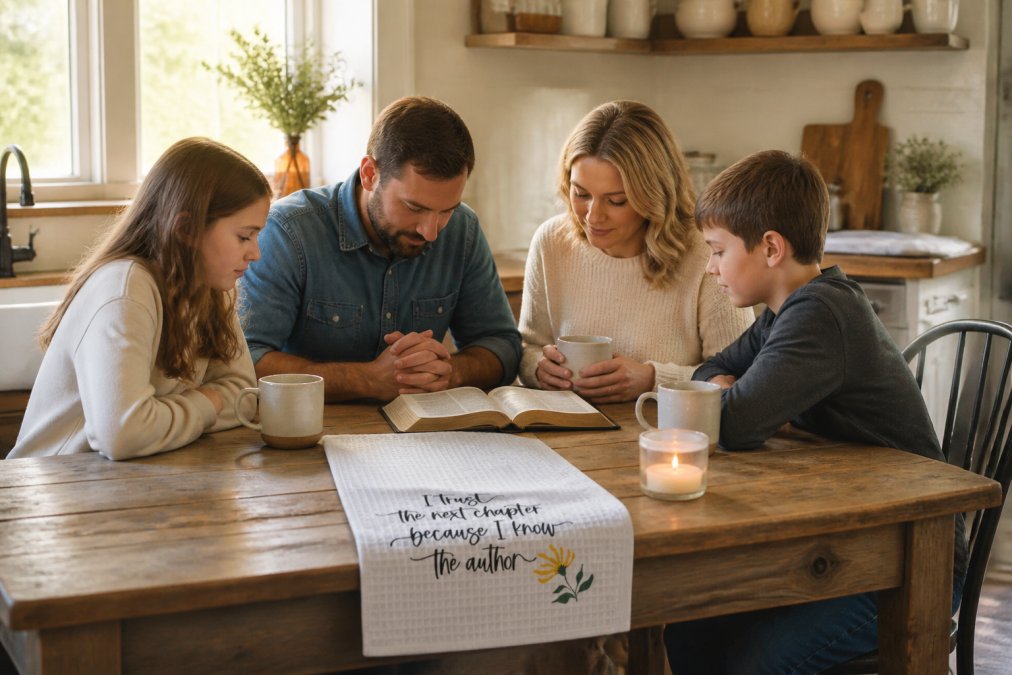
A faith-based home is a living environment where Christ-centered values shape small moments, including how your family handles disagreement, responds to hard news, and starts and closes each day. Faith woven into everyday life looks less like a formal program and more like a thousand small, intentional choices made with love.
Families who build a genuine spiritual legacy tend to share a few habits: they make time for Scripture together, pray without making it feel like a chore, and model grace when things go sideways. According to Barna Group's research on family faith practices, consistent spiritual rhythms can help shape faith across generations.
| Practice | Frequency | Impact |
|---|---|---|
| Family devotion | Daily or several times weekly | Growth and unity |
| Prayer together | Morning or bedtime | Connection and trust |
| Hospitality | Monthly | Community and service |
Daily Family Devotion Ideas That Stick
Most devotion plans fail because the format does not fit real life. Short, consistent, and flexible beats long and rigid.
- The breakfast Bible minute. Read one verse and ask what it tells you about God.
- Bedtime blessings. Each family member names one thing they are grateful for and one thing they are asking God for.
- Scripture memory. Place one verse where everyone will see it during the week.
- Sunday reflection. Talk about where you saw God at work and where you need grace.
- Audio devotionals. Listening together in the car can count as faith formation for older children.
Adapt the format to each age. Younger children respond to story and repetition, elementary-age children enjoy questions, and teenagers often respond best to honesty and dialogue.
How to Create a Prayer Corner at Home
A prayer corner is a dedicated physical space for quiet prayer and reflection. A chair, open Bible, journal, pen, and one meaningful object are enough. Keep it uncluttered and choose a place your family can actually use.
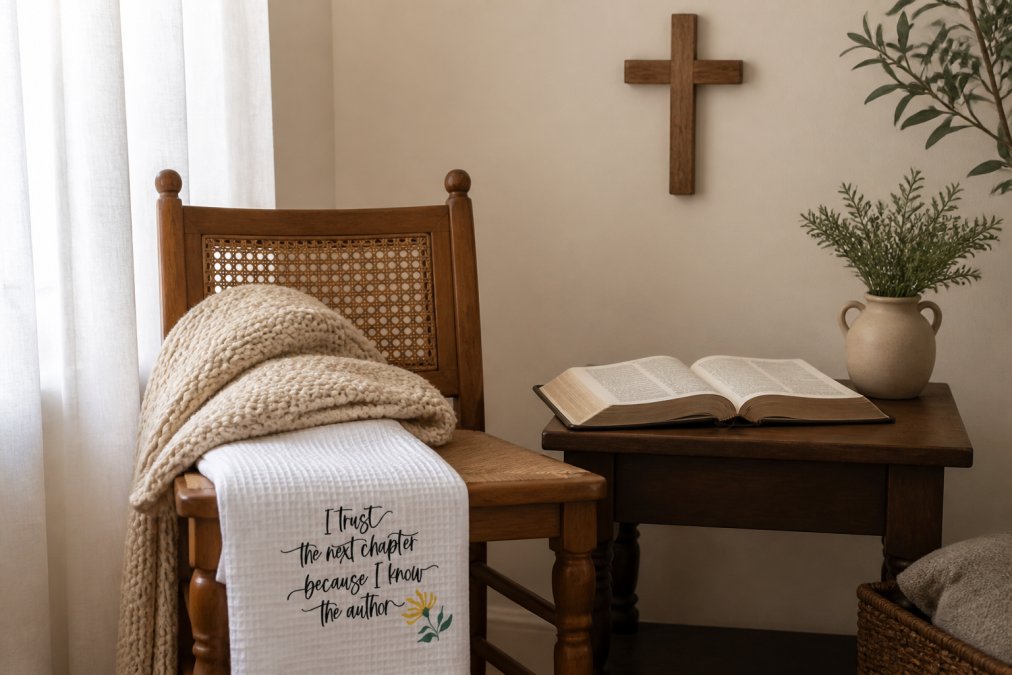
Some families create a shared space in a common room, while others keep individual spaces in bedrooms. The shared version makes prayer visible to children.
Christian Home Decor Ideas That Reflect Your Values
Home decor is one of the quietest forms of discipleship. What hangs on your walls tells your family and guests what you value without a word.
- Verse-based accents. Framed Scripture, a family prayer, or a meaningful phrase can bring faith into daily rooms.
- Handwritten Scripture. Rotate a verse each month on a chalkboard, frame, or removable board.
- Natural materials. Wood, linen, and stone textures can connect a home to creation and stewardship.
- Family mission statement. A framed statement can become one of the most intentional pieces in a faith-filled home.
What you see daily shapes what you think daily.
Building a Faith-Based Home Through Conflict and Forgiveness
A faith-based home is not conflict-free. It is a home where conflict is handled differently. Modeling grace and forgiveness in real time teaches children that humility is strength.
According to Focus on the Family's resources on family conflict, families who establish clear patterns of reconciliation can build stronger relationships over time.
- Establish a cool-down norm. Pause hard conversations and return when everyone is calmer.
- Use conflict as a teaching moment. Name disagreements, resolve them, and debrief when appropriate.
- Pray together after conflict. Prayer can be a powerful relational reset.
Digital Discipleship: Setting Technology Boundaries with Purpose
Digital discipleship means approaching technology with intention, conversation, and clear values. The question is not whether to allow technology, but whether your technology use reflects your values.
- Phone-free mealtimes. Protect meals as a connection point.
- Content standards as conversation. Discuss what aligns with your values.
- Tech Sabbath. Set aside time each week for rest and presence.
- Placement over willpower. Keep chargers in common areas rather than bedrooms.
- Curate what you consume together. Worship music, faith-based podcasts, and thoughtful documentaries can be part of family life.
American Psychological Association guidance on screen time and family wellbeing emphasizes that the quality of screen time matters as much as the quantity.
Faith-Based Hospitality and Opening Your Home to Others
Hospitality is a spiritual practice, not a social obligation. Opening your home to others is a tangible expression of a faith-filled environment.
This does not require elaborate hosting. A pot of soup and an open door are enough. What matters is the posture: your home is a resource for others.
- Monthly open table. Invite someone outside your usual circle to dinner.
- Serve before you host. Volunteer together as a family.
- Create a guest-room culture. Even without a dedicated room, the posture of availability matters.
- Give from your home. Share food, clothing, and household goods with people who need them.
The North American Mission Board's resources on neighborhood hospitality offer practical frameworks for extending faith into the community.
Conclusion
Building a faith-based home is a long-term investment made through small, consistent choices. The rhythms you establish now become the spiritual legacy your children carry forward.
Start with one practice that fits your current season: a short devotion, a prayer corner, a phone-free meal, an honest apology, or an open table. Build from there with consistency and grace. A Christ-centered home is not defined by perfection; it is defined by returning to faith, love, and forgiveness in ordinary moments.
Frequently Asked Questions
How can families incorporate daily prayer into their home routine?
Start small and tie prayer to existing habits, such as meals, bedtime, or the first few minutes of the morning. Invite children to lead prayers as they grow.
What are practical ways to teach children about faith at home?
Read short Scripture passages, ask simple questions, practice Scripture memory, sing faith-based songs, and let children see you pray on your own.
What does the Bible say about building a home on a firm foundation?
Matthew 7:24-27 describes the wise man who built his house on rock. A Christ-centered home built on Scripture, discipleship, and grace-filled relationships can endure hard seasons.
How do you create a peaceful, faith-filled atmosphere at home?
Keep Scripture accessible, protect time for prayer, display meaningful reminders, play worship music during routines, and create a simple prayer space. A faith-filled atmosphere grows from practice, not perfection.
This article was written using GrandRanker