

Table of Contents
- When Is a Child Ready to Start Hunting?
- Hunter Safety Rules for Kids: The Foundation
- Hunter Education for Children: Why Certification Matters
- Building Outdoor and Wilderness Skills Before the Hunt
- Hunting Safety Checklist for Families: Preparing for the Field
- Your First Hunting Trip with a Child: Step by Step
- Beyond the Harvest: Teaching Responsibility and Ethics
- Keeping Young Hunters Engaged and Coming Back
- Passing Down Hunting Traditions Safely
- Frequently Asked Questions
Last Updated: October 11, 2026
Teaching Kids to Hunt Safely: A Complete Guide
Some of the best hunting memories begin long before a child ever takes their first shot. They start with early mornings, walks through the woods, learning to recognize animal tracks, and spending time with family.
Teaching kids to hunt safely means passing down more than a tradition. It means helping the next generation understand responsibility, respect for wildlife, and the importance of making safe decisions outdoors.
Whether you're a parent, grandparent, or mentor, introducing a child to hunting should happen at their pace. From basic outdoor skills to hunter education and preparing for their first trip, every lesson builds confidence.
Here's how to help young hunters get started safely while making memories that last.
When Is a Child Ready to Start Hunting?
There's no single age when every child is ready to hunt. Readiness depends on maturity, interest, the ability to follow safety instructions, and applicable state hunting laws.
Some children are excited to learn about wildlife at an early age. Others may need more time before they're comfortable participating in a hunt. Both are perfectly fine.
Before planning a child's first hunting experience, consider whether they can:
- Follow safety instructions consistently.
- Stay attentive and communicate when something feels wrong.
- Understand that hunting requires patience and responsibility.
- Recognize that they must never handle a firearm without appropriate adult supervision.
- Show genuine interest without feeling pressured to participate.
Start with simple conversations about what hunting involves. Talk about early mornings, changing weather, quiet moments in the woods, and the possibility of coming home without seeing an animal.
Remember: A child's first experience doesn't have to involve carrying a firearm or harvesting an animal. Watching wildlife, scouting trails, and learning alongside a trusted adult are meaningful ways to begin.
Before participating in any hunt, check your state's current youth hunting, licensing, hunter education, and supervision requirements.
Hunter Safety Rules for Kids: The Foundation
Teaching kids to hunt safely begins with habits that protect everyone in the field. Before a child handles a firearm, they need to understand the basic rules of firearm safety and practice them under qualified adult supervision.
The Four Fundamental Firearm Safety Rules
These four rules should become familiar to every young hunter:
- Treat every firearm as if it's loaded. Never assume a firearm is unloaded. A responsible adult should demonstrate how to verify its condition safely.
- Always keep the muzzle pointed in a safe direction. Never point a firearm at anything you don't intend to shoot. A safe direction depends on your surroundings and where a projectile could travel.
- Keep your finger off the trigger until you're ready to shoot. Your finger should remain outside the trigger guard until you are properly aimed at a safe target and ready to fire.
- Know your target and what's beyond it. Never take a shot unless you have positively identified your target and confirmed that the surrounding area and background are safe.
Additional Hunting Safety: Wear the Right Visibility Gear
Firearm safety is only part of being a responsible hunter.
Hunter orange or other required high-visibility clothing helps hunters recognize one another in the field. Clothing requirements vary by state, hunting season, and type of hunt.
Before heading outdoors, check your state's current regulations for the required color, coverage, and type of clothing.
Important: An ordinary orange shirt is not automatically a substitute for legally required hunting-safety apparel. Always confirm that your child's clothing meets the applicable regulations.
Young hunters should also understand that they must follow their supervising adult's instructions and speak up immediately if something feels unsafe.

Rack Ridge Blaze Orange Long Sleeve Logo Shirt
Hunter Education for Children: Why Certification Matters
Hunter education helps young hunters build a strong foundation in firearm safety, wildlife identification, hunting regulations, and responsible hunting practices.
A recognized hunter education course gives children the opportunity to learn from trained instructors and develop skills that go beyond what they may learn during family outings.
Requirements vary by state. Some young hunters must complete an approved course before purchasing a hunting license, while certain youth or mentored hunting programs may have different rules.
Before planning a hunt, contact your state's wildlife agency to confirm current hunter education, licensing, age, and adult supervision requirements.
Even when a course isn't required for a particular youth hunting opportunity, hunter education is a valuable part of preparing a child to hunt responsibly.
Building Outdoor and Wilderness Skills Before the Hunt
A child's first hunting experience should begin with learning to feel comfortable and confident outdoors.
Start with family hikes, camping trips, or short walks through the woods. Give children opportunities to explore nature, ask questions, and learn about their surroundings without the pressure of a hunt.
Teach simple outdoor skills such as:
- Reading a basic trail map and using a compass.
- Recognizing familiar landmarks.
- Dressing for changing weather conditions.
- Staying with their supervising adult.
- Knowing what to do if they become separated.
- Respecting wildlife and its habitat.
Keep these outings enjoyable. A short afternoon exploring the woods can teach just as much as a longer trip when children are interested and engaged.
Learning to Read Tracks, Trails, and Animal Signs
One of the most exciting ways to introduce children to hunting is by teaching them to recognize signs of wildlife.
Look for deer tracks in soft ground, trails through the woods, bedding areas, and rubs on trees.
Ask simple questions along the way:
- What animal do you think made these tracks?
- Which direction was it traveling?
- Do you notice any other signs nearby?
- Where might this animal find food or shelter?
Make it a game of observation rather than a test.
Over time, children begin noticing small details on their own. These moments help build curiosity, patience, and respect for the outdoors—skills they'll carry into future hunting experiences.
Hunting Safety Checklist for Families: Preparing for the Field
A little preparation can make a child's first hunting experience safer, more comfortable, and more enjoyable. Before heading into the woods, take time to review your plans, check your equipment, and make sure everyone knows what to expect.
What to Wear and Bring
Start with clothing appropriate for the weather and the type of hunt.
Check your state's current hunting regulations for required blaze-orange or other high-visibility clothing. Requirements may vary by season, hunting method, and location.
Make sure your child has comfortable layers, weather-appropriate boots, and clothing that allows them to move easily.
Pack a small backpack with:
- Drinking water and easy-to-carry snacks.
- A basic first-aid kit.
- A flashlight or headlamp with working batteries.
- A whistle for emergencies.
- A map and compass or another reliable navigation method.
- A charged phone when service is available.
- Extra gloves or warm layers when needed.
The supervising adult should check all hunting equipment before leaving. Firearms and ammunition must be handled, transported, and secured according to applicable laws and established safety practices.
Physical and Mental Readiness
Before leaving, check in with your child.
Are they rested, comfortable, and excited about going? Do they understand what the day might involve?
It's normal for children to feel nervous about a new experience. Give them time to ask questions, and make it clear that they can speak up whenever they feel uncomfortable.
Talk about where you're going, how long you expect to stay, and what you'll do if the weather changes or someone wants to leave.
Most importantly, explain that a successful first hunting trip doesn't require harvesting an animal.
Learning something new, watching wildlife, and spending time together are all reasons to consider the day worthwhile.
Preparation Element |
What to Check |
Why It Matters |
|---|---|---|
Clothing |
Required high-visibility gear, comfortable layers, suitable footwear |
Visibility and comfort |
Equipment |
Adult checks firearm safety, lawful transport, emergency supplies |
Safety and preparedness |
Physical |
Rest, food, water, weather readiness |
Comfort and focus |
Mental |
Genuine interest, clear expectations, willingness to participate |
Positive experience |
Knowledge |
Safety rules, adult supervision, route and emergency plan |
Awareness and confidence |
Your First Hunting Trip with a Child: Step by Step
A child's first hunting trip can become a memory they'll carry for years. The goal isn't to make everything perfect. It's to create a safe, positive experience that encourages curiosity and respect for the outdoors.
Before You Head Out
Review the four fundamental firearm safety rules together.
Make sure your child understands the importance of following instructions, staying close to their supervising adult, and speaking up if something feels unsafe.
Check clothing, equipment, weather conditions, and the day's hunting regulations before leaving.
Plan enough time to reach your location safely without rushing. Keep the first outing manageable, especially if your child is new to spending long periods outdoors.
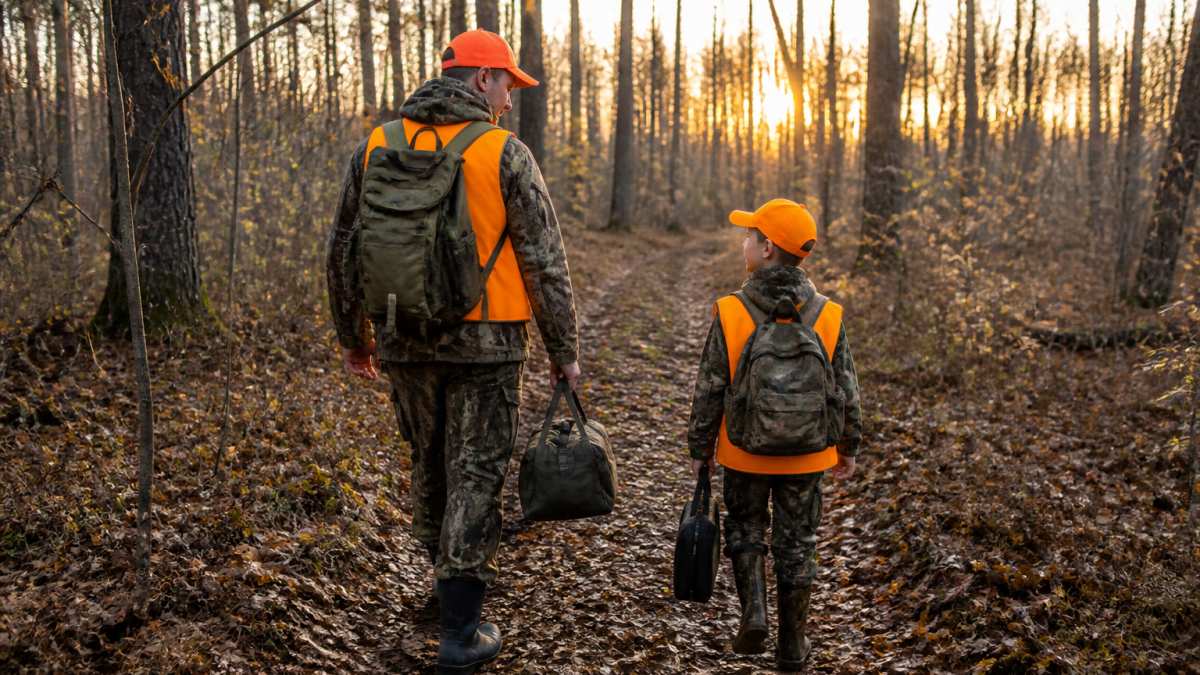
A parent and young child in blaze orange gear walking together through a wooded trail at dawn, both carrying gear and looking engaged
During the Hunt
Help your child observe the woods and enjoy the experience.
Point out animal tracks, listen for wildlife, and talk quietly about what you're seeing.
If an animal appears, use the moment as a learning opportunity. Explain how hunters identify wildlife, consider their surroundings, and make responsible decisions.
The supervising adult must remain in control of safety decisions and ensure all legal requirements are followed.
Never pressure a child to take a shot. If they aren't ready, that's perfectly fine.
What to Do If Things Get Uncomfortable
Children may become cold, tired, nervous, or bored during their first hunting experience.
Pay attention to how they're feeling, and encourage them to tell you when they need a break.
Bring extra layers, snacks, and water to help everyone stay comfortable.
Have a plan for leaving early if necessary.
Remember, a short outing filled with positive memories is far better than a long day that makes a child reluctant to return.
The goal is to help them enjoy being outdoors, whether or not the hunt ends with a harvest.
Beyond the Harvest: Teaching Responsibility and Ethics
Teaching kids to hunt safely also means helping them understand the responsibilities that come with hunting.
Talk about wildlife conservation, habitat protection, and why hunting seasons and regulations exist.
Explain how regulated hunting can contribute to wildlife management and conservation efforts.
Introduce the idea of fair chase and what it means to hunt legally, respectfully, and responsibly.
Help children understand that ethical hunters:
- Follow hunting laws and regulations.
- Respect wildlife and its habitat.
- Make safety their first priority.
- Never take a shot unless it is lawful, safe, and responsible.
- Work to avoid unnecessary suffering.
- Respect other hunters, landowners, and outdoor recreationists.
It's also important to talk about the possibility of coming home without harvesting an animal.
Sometimes the most meaningful lessons happen during quiet mornings, unexpected wildlife encounters, and conversations shared in the woods.
These experiences help children understand that hunting is about much more than filling a tag.
Keeping Young Hunters Engaged and Coming Back
The best way to introduce children to hunting is to make the experience enjoyable, educational, and free from pressure.
Let them ask questions, explore their surroundings, and learn at a comfortable pace.
Mix hunting-related activities with other outdoor adventures. Fishing trips, family camping weekends, hiking, and wildlife watching can all help children develop an appreciation for nature.
Celebrate the little moments.
Maybe they spotted their first deer track, learned to identify a bird, or simply enjoyed watching the sunrise with a parent or grandparent.
Comfort matters, too. Choose properly fitting clothing and equipment suited to the weather and the activity.
For children who enjoy deer camp traditions, a favorite outdoor-themed shirt can help them feel included in family gatherings, even when they aren't participating in the hunt itself.
Whether a child grows up to become a hunter or simply develops a love for the outdoors, those shared experiences are worth celebrating.
A Rack & Ridge shirt designed for young hunters in blaze orange, like our RACK & RIDGE Raised on Deer Camp Toddler Boys' Long-Sleeve Tee, or our RACK & RIDGE Sunset Deer Camp Youth Girls' Long-Sleeve Tee, helps them feel part of the tradition.


Passing Down Hunting Traditions Safely
Teaching kids to hunt safely is about more than preparing them for their first hunting season. It's about building confidence, encouraging responsibility, and sharing a love for the outdoors.
From learning to recognize deer tracks to understanding firearm safety and wildlife conservation, every lesson helps children develop respect for nature and the traditions that bring families together.
Remember, the best first hunting experience doesn't have to end with a harvest. Sometimes it's the quiet walk through the woods, the excitement of spotting wildlife, or the conversations shared between generations that make the biggest impression.
At Rack & Ridge, we believe those moments are worth passing down. Whether your family is preparing for deer camp or simply spending a morning exploring the woods, the memories you make together can last a lifetime.
Safety first. Family always. Built for the Backwoods.
Frequently Asked Questions
What age should you take your kid hunting?
There's no single age that's right for every child. Readiness depends on maturity, interest, the ability to follow safety instructions, and applicable hunting laws. Younger children can begin by observing wildlife, identifying animal tracks, and learning about nature alongside a trusted adult. Before participating in a hunt, check your state's current age, licensing, hunter education, and supervision requirements.
What are the four fundamental firearm safety rules?
The four fundamental firearm safety rules are: (1) Treat every firearm as if it's loaded. (2) Always keep the muzzle pointed in a safe direction. (3) Keep your finger off the trigger until you're ready to shoot. (4) Know your target and what's beyond it. These rules should always be followed together. Young hunters must practice firearm safety under appropriate adult supervision.
Do kids need a hunter education course?
Hunter education requirements vary by state, age, and hunting program. Some young hunters must complete an approved course before obtaining a hunting license, while certain youth or mentored hunting programs have different requirements. These courses teach firearm safety, hunting regulations, wildlife identification, and responsible hunting practices. Check your state wildlife agency for current requirements and approved course options.
How do you prepare a child for their first hunting trip?
Start with short outdoor outings to help your child become comfortable in the woods. Teach them to recognize animal tracks, follow safety instructions, and understand what to expect during a hunt. Review firearm safety rules, confirm licensing and supervision requirements, and pack weather-appropriate clothing, water, snacks, and emergency supplies. Keep the first trip short and relaxed. The goal is to build confidence and positive memories, not necessarily to harvest an animal.
How can you teach kids firearm safety before a hunt?
Begin by explaining the four fundamental firearm safety rules in clear, age-appropriate language. Discuss why each rule matters and reinforce that children must never handle firearms without appropriate adult supervision. When a child is ready and legally eligible, a qualified hunter education or firearm safety instructor can provide supervised, hands-on instruction. Always follow applicable laws, use appropriate safety equipment, and store firearms securely to prevent unauthorized access.
What should kids wear for a safe hunting trip?
Children should wear comfortable, weather-appropriate layers, sturdy footwear, and any high-visibility clothing required for the hunt. Blaze-orange and other visibility requirements vary by state, season, and hunting method, so check current regulations before heading out. Bring warm gloves, extra socks, and rain protection when needed. Water, snacks, a whistle, and basic emergency supplies can also help keep young hunters comfortable and prepared.
What should you do if a child becomes tired or uncomfortable during a hunt?
Listen to your child and take their concerns seriously. If they're cold, tired, nervous, or overwhelmed, take a break or end the outing safely. Never pressure a child to stay longer than they're comfortable with. Plan shorter trips and bring extra layers, snacks, and water. A positive experience that ends early is better than a long day that leaves a child discouraged about hunting.
How can you keep a child comfortable and focused while hunting?
Dress your child in layers suited to the weather, and pack water, snacks, and extra clothing. Choose a comfortable location and keep outings appropriate for their age and experience. Encourage them to watch for wildlife, listen to birds, and look for animal tracks. Take breaks when needed and let them ask questions. Keeping the experience relaxed and engaging helps children enjoy their time outdoors without feeling pressured.