

Table of Contents
- What Makes Clothing Sustainable for Homesteading Life
- Best Outdoor Clothing Materials for Longevity
- Durable Workwear for Homesteading: What to Look For
- How to Build a Capsule Wardrobe for Outdoor Work
- Caring for Rugged Outdoor Clothing So It Lasts
- Repair, Resale, and the Circular Economy
- Conclusion
- Frequently Asked Questions
Last Updated: September 18, 2026
What Makes Clothing Sustainable for Homesteading Life
When looking at sustainable clothing brands for homesteading life, durability, repairability, fabric choice, and how long you'll actually use a garment are practical places to start. For outdoor work, clothing also has to stand up to real wear, changing weather, and repeated use.
Most "sustainable fashion" advice falls apart the moment you're mucking a stall or splitting firewood. The real test isn't a label. It's whether a garment survives seasons of work and can be mended when it wears.
That's the throughline here: durability is sustainability. A durable jacket you keep and maintain for years can reduce the need to replace lower-quality garments frequently.
Best Outdoor Clothing Materials for Longevity
The best materials for homestead work balance abrasion resistance, breathability, and repairability. Natural fibers like hemp canvas, organic cotton, and merino wool top the list for most tasks, while synthetics earn a place in specific conditions.
Natural Fibers That Hold Up to Hard Work
Natural fibers remain the backbone of rugged apparel because they resist wear, breathe well, and mend cleanly.
- Hemp canvas, exceptionally abrasion resistant and gets softer with age
- Organic cotton duck, heavyweight, tough, and easy to patch
- Merino wool, regulates temperature and resists odor naturally
- Linen blends, breathable for hot-weather chores
Many homesteaders find that a heavyweight cotton duck cloth handles cold mornings and field work without breaking down.
When Synthetics Make Sense
Synthetics aren't the enemy. They're the right tool for specific jobs.
Durable Workwear for Homesteading: What to Look For
Durable workwear for homesteading prioritizes reinforced stress points, heavyweight fabric, and construction that can be repaired. Look past color and fit; the details decide whether a garment survives real work.
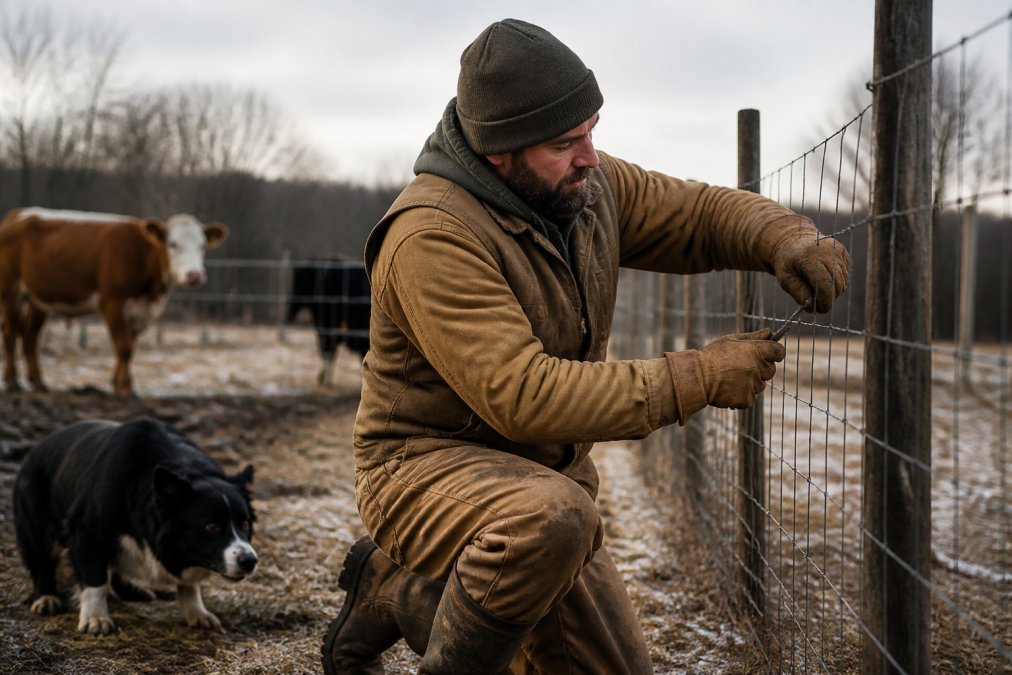
Check these features before buying:
- Fabric weight, heavier duck cloth and canvas resist tearing
- Reinforcement, metal rivets and bar-tacked seams at high-wear areas
- Pockets, secure interior pockets for tools and a phone
- Fit for layering, room for a flannel or hoodie underneath
- Repairability, simple seams you can stitch yourself
How to Build a Capsule Wardrobe for Outdoor Work
A capsule wardrobe for outdoor work is a small set of versatile, layerable pieces that cover every season. Fewer items, better made, means less textile waste and less time deciding what to wear. But a homestead capsule isn't the same as a fashion capsule, it has to survive chores, not just match.
Start With the Layers You'll Actually Use
Build from the base out, and only add what you'll genuinely wear. The goal is a working system, not a closet full of options.
Layer |
Purpose |
Best Fabric for the Job |
Example Piece |
|---|---|---|---|
Base |
Moves sweat off skin, controls odor |
Merino wool or a wool-synthetic blend |
Merino or moisture-wicking tee |
Mid |
Traps warmth, still breathes during chores |
Brushed flannel, fleece, or wool sweater |
Flannel or hoodie |
Outer |
Blocks wind, cold, and abrasion |
10-12 oz cotton duck or hemp canvas |
Duck cloth jacket or vest |
Accessory |
Hands, head, and detail work |
Leather, wool, waxed canvas |
Gloves, hat, work belt |
Why Fabric Choice Matters More Than Piece Count
This is where most capsule guides stop short. The fiber you pick decides how the garment behaves when it's wet, cold, or snagged on a fence.
- Cotton duck and hemp canvas are abrasion champions. They shrug off thorns, wire, and wood splinters, and they hold a patch well. The trade-off: cotton soaks up water and dries slowly, so it's a poor base layer in wet cold.
- Merino wool regulates temperature across a wide range, resists odor, and stays warm even when damp. It's softer and pricier than canvas, and it wears through faster at high-friction points like elbows and knees.
- Synthetics dry fastest and wick sweat best during high-output work like splitting wood or hauling feed. They're the right call for a base layer under a shell, but they snag on briars and pick up odor faster than wool.
A Seasonal Rotation That Works
You don't need a separate wardrobe for every season. You need the same core pieces rotated by temperature.
Lodge Quilt - Stonehurst Collection →
- Late spring through early fall: base layer plus a light canvas vest. Add a brimmed hat for sun and a light glove for wire and briars.
- Cool mornings and shoulder season: flannel or fleece mid layer under a duck cloth vest or jacket. Peel the mid layer once you're moving.
- Deep winter and feeding chores: merino base, wool or fleece mid, duck cloth outer, plus insulated gloves and a wool beanie. Keep a spare pair of gloves drying by the stove.
Sourcing for the Whole Family
A homestead capsule isn't just for one person. Kids outgrow work clothes fast, and that's where the circular approach pays off.
- Buy adult pieces once and mend them for years.
- Pass hand-me-downs down the line, and patch knees and elbows before they tear through.
- For growing kids, size up on outer layers so they last two seasons instead of one.
- Keep a shared bin of gloves, hats, and wool socks so nobody's hunting for a pair at chore time.
Caring for Rugged Outdoor Clothing So It Lasts
Caring for rugged outdoor clothing comes down to washing less, washing gently, and repairing early. Proper care can play a major role in garment longevity.
- Wash cold on a gentle cycle to protect fibers
- Tumble dry low, or line dry when you can
- Follow the garment's care label before bleaching, dry cleaning or using high heat, since recommendations can vary by fabric and finish.
- Repair small tears before they spread
- Re-wax or re-proof outer layers as needed
Repair, Resale, and the Circular Economy
The circular economy for workwear means repairing, reselling, and passing on garments instead of discarding them. This is where homesteaders already have an edge, because mending is a skill worth keeping. Most sustainable clothing brands stop at "buy less." The real leverage is in what you do after the tag is cut.
A Repair Kit That Actually Gets Used
A basic repair kit costs little and saves a lot. Keep it in one place so it's ready when a seam blows out.
- Heavy-duty needle and waxed thread (waxed thread grips the fabric and resists rot)
- Iron-on patches for quick fixes, plus scrap canvas for structural patches
- Spare buttons and a thimble
- A sharpening stone for keeping scissors and knives ready
- A seam ripper and a small pair of snips
How to Mend the Fabrics You Actually Wear
Different fibers fail in different ways, and the patch that works on one can ruin another. Here's how to handle the three workhorses of a homestead wardrobe.
When to Repair, When to Retire
Not every garment is worth saving. A quick rule of thumb:
- Repair if the fabric around the damage is still sound and the seam is the only failure.
- Repurpose if the body is worn but the fabric is still good, cut it into patches, shop rags, or a tool roll.
- Retire if the fabric itself is thin across a wide area or the structural seams have failed in multiple places.
Resale, Hand-Me-Downs, and the Second-Hand Loop
When a garment is truly done for you, it may not be done for someone else.
- Resell workwear that's still functional. Duck cloth jackets and wool sweaters hold value, especially in good condition.
- Donate clean, wearable pieces to farm-supply swaps, church closets, or rural thrift stores where they'll actually get used.
- Hand down within the family. Kids' work clothes move fast, and a patched pair of canvas pants is a badge of honor on a homestead, not a hand-me-down to be embarrassed about.
- Repurpose the last of it. Canvas scraps become patches, garden ties, or a knife roll. Wool scraps become pot holders or felted patches.
Conclusion
Building a wardrobe that survives homestead life takes patience, but every durable piece you keep is one less item in a landfill. Start with a few well-made layers, care for them, and learn to mend.
Frequently Asked Questions
What features should I look for in durable homesteading clothing?
Focus on fabric weight, abrasion resistance, and reinforced stress points. Heavyweight cotton duck cloth, hemp canvas, and merino wool hold up to repeated wear and washing. Look for metal rivets at pocket corners, double-stitched seams, and rib-knit cuffs that keep their shape. Repairability matters too: garments with simple construction and standard fasteners are easier to mend when they eventually wear out.
Are there sustainable clothing brands that specialize in outdoor workwear?
Durability is one factor to consider when shopping for outdoor workwear with longevity in mind. Look at fabric weight, construction, repairability and how well a garment fits the work you actually do. Rack & Ridge offers an insulated hooded duck cloth work jacket designed for rugged outdoor use, but sustainability can involve additional factors such as sourcing, manufacturing and material certifications that vary by product and brand.
How does choosing high-quality apparel support a sustainable homesteading lifestyle?
Durability is the backbone of sustainable fashion for outdoorsmen. A jacket that lasts ten years replaces ten cheap jackets that fall apart in a season. That reduces textile waste, lowers your carbon footprint from repeated manufacturing and shipping, and saves money over time. Buying fewer, better pieces and caring for them properly is conscious consumerism in practice, not just a label.
What materials are best for long-lasting outdoor clothing?
Merino wool regulates temperature and resists odor. Hemp canvas gets softer with age and stands up to abrasion. Organic cotton duck cloth is heavy, breathable, and takes years of hard use. Each has a place in seasonal layering. Avoid fabrics that pill quickly or lose shape after a few washes. Durability varies by fabric construction, weight and intended use. Heavy cotton duck, canvas, wool and purpose-built synthetic fabrics can all perform well in outdoor work when matched to the conditions.