

Table of Contents
- What to Look for in Quality Country Clothing
- Best Materials for Country Lifestyle Apparel
- Rack & Ridge Pieces Built for Field and Farm
- How to Style Country Chic Outfits
- Fit and Care: Making Country Lifestyle Apparel Last
- Sustainable Sourcing in Country Lifestyle Apparel
- Conclusion
- Frequently Asked Questions
Last Updated: September 15, 2026
What to Look for in Quality Country Clothing
Quality country clothing is apparel built to survive real work and real weather, judged by its stitching, seams, hardware, and fabric weight rather than its logo. This guide from Rack & Ridge walks through what separates genuine country lifestyle apparel from costume-grade imitations, so you can shop quality country lifestyle apparel with confidence.
The difference usually shows up in three places: how seams are finished, how hardware is attached, and whether the fabric holds its shape after a season of use. Most shoppers never check any of them.
Stitching, Seams, and Hardware That Hold Up
Start with stitch density. Dense, even stitching along stress points, shoulders, armholes, pocket corners, and hems, is the single clearest signal of durability. Double-needle topstitching at seams adds another layer of reinforcement where garments typically fail first.
Hardware matters just as much. Metal grommets, auto-lock zipper sliders, and reinforced snap closures outlast thin plastic equivalents by a wide margin. Check that zippers run smoothly along the full length and that buttons sit on reinforced plackets rather than single-layer fabric.
A common mistake is judging a shirt by its exterior print. Prints fade; construction decides how long the piece stays in your rotation.
Best Materials for Country Lifestyle Apparel
The best materials for country lifestyle apparel balance breathability, durability, and weather resistance: ring-spun cotton for everyday comfort, wool for insulation, and performance blends for active days outdoors. Matching the fabric to the job matters more than chasing a single "best" material, and the reason comes down to fiber mechanics, not marketing.
Why Fiber Structure Decides Performance
Cotton is a staple fiber: short lengths twisted into yarn. Ring-spun cotton spins those fibers tighter and smoother than open-end cotton, which is why it feels softer, pills less, and holds print detail longer. The trade-off is cost and a small amount of shrinkage, since cotton relaxes when wet and tightens as it dries.
Wool is a crimped protein fiber with a natural loft that traps air. That structure is why wool keeps insulating even when damp, while cotton loses loft and clings when soaked (pubmed.ncbi.nlm.nih.gov). Wool's weakness is the same crimp: it felts under heat and agitation, so it needs cold water and low agitation.
Performance synthetics, polyester, nylon, and elastane blends, are extruded filaments, meaning they are continuous strands rather than short staples. That construction resists pilling and moves moisture along the filament surface instead of absorbing it. The trade-off is odor retention and a finish (DWR, UPF, wicking) that degrades with fabric softener and high dryer heat.
Fabric Weight and Construction by Use
Weight is measured in ounces per square yard (oz/yd²) for knits and grams per square meter (GSM) for wovens. A few reference points most buyers never see on a product page:
- 4.5 oz/yd² ring-spun jersey, light enough for a base layer, the weight of the Rack & Ridge Mountain Antler Logo T-Shirt.
- 8-9 oz/yd² fleece, the mid-layer sweet spot; warm without trapping so much heat that you sweat through it on a 40°F morning.
- 10-12 oz/yd² canvas or denim, workwear territory, where abrasion resistance matters more than breathability.
- Ripstop nylon shells, light, packable, and rated by waterproofing (a 5,000 mm hydrostatic head resists steady rain; 10,000 mm and up handles sustained downpour).
Construction matters as much as the fiber. No-side-seam tubular knits (like the Mountain Antler tee) eliminate the twisting seam that rubs under a pack strap. Three-panel hoods (like the Rack & Ridge Outdoor Hoodie) hold shape when the hood is down instead of collapsing into a cone. And a DWR finish on a soft shell sheds light rain until abrasion and detergent wear it off, at which point a wash-in DWR treatment restores it.

| Material | Best For | Key Strength | Watch Out For |
|---|---|---|---|
| Ring-spun cotton | Everyday wear, layering | Soft hand-feel, holds print detail | Shrinks slightly without care |
| Wool | Cold-weather insulation | Warmth when damp | Felts under heat and agitation |
| Cotton-poly fleece | Hoodies, mid-layers | Warmth without bulk | Lower breathability |
| Performance synthetic | Active field use | Moisture-wicking, UPF protection | Pills with rough washing; retains odor |
| Ripstop nylon shell | Rain, wind, packability | High strength-to-weight ratio | DWR finish degrades over time |
For most wardrobes, a cotton base layer plus a fleece or soft shell mid-layer covers the widest range of conditions. Performance fabrics earn their place when you're moving hard in changing weather, and the reason is filament construction, not a label claim.
The Sustainability Angle Most Material Guides Skip
Fiber choice is also a sourcing decision. Ring-spun cotton can be grown and harvested under ethical programs and finished to OEKO-TEX STANDARD 100, which tests the finished textile for harmful substances rather than just the raw fiber (OEKO-TEX® STANDARD 100). Recycled polyester carries RCS (Recycled Claim Standard) and GRS (Global Recycled Standard) certification, which trace recycled content through the supply chain (Recycled Claim Standard (RCS) + Global Recycled Standard (GRS)).
Rack & Ridge Pieces Built for Field and Farm
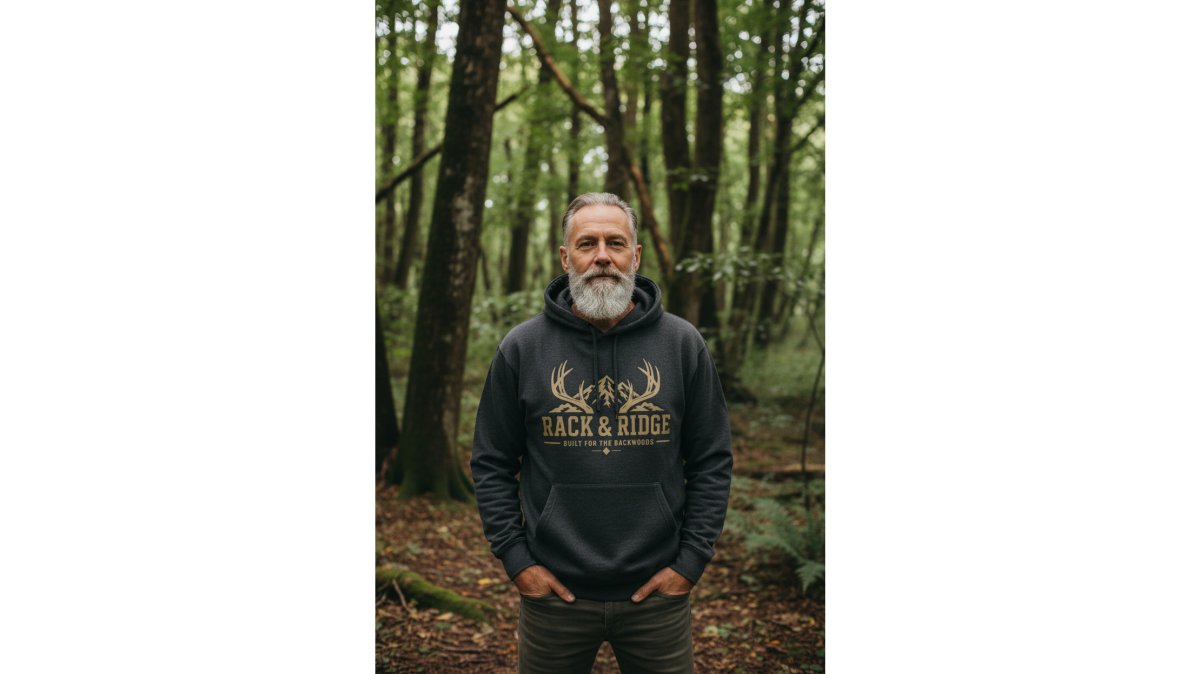
The Rack & Ridge collection from Rack & Ridge covers the full layering system, from a $30.58 ring-spun cotton tee to a $114.18 waterproof shell, all built for people who move between the field, the truck, and town without changing clothes.

Layering from Base to Shell
- Base: the Rack & Ridge Mountain Antler Logo T-Shirt ($30.58), 4.5 oz. ring-spun cotton with no side seams.
- Mid: the Rack & Ridge Outdoor Hoodie ($55.54), an 80/20 cotton-recycled polyester fleece with a three-panel hood.
- Active: the Antler Embroidered Quarter-Zip Pullover ($85.05), moisture-wicking with UPF 50+ protection.
- Shell: the Torrent Waterproof Jacket ($114.18), a 5,000 mm waterproof shell that packs into its own pouch.
For milder days, the Soft Shell Jacket ($79.57) blocks wind and light rain without the bulk of a full rain shell.

A four-piece layering system covers nearly every condition you'll meet between September and March. Buy the base and shell first, then fill in the middle.
How to Style Country Chic Outfits
Fit by Activity, Not by Size Chart
Body Type and Proportion Adjustments
Building the Outfit
Fit and Care: Making Country Lifestyle Apparel Last
Three habits extend the life of almost any piece:
Tumble drying on high heat is the fastest way to shrink cotton and crack printed graphics. One hot cycle can take a shirt out of rotation permanently.
Sustainable Sourcing in Country Lifestyle Apparel
Conclusion
Frequently Asked Questions
What defines quality country lifestyle apparel?
Quality country lifestyle apparel comes down to three things: fabric weight, construction, and how it wears over time. Look for midweight cotton or cotton-poly blends that hold their shape, double-needle stitching at stress points, and hardware like reverse-coil zippers that won't snag. A piece like the [Rack & Ridge Outdoor Hoodie, Hunting Antler Logo](https://gandsessentials.com/products/rack-ridge-outdoor-hoodie-hunting-antler-logo) uses 80/20 combed ring-spun cotton and recycled polyester fleece with twill necktape, which means it holds up through repeated washes and real field use.
What are the best materials for country lifestyle apparel?
Cotton remains the standard for breathability and comfort, especially ring-spun varieties that feel softer and resist pilling. For outerwear, look for polyester shells with waterproof ratings above 5,000 mm, like the Torrent Waterproof Jacket. Recycled polyester blends work well for performance layers because they wick moisture and dry fast. Wool still earns its place for insulation, but for everyday country wear, midweight cotton and cotton-poly fleece give you the best balance of durability, comfort, and easy care.
How do I choose durable clothing for outdoor work and leisure?
Start with fabric weight. Anything under 4.5 oz. is too light for real work. Check the seams: double-needle topstitching at shoulders, pockets, and hems tells you the piece was built to last. Look for reinforced shoulders with twill tape and ribbed cuffs that stay snug. For wet conditions, a jacket with a 5,000 mm waterproof rating and taped seams will keep you dry. Pieces like the Rack & Ridge Soft Shell Jacket combine wind resistance and water repellency in one layer that moves between the field and town.
How can I balance style and functionality in country clothing?
The trick is layering pieces that work in both settings. A quarter-zip performance pullover with an embroidered logo looks sharp enough for dinner but wicks moisture on the trail. Pair a long-sleeve antler tee with dark denim and a soft shell jacket for a look that transitions from the truck to the stand to the store. Stick to neutral tones like charcoal, navy, and heather grey, then add one piece with a subtle logo or texture. That keeps the outfit grounded without looking like you just walked out of the woods.
What are the best ways to care for high-quality outdoor clothing?
Wash cold on a gentle cycle and tumble dry low to protect fabric fibers and any embroidery or prints. Skip fabric softener, which coats performance fabrics and reduces breathability. For waterproof jackets, avoid dry cleaning and reapply a DWR spray after several washes to keep water beading. Hand wash ceramic mugs and tumblers when possible to preserve engraved designs. Storing clean, dry pieces on hangers or folded in a dry place prevents mildew and keeps seams intact season after season.