

Table of Contents
- Why Gear Choice Matters More Than Price for New Hunters
- The Essential Hunting Gear Checklist for Your First Season
- How to Choose Durable Outdoor Clothing: The Layering System
- Affordable Hunting Clothing for Beginners Without Cutting Corners
- Footwear, Optics, and Navigation: Where to Invest First
- Safety Essentials: First Aid, Communication, and Emergency Shelter
- New vs. Used Gear and Maintenance That Extends Lifespan
- Conclusion: Build Your Kit One Reliable Piece at a Time
- Frequently Asked Questions
Last Updated: September 8, 2026
Why Gear Choice Matters More Than Price for New Hunters
Most new hunters lose money twice: once on cheap gear that fails, and again on the replacement they buy after the first or second trip. The cold truth is that the most expensive part of hunting isn't the license or the tag; it's the equipment you'll discard because it wasn't built for real conditions. Investing in reliable hunting gear for beginners means prioritizing function and durability over the lowest sticker price, and this guide from g&s Essentials is built around that principle.
A common mistake is treating a shopping list like a grocery run. You don't need everything at once. You need a core kit that works, then you build outward. A thoughtful, layered approach beats a pile of impulse buys every season. Below, we’ll show you exactly how to evaluate each piece of your kit so your first season is safe, comfortable, and successful.
The Essential Hunting Gear Checklist for Your First Season
Building a reliable kit starts with a realistic list. Before you spend a dollar, secure your state hunting license and review local regulations and complete a hunter safety course if you haven't already. These are non-negotiable first steps.
Your first-season checklist should cover five core areas:
- Clothing system: base layer, insulation, and a waterproof outer shell
- Footwear: waterproof, broken-in boots with good ankle support
- Navigation: a GPS device or app plus a physical map and compass
- Safety kit: first aid supplies, headlamp, fire starter, and emergency shelter
- Harvest tools: a sharp knife, game bags, and a method to pack meat out
This is a working list, not a luxury catalog. Many beginners find that a modest, well-chosen kit outperforms a closet full of gear that never leaves the truck. Focus on the essentials that keep you warm, dry, safe, and legal.

How to Choose Durable Outdoor Clothing: The Layering System
Understanding how to choose durable outdoor clothing begins with the layering system, the single most important concept for staying comfortable in the field. A proper system manages moisture and heat in three parts: a moisture-wicking base layer, an insulating mid-layer, and a protective outer shell. This approach lets you adapt to changing temperatures without carrying a second wardrobe.
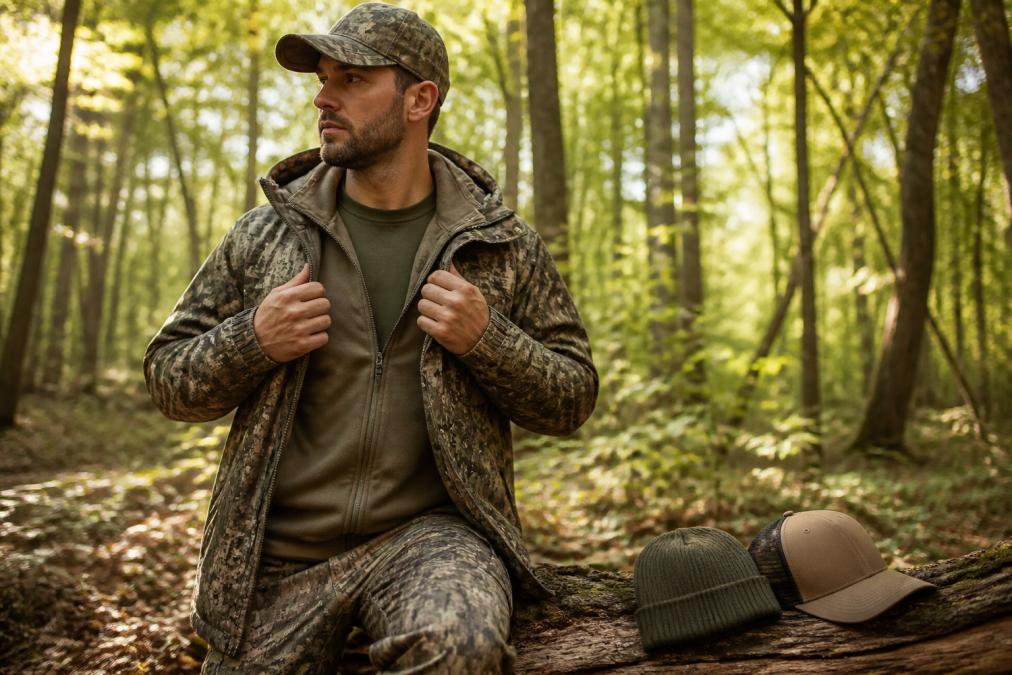
Start with a base layer made of merino wool or a quality synthetic. It sits against your skin and must pull sweat away to prevent hypothermia when you stop moving. Avoid cotton entirely; it holds moisture and steals body heat (the CDC).
Your mid-layer traps warmth. Fleece or a lightweight wool sweater works well for most active hunting. The outer shell is your defense against wind, rain, and brush. It should be waterproof, breathable, and quiet enough for stalking. A durable outer layer protects the expensive insulation underneath, making it a critical investment.
Affordable Hunting Clothing for Beginners Without Cutting Corners
You don't need a designer label to stay warm, but you do need fabrics that perform. Affordable hunting clothing for beginners is about buying the right items at the right price, not buying the cheapest version of everything. A common mistake is spending on a camo pattern before securing quality boots and a functional layering system.
Here is a practical buying strategy:
- Buy the best boots you can afford. They carry you every step.
- Prioritize merino wool socks. Two or three pairs are worth more than an extra jacket.
- Skip the expensive camo for your first season. A blaze orange vest and plain earth-tone clothing are legal and effective for many hunts.
- Invest in a quality beanie and hat. You lose most of your body heat through your head.
The Rack & Ridge Sportsman Beanie is a prime example of a small item that delivers real value. Priced at $30.60, it is built for early mornings in the stand and late walks out, and it serves as a practical piece of your cold-weather kit that won't break your budget.

Footwear, Optics, and Navigation: Where to Invest First
If your budget only stretches to two quality purchases, make them your boots and your navigation tools. Everything else can be upgraded later. Your feet are your transportation, and getting lost is the most preventable danger you will face.
For footwear, look for waterproof, breathable boots with sturdy ankle support. Plan to break them in well before opening day; new boots cause blisters that can end a hunt early. Pair them with merino wool socks for moisture management and thermal regulation.
Here is what separates a hunting boot from a hiking boot: the outsole. Hunting boots use a deeper, more aggressive lug pattern designed to grip on wet leaves, mud, and steep, uneven terrain. Look for outsoles with lugs at least 5 mm deep. For insulation, match the boot to your hunt. An uninsulated boot (400 grams or less of insulation) works for early season and any hunt where you are walking a lot. A 600- to 800-gram insulated boot is for late-season sits where you are stationary for hours. The trade-off is weight: an 800-gram boot can add nearly two pounds per foot, and that weight compounds with every step.
For navigation, a reliable GPS device or a smartphone app with offline maps is a starting point, but you must also carry a physical map and compass as a backup. Batteries die and devices fail. Many hunters also find a simple topographic map resource invaluable for understanding terrain and animal movement.
Optics are where beginners often overspend. A decent pair of binoculars in the 8x42 range is sufficient for most scouting and glassing. A bino harness protects your investment and keeps them accessible. Skip the expensive rangefinder until you are sure you need it for your specific hunting style, whether that is stand hunting or stalking on public land.
Here is the part most gear guides miss: your gear is only as useful as your body's ability to carry and use it. A typical first-season kit, boots, layered clothing, a day pack with water, safety gear, and optics, weighs between 15 and 25 pounds. On a steep public-land hike, that load increases the energy cost of every step by roughly 10 to 15 percent compared to walking unloaded. If you are not conditioned for that load, you will arrive at your spot exhausted, sweating through your layers, and more likely to make a careless mistake with your firearm or your footing.
A practical conditioning plan for new hunters starts six to eight weeks before the season. Walk three to four times per week with a loaded pack, starting at 10 pounds and adding 5 pounds each week until you reach your expected field weight. Include hills or stairs to mimic the terrain you will hunt. This does two things: it builds the cardiovascular base you need for the hike in, and it breaks in your boots at the same time. Many beginners skip this step and then blame their gear for a miserable first hunt when the real problem was a 20-pound pack on an unconditioned body.
A second overlooked factor is foot care. Blisters are the number one reason hunts end early. Beyond breaking in boots, learn to manage hotspots before they become blisters. Carry leukotape or moleskin in your pack and apply it at the first sign of friction. Change your socks at midday if your feet are sweating. The cost of a few ounces of foot-care supplies is nothing compared to the cost of hiking out on raw feet.
Safety Essentials: First Aid, Communication, and Emergency Shelter
Hunting is safe when you plan for what can go wrong. A compact first aid kit is mandatory, but it is only the beginning. You must also plan for communication failures and unexpected overnight stays.
Your safety kit should include:
- A tourniquet and trauma dressings, not just band-aids
- A waterproof headlamp with fresh batteries
- A fire starter and waterproof matches
- An emergency shelter like a bivy sack or space blanket
- A whistle and a signal mirror
Communication is a critical piece of this system. Tell someone exactly where you are hunting and when you plan to return. A satellite messenger or personal locator beacon is a worthwhile investment for anyone hunting remote public land. It can be the difference between a cold night and a rescue.
New vs. Used Gear and Maintenance That Extends Lifespan
A smart strategy for building your kit is mixing new safety-critical items with quality used gear for everything else. Buy your boots, base layers, and safety equipment new. Look for used outer layers, packs, and optics from reputable sources, but inspect them carefully for wear, broken zippers, and delamination of waterproof membranes.
Once you own reliable gear, maintenance determines how long it lasts. A few simple habits will extend the life of your investment significantly:
- Clean your gear after every trip. Dirt and sweat break down fabrics and zippers.
- Re-treat waterproof coatings on your outer shell and boots annually.
- Store everything dry and loose. Never leave gear compressed in a stuff sack for months.
- Sharpen your knives after every use and oil the blades.
This approach is also a step toward sustainable, ethical gear sourcing. Buying quality items once and maintaining them reduces waste. When you do need something new, consider brands that prioritize durability and repairability over disposable fashion. The Rack & Ridge Real Tree Camo Trucker Hat, at $35.52, is an example of a durable item designed to handle seasons of use while maintaining its look.

| Gear Category | Buy New (Critical) | Buy Used (Acceptable) | Maintenance Frequency |
|---|---|---|---|
| Boots & Socks | Yes | No | Clean and dry after every hunt |
| Safety & First Aid | Yes | No | Check and restock each season |
| Base/Mid Layers | Yes | No | Wash with tech-specific detergent |
| Outer Shell & Packs | Optional | Yes | Re-treat waterproofing annually |
| Optics & Tools | Optional | Yes | Inspect and clean before season |
Conclusion: Build Your Kit One Reliable Piece at a Time
Building reliable hunting gear for beginners is not about buying everything at once. It is about making smart choices, prioritizing safety and function, and maintaining what you own. Start with the essentials, add pieces as your skills and hunting style develop, and resist the urge to chase every new product on the market. This patient approach leads to a kit that serves you for years.
At g&s Essentials, we understand the value of gear that works as hard as you do. Our Rack & Ridge collection is built for hunters who need apparel that performs in the field and reflects their connection to the land. From the Rack & Ridge Sportsman Beanie to insulated bottles that keep coffee hot through a morning sit, we focus on durable, practical pieces for your outdoor lifestyle. Join our email list to get first access to new outdoor gear and seasonal recommendations.
Frequently Asked Questions
What is the best hunting gear for a beginner?
Start with the essentials that ensure safety and comfort: a reliable firearm or bow you've practiced with, blaze orange for visibility, a sharp knife, a headlamp, and a hydration system. For clothing, focus on a moisture-wicking base layer, an insulating mid-layer, and a waterproof outer shell. This core kit gets you through your first hunts without unnecessary expense.
How do I choose durable hunting clothing for different seasons?
Focus on the layering system rather than buying separate outfits. A merino wool base layer regulates temperature in early season and winter. Add a fleece or synthetic mid-layer for insulation. Your outer shell should be waterproof and breathable to handle rain and wind. This approach works across seasons and extends the life of your gear.
Is it better to buy budget or premium hunting gear as a beginner?
Buy budget for items that don't affect safety or comfort, like camo patterns or extra hats. Invest more in boots, a waterproof outer shell, and optics, as these directly impact your experience and durability. A mid-priced base layer and a quality insulated bottle, such as the Rack & Ridge 32oz Insulated Water Bottle at $51.20, offer reliable performance without premium markup.
What are the most important safety items for new hunters?
A comprehensive first aid kit, a reliable headlamp with spare batteries, and a communication device like a fully charged cell phone in a waterproof case or a two-way radio. Always carry a whistle and a small emergency shelter. Before heading out, ensure you have completed a hunter safety course and have your hunting license in your pack.
How should I maintain my hunting gear to ensure it lasts?
Clean and dry your clothing after every hunt, following manufacturer instructions to preserve waterproofing and scent control. Wash your base and mid-layers with scent-free detergent. Store boots in a cool, dry place and treat leather regularly. Inspect zippers and seams for wear. Proper maintenance prevents costly replacements and keeps gear reliable.