

Table of Contents
- Why Parents Ask if a Youth Hunting Vest Is Worth It
- Youth Blaze Orange Hunting Vest: Visibility and Safety Basics
- Youth Insulated Hunting Vest: Warmth Without the Bulk
- Youth Hunting Vest Sizing: Getting the Fit Right
- Matching the Vest to Your Hunting Style and Trip Length
- Cost, Durability, and the Case Against Buying One
- Youth Hunting Gear Checklist: What Else Belongs in the Pack
- Conclusion: Making the Call for Your Young Hunter
- Frequently Asked Questions
Last Updated: October 12, 2026
Why Parents Ask if a Youth Hunting Vest Is Worth It
If you have priced a youth hunting vest lately, you have probably wondered whether the money is better spent elsewhere.
The hesitation is usually not about whether the kid wants to hunt, but whether the gear will still fit next year, whether it is warm enough, and whether it does anything a jacket pocket cannot.
Below, we walk through visibility, warmth, sizing, hunting style, and cost so you can make the call for your young hunter.
Youth Blaze Orange Hunting Vest: Visibility and Safety Basics
A blaze orange hunting vest is a safety garment worn over a jacket or shirt to make a hunter easier to see. No vest automatically satisfies every requirement in every state, but wearing the required hunter-orange clothing is an important part of helping young hunters stay visible in the field.
What Blaze Orange Does and Does Not Do
Blaze orange makes a person stand out against the browns, grays, and greens of the woods. It does not make someone bulletproof or excuse poor muzzle discipline.
Regulations for hunter orange vary by state, by season, and by hunting method. A state fish and wildlife agency directory is a good starting point for finding your state's current rules.
Youth Insulated Hunting Vest: Warmth Without the Bulk
An insulated youth hunting vest adds warmth across the core without the arm bulk that makes a kid feel like the Michelin man.
The trade-off is straightforward: a vest is warmer than a shell and less warm than a full coat. For a mild-weather sit or a walk through a field, that is often exactly right. In real cold, a youth insulated hunting vest works best as a mid-layer under a heavier coat. Remember, an insulated vest is designed for warmth. If hunter orange is required, make sure the child's outer clothing meets your state's visibility requirements.
Youth Hunting Vest Sizing: Getting the Fit Right
Youth hunting vest sizing is where most parents either win or waste money. A vest that is too tight restricts movement and gets left at home; one that is too loose rides up and catches on brush.
Start With the Layers, Not the Number
Youth vest sizes are usually labeled by age range or a youth size like YS, YM, YL, but those labels are loose guides, not measurements. A tall eight-year-old and a stocky eight-year-old can wear two different sizes.
Measure the chest at its widest point, over the base layer and the jacket your child will actually hunt in, then measure from the top of the shoulder to the waist.
The Kitchen-Table Fit Test
Here is how to check the fit before the tags come off:
- Have the child wear the base layers and jacket they will actually hunt in
- Check that the shoulders sit flat, not sliding off either side
- Confirm they can raise both arms overhead without the hem pulling past the waist
- Make sure the front closure can be snugged down without pinching
- Test reaching across the body, like grabbing a shell from a pocket
If any of those checks fail, the vest is the wrong size, no matter what the tag says.
A Safety Fit Check, Not Just a Comfort Check
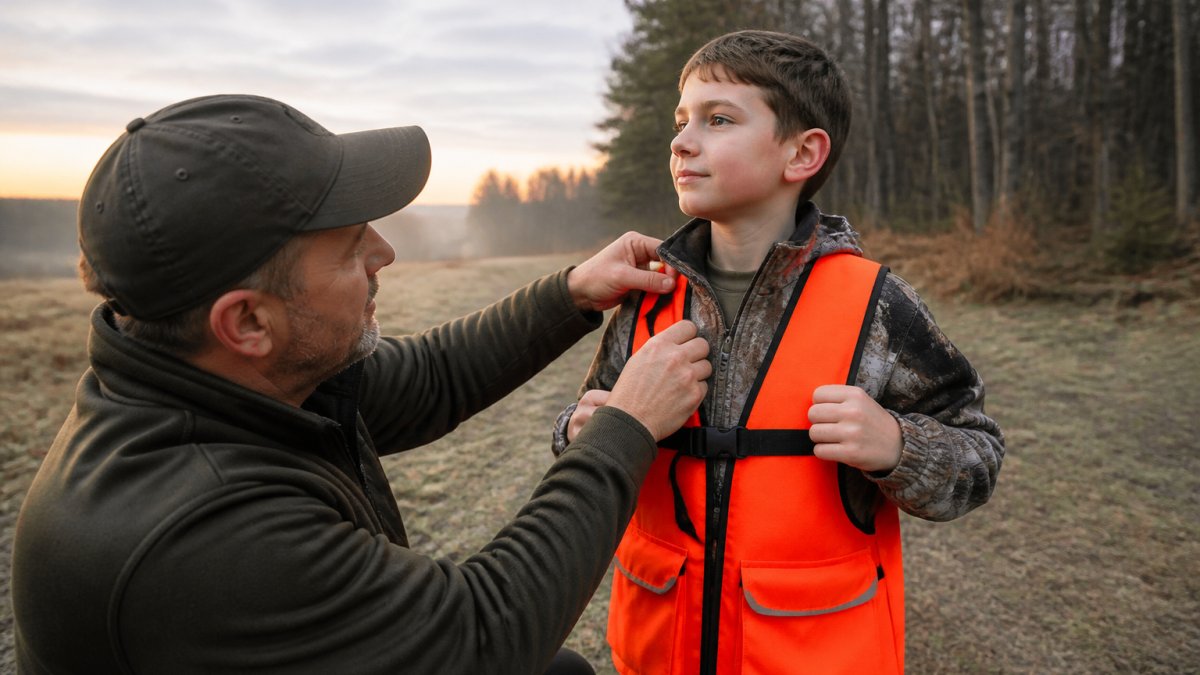
Fit is a safety issue as much as a comfort issue. A loose vest can snag on brush, fence wire, or a tree limb; one that rides up can cover the face or block a sight line; and a loose strap can shift while your child climbs into a stand or steps over a log.
Run these three checks every season, not just at purchase:
- Strap security. Grab each adjustment strap and tug. Check that every adjustment strap stays securely in place. If a strap slips, readjust it according to the manufacturer's instructions. If it won't stay secure, choose another vest.
- Snag check. Look for loose webbing, dangling zipper pulls, or open pockets that could catch on brush. Trim or tuck anything that hangs.
- Movement check. Have your child walk, kneel, and reach overhead. If the vest restricts any of those, it is too small or cut wrong for their frame.
How Long Will It Fit a Growing Child?
A youth hunting vest with adjustable straps may fit for more than one season, depending on how quickly your child grows. But fit should always come before getting another year of use out of the gear.
Before each hunting season, have your child try on the vest over the clothing they'll actually wear. Check the shoulders, straps, closures, and freedom of movement. If the vest is too tight, too loose, or no longer stays securely in place, it's time for a different size.
When to Hand It Down or Pass It On
A youth vest that has been outgrown is not wasted money if it fits a younger sibling or cousin. Adjustable straps can make a vest easier to fit to another child, but every young hunter should have a vest that fits securely and allows comfortable movement.
Matching the Vest to Your Hunting Style and Trip Length
Hunting style should drive the choice more than the label on the tag. A kid who walks miles behind a bird dog has different needs than one who sits in a ground blind for three hours. The vest that works for one will frustrate the other.
Hunting Style |
What Matters Most |
Vest Type to Look For |
|---|---|---|
Upland bird hunting |
Freedom of movement, shell access |
Lightweight strap vest |
Deer stand or blind |
Quiet fabric, warmth, pockets |
Insulated front-loader |
Short scouting trips |
Low bulk, easy on and off |
Keep, when hunter orange is appropriate or required |
Cold late-season sits |
Layering, core warmth |
Insulated vest under a coat; maintain required hunter-orange visibility |
Why Upland Hunting Favors a Strap Vest
Upland hunting is the classic use case for a strap vest or traditional vest with a game pouch, because the hunter is moving and needs shells within reach.
The game pouch in the back is the other reason: a walking hunter needs somewhere to put a retrieved bird without digging through a pack. What a strap vest does not do well is keep you warm.
Why Blind Hunting Favors a Front-Loader
Blind hunting favors a front-loader with quiet fabric, since noise carries and a loud zipper will end the sit early.
Quiet fabric is the other half of the equation. Brushed cotton, fleece, and soft cotton-poly blends absorb sound better than crisp nylon or ripstop. During a long sit, quieter fabrics can help reduce unnecessary noise when your child shifts position, reaches for a snack, or adjusts their gear.
Trip Length Changes the Math
A short scouting trip or a quick afternoon sit does not need much. A simple blaze orange safety vest over a jacket helps improve visibility and keeps things light.
A full-day hunt is the opposite. More hours means more layers, snacks, water, and chances for the weather to change, so a vest with real pockets and a way to carry a layer or two becomes worth the weight.
A Simple Decision Path
If you are not sure which way to go, walk through these questions in order:
- Is your child walking or sitting? Walking points to a strap vest. Sitting points to a front-loader.
- How long is the trip? Under two hours, a simple safety vest may be enough. Over half a day, look for storage.
- What is the weather? Mild weather favors a shell vest. Cold weather favors an insulated vest worn as a mid-layer.
- What does your child actually carry? Shells, a call, a snack, and a phone fit in a vest. A full day of layers and water may need a small pack.
- What does your state require? Confirm the blaze orange rule for your season and method before you buy anything.
One Vest or Two?
Most families do not need two vests. A lightweight strap vest with a game pouch and a couple of front pockets covers upland walking and mild-weather sits. An insulated front-loader covers cold-weather blind hunting.
If your child is new to hunting and you are not sure what they will enjoy, start with a simple blaze orange safety vest.
Cost, Durability, and the Case Against Buying One
A youth hunting vest can be a worthwhile investment, especially if your child hunts regularly and needs a comfortable way to carry small essentials. But not every young hunter needs an expensive vest.
If your child is just getting started, a simple, properly fitted blaze-orange safety vest may be enough, depending on your state's requirements and the type of hunting you're doing.
Consider the cost, durability, comfort, and how often the vest will be used before deciding what makes sense for your family.
Youth Hunting Gear Checklist: What Else Belongs in the Pack
A vest only solves part of the puzzle. Here is a practical youth hunting gear checklist to round out the kit, whether the vest carries it or a small pack does.
- Blaze orange vest, hat, or both, per your state's rule
- Base layer appropriate to the temperature
- Insulating mid-layer for cold sits
- Quiet outer layer that does not rustle
- Gloves that fit properly and allow safe, comfortable hand movement.
- Warm hat and hand warmers for late season
- Water and easy-to-carry snacks
- A small first-aid kit
- A whistle and age-appropriate emergency plan
- A flashlight or headlamp
- A map or navigation tool appropriate for the area
A vest versus a backpack comes down to access. A vest keeps shells and calls on the body, reachable without shrugging off a pack, while a backpack carries more but slows everything down.
Conclusion: Making the Call for Your Young Hunter
The question is not whether a youth hunting vest is worth it in the abstract. It is whether it fits your kid, your season, and the way you hunt together.
At Rack & Ridge, we believe the best outdoor traditions start with time spent together. Whether you're preparing for your child's first hunt or another season in the woods, choosing comfortable, properly fitted gear is part of making the experience enjoyable.
Explore our Rack & Ridge collection for outdoor-inspired apparel, and visit The Ridge Journal for more practical tips, family hunting traditions, and stories from the backwoods.
Frequently Asked Questions
How should a youth hunting vest fit?
A youth hunting vest should sit at the shoulders without sliding, close comfortably over a base layer, and leave the arms free to raise a bow or shotgun. Check that straps do not dig in and the hem does not ride up when the child bends or sits. Have them test it with the layers they will actually wear, and remember that fit needs rechecking as they grow. Confirm any blaze orange requirements with your state wildlife agency.
Does a youth hunter need a blaze orange vest?
Many states require some amount of blaze orange for hunters, and the rules vary by state, season, and hunting method. A blaze orange vest is a simple way to add visibility without changing the rest of the outfit. It does not replace knowing and following your state's specific requirements, so check the current regulations from your state wildlife or natural resources agency before opening day.
What is the difference between a safety vest and an insulated hunting vest?
A safety vest is typically a thin blaze-orange shell worn over other clothing for visibility. An insulated hunting vest adds warmth for cold-weather sits and often includes pockets for shells or calls. A casual outdoor vest is built for everyday wear and may not meet visibility rules. Which one makes sense depends on your season, weather, and how your child hunts. If hunter orange is required, make sure the child's outer clothing meets your state's specific requirements, even when wearing an insulated vest.
Can a youth hunting vest be worn over a winter coat?
A vest can often be worn over a coat if it is sized with room for layers, but fit and freedom of movement matter more than the size on the tag. Have your child try the vest over the exact coat they will wear, then test raising their arms and shouldering a firearm or drawing a bow. If the vest bunches or restricts movement, size up or choose a different style.