

Table of Contents
- The Short Answer: When a Portable Wood Stove Pays Off
- Portable Wood Stove Pros and Cons at a Glance
- Wood Stove vs Gas Stove for Camping: Which Fits Your Trip
- Weight, Heat Output, and Fuel: What Actually Decides the Purchase
- Portable Wood Stove Safety Tips for Tent Use
- Maintenance, Long-Term Costs, and Fire Ban Rules
- Frequently Asked Questions
Last Updated: October 2, 2026
The Short Answer: When a Portable Wood Stove Pays Off
Is a portable wood stove worth it for camping? It can be a useful addition for cold-weather camping when you're using a compatible shelter and can safely operate the stove under current fire regulations. A portable wood stove can provide heat and, depending on the model, a cooking surface, but it also adds weight, requires fuel and regular tending, and comes with important ventilation and fire-safety considerations.
Whether one makes sense depends on where you camp, the weather, how you travel, your shelter setup, and the rules where you're camping.
Portable Wood Stove Pros and Cons at a Glance
Weighing a portable wood stove against your actual trips comes down to four things: heat quality, weight, fuel, and effort.
Factor |
What Works |
What Doesn't |
|---|---|---|
Heat |
Dry, radiant warmth; dries gear |
Slow to reach full heat output |
Weight |
Collapsible designs pack flat |
Titanium costs more; steel is heavy |
Fuel |
Can use suitable firewood where collection and burning are permitted |
Dry, seasoned wood generally burns more effectively |
Effort |
Some models provide a cooking surface |
Needs tending, cleaning, and venting |
Where Wood Stoves Win
Radiant heat is one of the main reasons campers choose a wood stove for cold-weather trips. In an appropriately designed shelter and with proper ventilation, a stove can make a cold basecamp more comfortable and may help damp gear dry when it is kept a safe distance from the stove and chimney. Always follow the stove and shelter manufacturers' required clearances from clothing, sleeping gear and other combustible materials.
Where They Fall Short
Weight and tending are part of the trade-off. Even lightweight stove systems add weight and bulk once you include the stove, chimney, spark arrestor and other required components. A wood stove also requires ongoing attention while it's burning.
Wood Stove vs Gas Stove for Camping: Which Fits Your Trip
A wood stove vs gas stove for camping isn't a contest with one winner. It's a question of what your trip demands.
Weight, Heat Output, and Fuel: What Actually Decides the Purchase
Weight, stove size, firebox capacity, construction, and intended use are all worth considering. Manufacturer specifications can help you compare models, but also think about the complete setup—including the chimney, spark arrestor, stove jack or compatible shelter, and other required components.
Reading BTU Output and Firebox Capacity
BTU ratings can provide information about heat output when manufacturers supply them, while firebox capacity tells you how much fuel the stove can hold. A larger firebox may allow longer periods between adding wood, but burn time and heat output also depend on the stove design, fuel, airflow, weather, and how the stove is operated.
Real-World Fuel Consumption and Sourcing Dry Wood
How much wood you'll use varies widely with stove size, outside temperature, fuel type, moisture content, airflow, and how long you operate the stove. Plan ahead for an adequate supply of dry, suitable firewood, and follow the rules for the campground or land where you're staying. Don't assume collecting firewood on-site is permitted.
Managing Moisture and Condensation in a Heated Tent
Moisture can build up inside a tent from breathing, cooking, wet clothing, and changing temperatures. In cold conditions, that moisture may condense on tent walls and other cool surfaces. Proper ventilation remains important even when you're trying to keep the shelter warm. Follow the tent and stove manufacturers' ventilation requirements, and keep wet gear a safe distance from the stove and chimney.
Backpacking vs. Car Camping: Where the Math Changes
Weight matters differently depending on how you reach camp. For vehicle-based camping, the weight and bulk of a stove system may be less important. For backpacking or trips where you're pulling gear by sled, consider the weight of the entire setup—not just the stove—including the chimney, spark arrestor, compatible shelter components, and other required equipment. Regardless of whether you bring a stove, carry sleeping gear appropriate for the temperatures and conditions you may encounter.
Portable Wood Stove Safety Tips for Tent Use
Using a portable wood stove in or around a tent requires careful setup and should only be done with a stove and shelter designed for that purpose. Wood-burning stoves produce carbon monoxide, an odorless, colorless gas that can build up to dangerous levels without adequate ventilation. Always follow the stove and shelter manufacturers' instructions for installation, ventilation, clearances, chimney setup, and operation. (the CDC).
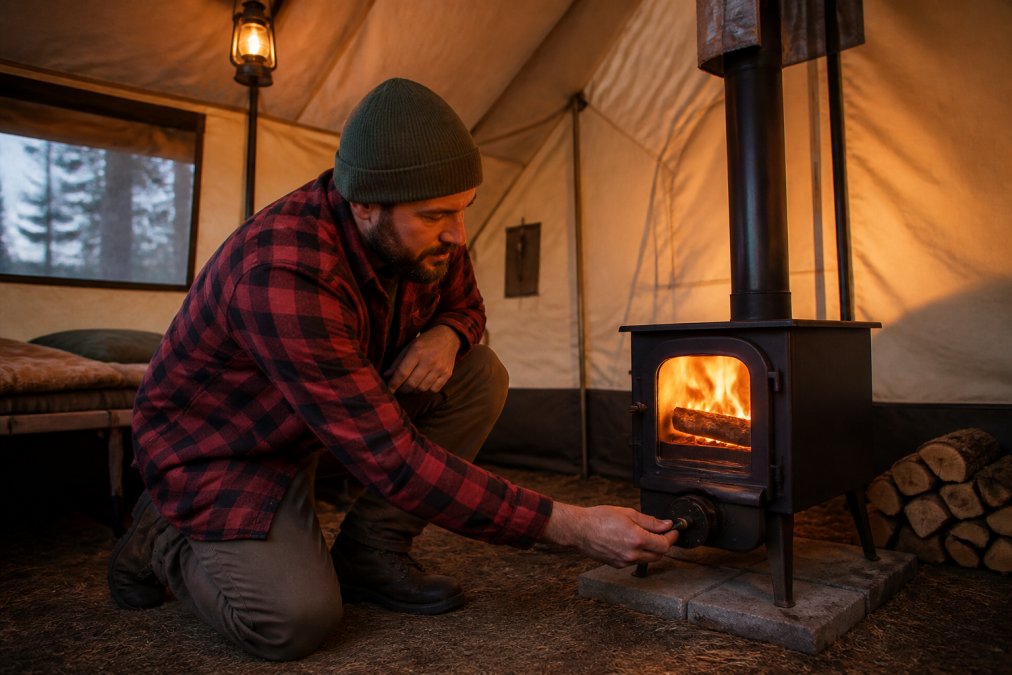
Carbon Monoxide, Ventilation, and the Stove Jack
A stove jack is a heat-resistant opening designed to allow a stove pipe to pass through a compatible tent or shelter. Never cut or improvise an opening in a tent that wasn't designed for stove use. Follow the shelter and stove manufacturers' instructions for the stove jack, chimney, clearances, and any required heat protection.
Use only a stove and shelter designed to work together for this type of use.
Maintain the clearances specified by the stove and shelter manufacturers from tent walls, bedding, clothing, gear, and other combustible materials.
Provide ventilation according to the manufacturers' instructions and never operate a wood-burning stove in a sealed shelter.
Use required chimney components and spark-control equipment according to the manufacturer's instructions.
Use a carbon monoxide alarm appropriate for the environment and follow its manufacturer's instructions for placement, testing, and replacement.
Never leave a burning stove unattended.
Check current campground, land-manager, and local fire restrictions before using any wood-burning stove.
Maintenance, Long-Term Costs, and Fire Ban Rules
Long-term ownership isn't free, and the two things that catch new owners off guard are maintenance rhythm and fire restrictions. Both are predictable once you know what to look for.
A Simple Maintenance Rhythm
Creosote can build up inside a stove pipe when wood is burned, creating a potential fire hazard. The amount of buildup varies with the fuel, stove, airflow, burn conditions, and frequency of use.
A workable routine looks like this:
- Inspect and clean the stove and chimney according to the manufacturer's recommended maintenance schedule. Before each trip, inspect the stove, chimney, connections, door components, and spark-control equipment for damage, excessive buildup, blockage, or other problems. Store the stove and chimney components clean and dry between trips, following the manufacturer's care instructions.
- Check the spark arrestor screen for clogging, since a blocked screen kills draft and pushes smoke back into the tent.
- Store the stove and pipe dry between trips. Rust on a steel stove is the most common reason one gets retired early.
Fire Bans: When a Wood Stove Is Off the Table
Fire restrictions can determine whether you can use a portable wood stove at all. Rules vary by campground, land manager, location, season, and current fire conditions, and they can change quickly. A portable wood stove may be restricted even when some other types of cooking equipment are permitted. Before your trip, check the current regulations for the specific place you're camping rather than assuming a contained wood stove is allowed.
The Decision Framework
Questions to Ask Before Choosing a Portable Wood Stove:
-
Before adding a portable wood stove to your camping setup, consider where and when you normally camp.
Will the stove be permitted where you're camping? Check current fire restrictions and campground or land-manager rules.
Is your shelter designed for stove use? Use only compatible equipment and follow the stove and shelter manufacturers' instructions.
How are you getting to camp? A stove system may be practical for vehicle or sled-supported trips while the additional weight and bulk may matter more when backpacking.
Will suitable fuel be available and legal to use? Don't assume you can collect firewood where you're camping.
Do you actually need supplemental heat? Consider the temperatures, length of your trip, shelter, sleeping system, and how much time you'll spend at camp.
Frequently Asked Questions
Is it safe to sleep in a tent with a wood stove?
A wood stove in a tent or shelter presents fire and carbon monoxide risks. Use a stove only with a shelter designed for stove use and follow the stove and shelter manufacturers' instructions for ventilation, clearances, chimney installation, and operation. Use an appropriate carbon monoxide alarm, and never leave a burning stove unattended. Do not rely on a wood stove as a substitute for sleeping gear appropriate for the expected temperatures.
What are the main drawbacks of a portable wood stove compared to gas stoves?
Portable wood stoves generally require more setup, tending, cleaning, and fuel management than many gas camping stoves. They also require appropriate chimney components and, when used with a shelter, a compatible stove-ready setup. Gas and liquid-fuel equipment have their own safety requirements and restrictions, so the better fit depends on how and where you camp. Always check current fire regulations before using either type.
How much fuel does a portable wood stove actually burn in a night?
There isn't one reliable amount for every stove or trip. Wood consumption depends on the stove and firebox size, fuel type and moisture content, airflow, outside temperature, desired heat output, and how long the stove is operated. Follow the stove manufacturer's fuel recommendations and plan your fuel supply according to the conditions and rules where you're camping.
What maintenance does a portable wood stove need?
Maintenance requirements vary by stove, so follow the manufacturer's instructions for cleaning and inspection. Regularly check the firebox, chimney or stove pipe, damper, door components, spark arrestor, and connections for damage, blockage, or buildup. Allow the stove to cool completely before cleaning, and store the stove and chimney components clean and dry between trips.
Can I use a portable wood stove during a fire ban?
It depends on the specific fire restrictions in effect where you're camping. Rules can vary by location, land manager, season, and current fire conditions, and a portable wood stove may be prohibited even when some other cooking equipment is allowed. Check current restrictions with the campground, land manager, or appropriate local authority before your trip, and never assume a contained wood stove is exempt.
A portable wood stove can be a useful addition to some cold-weather camping setups, but it isn't the right choice for every trip. Consider your shelter, expected conditions, transportation, fuel availability, current fire restrictions, and the manufacturer's safety requirements before deciding what works for you. The best setup is the one that fits the way you actually camp.