

Table of Contents
- What a Deer Camp Tradition Really Means
- Step 1: Pick Your People and Your Place
- Step 2: Build a Deer Camp Checklist Before Opening Day
- Step 3: Plan Deer Camp Activities for Kids and Beginners
- Step 4: Set a Simple Hunt Schedule and Share the Work
- Step 5: Make the Evening Gathering the Heart of Camp
- Step 6: Handle Safety, Rules, and Legal Requirements
- Step 7: Keep the Deer Camp Tradition Alive Year After Year
- Frequently Asked Questions
Last Updated: October 12, 2026
What a Deer Camp Tradition Really Means
A deer camp tradition is a set of shared routines, meals, and rituals a group repeats every season until they become part of its identity. The strongest camps rarely start with a plan, they start with a decision to show up together.

You don't need a cabin, a big group, or decades of history to start a deer camp tradition, just people, a place, and a reason to come back.
The Difference Between a Camp and a Tradition
A camp is where you sleep during deer season. A tradition is what your group does there that nobody wants to skip.
The difference shows up in small things: a camp has a coffee pot, but a tradition has someone who always makes the first pot.
Sometimes it's the card games around the kitchen table, the stories shared around the campfire, or the same family meal everyone looks forward to each season.
Traditions are built from repetition, not money, a borrowed trailer on family land can hold as much meaning as a lodge.
Step 1: Pick Your People and Your Place
Start with two questions: who's coming, and where will you gather?
Keep the first year small, three to six people can share one kitchen, one fire, and one hunt schedule without stepping on each other. You can always grow later.
For a place, you have more options than you think:
- Family land or a friend's property with permission
- A rented cabin near public hunting land
- A state or federal campground used as a base camp
Traditions That Work Without a Cabin or a Big Group
No cabin? No problem. Two brothers and their kids in a wall tent. A father and daughter in a camper on public land. A grandfather and two grandkids in the garage. The people and the traditions matter more than the building.
Pick one anchor ritual and repeat it every year. That single repeated thing is what turns a trip into a deer camp tradition.

Step 2: Build a Deer Camp Checklist Before Opening Day
A written checklist keeps a small camp from falling apart on day one. Build it once, save it, and update it after every season.
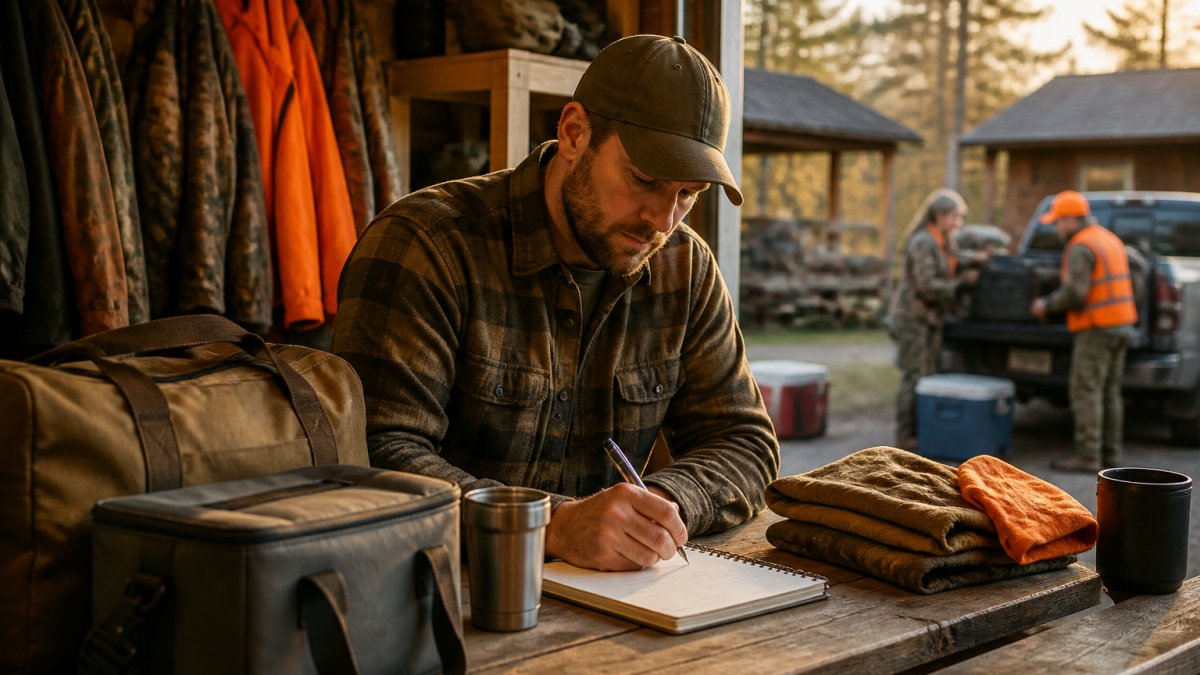
Split the list into four buckets: gear, food, comfort, and safety. Assign each bucket to a person, shared responsibility keeps a camp running for years.
What to Bring to Deer Camp: Gear, Food, and Comforts
Here's a starter checklist you can copy and adjust:
- Hunter-orange clothing that meets the current requirements for your state, season, and hunting method.
- Boots broken in before the trip, plus a dry backup pair
- Warm base layers and a spare set of socks per day
For meals, plan easy food that scales: biscuits and gravy for opening morning, soup or chili for supper, smoked bologna and crackers for the midday sit.
Step 3: Plan Deer Camp Activities for Kids and Beginners
Kids stay interested when they have a job, give them one every day that matches what they can actually do. The same goes for adult beginners and non-hunting family members. A camp that only has room for tag-holders shrinks every year.
Age-Appropriate Ways to Introduce Kids to Hunting
There is no single best age to start teaching kids to hunt. Readiness depends on maturity, attention span, interest, and how well a child follows directions, not a birthday.
A rough guide, framed as learning activities, not legal eligibility:
Age Range |
Suggested Activity |
Focus |
|---|---|---|
3-5 |
Nature walks, animal sounds, helping at camp |
Comfort outside, curiosity |
6-8 |
Identifying tracks and scat, scouting food and cover, campfire cooking help |
Observation, patience |
9-11 |
Hunter safety education, learning firearm safety rules with a qualified adult, and identifying deer habitat |
Safety, rules, responsibility |
12+ |
Mentored hunts where state rules allow |
Judgment, ethics, follow-through |
Those ranges are suggestions for learning activities, not legal hunting ages.
Introducing a child to outdoor traditions is different from putting them in a legal hunt. Nature walks, wildlife watching, and helping at camp are introductions.
Deer Camp Activities for Kids That Don't Involve a Weapon
Some of the best deer camp memories happen away from the hunt. Kids can enjoy exploring nature, learning outdoor skills, and spending time with family without ever carrying a firearm or bow.
- Tracking practice on a nature walk, find a fresh track and follow it as far as it goes; however, children should stay with a responsible adult and remain in permitted areas.
- Identifying animal tracks and scat, and learning what each one tells you
- Learning deer habitat by scouting food, water, and cover on the edge of the property
- Helping prepare a family meal or traditional deer camp breakfast
- Playing cards, sharing stories, or learning a favorite family game around the table
Give a kid one real job per day and they'll remember the trip. Give them nothing to do and they'll remember being bored.
Welcoming Beginners and Non-Hunters
Not everyone at camp has to hunt. Some of the strongest camps include a spouse, a grandparent, a friend, or a kid who comes for the food and the fire. Make room on purpose:
- Pair a first-timer with someone who has been to camp before
- Give non-hunters a real role, cooking, firewood, photography, journaling
- Keep the schedule loose enough that someone can sleep in without feeling like a problem
- Valid hunting licenses and required permits for those participating in the hunt
- First-aid kit, flashlight or headlamp, and spare batteries
- Drinking water, snacks, and easy meals for the group
- Sleeping bags, blankets, and extra warm clothing
- A plan for emergencies and a way to contact help
- Playing cards or board games for evenings at camp
A camp that welcomes beginners stays alive; one that only welcomes veterans fades out when the veterans stop coming.
Step 4: Set a Simple Hunt Schedule and Share the Work
Write the schedule on a whiteboard or a piece of cardboard. Everyone sees it. Nobody argues about it at 5 a.m.
A simple three-day hunt might look like this:
- Day 1: Opening morning sit, big breakfast, midday nap, evening sit, supper together
- Day 2: Later start, scouting or stand moves, evening hunt, campfire
- Day 3: Short morning hunt, pack up, group photo, plan next year
Rotate the chores. One person cooks, another cleans, another handles firewood. A camp where one person does everything burns that person out by year three.
Step 5: Make the Evening Gathering the Heart of Camp
The evening gathering is where the day gets retold, and it's the part people remember longest. Some of the best deer camp memories happen after everyone comes in from the woods. Maybe it's a game of cards around the kitchen table, Grandma's favorite meal, or sitting around the campfire telling stories about hunts from years ago. Those simple moments become the traditions everyone looks forward to, season after season.

Keep a camp journal. Write down who came, what the weather did, and one story from the day. Read last year's entry on the first night.
Step 6: Handle Safety, Rules, and Legal Requirements
Safety and legal rules come before any hunt, no exceptions. It helps to separate two things that get tangled together: introducing a child to outdoor traditions, and letting a child participate in a legal hunt. Those are not the same milestone.
Firearm and Archery Safety at an Age-Appropriate Level
Safety instruction should match the child, not the calendar. A few patterns that hold up across most families:
- Younger kids (roughly 3-7): No handling. The lesson is boundaries. Teach them to stop, not touch, and go find an adult if they see a firearm or bow. Practice it the way you'd practice a fire drill.
- Older kids (roughly 8-11): Rules first, handling second, and only with a qualified adult standing right there. The classic four rules are the starting point: treat every firearm as loaded, keep the muzzle pointed in a safe direction, keep your finger off the trigger until you're ready to shoot, and know your target and what's behind it.
- Archery: The same logic applies. A bow is not a toy, arrows go one direction, and nobody draws behind the firing line. Many archery ranges and 4-H shooting sports programs offer youth-intro sessions with trained instructors, which is often a better first step than a backyard setup.
Never pressure a child to handle a firearm or bow before they're ready. Interest is a good starting point, but readiness also depends on maturity, the ability to follow safety instructions, proper supervision, and applicable laws.
Secure Storage and Safe Handling at Camp
Safe storage is part of the tradition, not separate from it. Basics for every camp plan:
- Firearms stored unloaded, locked, and separate from ammunition
- Ammunition locked in a different location than the firearms
- Store bows securely according to the manufacturer's instructions, with arrows in a protective case and all equipment kept out of children's reach.
Blaze orange requirements vary by state and by season, so check your state's rules before opening day. Many states require a minimum amount of visible orange for hunters and sometimes for accompanying adults.
Hunter Education and Legal Requirements
Hunting seasons, licensing, hunter education, mentoring programs, and supervision rules are set by each state, and they change.
Verify current rules with your state wildlife or natural resources agency before opening day. The U.S. Fish and Wildlife Service state agency directory is a good starting point to find yours.
Hunter education requirements and course options vary by state. Some states offer online coursework, in-person instruction, or field training. Check your state wildlife agency for approved courses and current requirements.
A child can accompany an adult hunter in many states without hunting themselves, but the rules on whether they can carry a firearm, wear orange, or sit in a stand vary. Check your state's rules before you assume either way.
Recognizing When a Child Is Ready
Readiness shows up in behavior long before it shows up on a license. Watch for these signals:
- Listening skills: They follow directions the first time, not the third.
- Patience: They can sit still for a reasonable stretch without needing to be entertained.
- Genuine interest: They ask questions about deer, tracks, or camp on their own, not just because a parent is excited.
If a child is missing most of these, more time outside, not more pressure, is usually the answer. There's no penalty for waiting a year.
A Parent Readiness Checklist
Before the first real hunt, run through this:
- Child can repeat the four firearm safety rules back to you
- Child has completed hunter education if your state requires it
- You know your state's minimum age, mentoring, and supervision rules
Before a child participates in a hunt, make sure all applicable legal requirements are met and that the child understands and consistently follows the necessary safety rules. If they're not ready yet, there's nothing wrong with waiting. They can still enjoy deer camp, learn outdoor skills, and build family traditions along the way.
Step 7: Keep the Deer Camp Tradition Alive Year After Year
Traditions survive on two things: a date on the calendar and someone willing to send the text.
Set next year's dates before everyone leaves camp. Put it on the calendar that same weekend. Assign one person to send the first planning message in late summer.
Then protect the tradition as your group changes:
- Invite a beginner every few years to keep the camp fresh
- Let go of rituals that stop working, keep the ones that still matter
- Hand off jobs to younger members as they grow into them
Some years nobody fills a tag. Those years still count. The tradition isn't the harvest. It's the people who show up.
Starting a deer camp tradition doesn't require a fancy cabin or expensive gear. It starts with people who enjoy being together and want to keep coming back.
At Rack & Ridge, we believe those traditions are worth passing down. From early mornings in the woods to card games around the kitchen table, it's the little moments that become lifelong memories.
Whether you're starting your first deer camp or carrying on a family tradition, we're proud to be part of the outdoor lifestyle you love.
Built for the Backwoods.
Frequently Asked Questions
Do you have to wear orange on private property?
It depends on your state. Many states require blaze orange for firearm deer seasons even on private land, while others allow exceptions for landowners or archery hunters. Requirements differ by season, method, and whether you are the landowner. Before opening day, check your state wildlife agency's current rulebook or call the local office. Before heading out, make sure every hunter and accompanying person who is required to wear hunter orange has clothing that meets the current regulations for your state and hunting season.
What should I bring to deer camp for kids?
Pack layers they can shed, warm boots, gloves, hats, snacks, water, and a headlamp or flashlight. Bring quiet activities for stand time or rainy afternoons, like a small notebook, cards, or a field guide for tracks and trees. A comfortable camp chair and a change of dry clothes make a big difference. Keep the first trips short, and let kids help with simple jobs like organizing supplies, preparing snacks, or keeping a camp journal so they feel part of the deer camp tradition.
Can a child accompany an adult hunter?
In many places, children can accompany an adult hunter, but the rules vary by state, season, and hunting method. Requirements may be different for a child who is simply observing versus one who is actively participating in the hunt. Before heading out, check your state wildlife agency's current rules for youth participation, licensing, hunter education, and supervision. Keep the outing comfortable and age-appropriate so children can enjoy the experience without feeling pressured to hunt.
What if my child loses interest in hunting?
That is normal, and it is not a failure. Kids change, and forcing it can turn them off for good. Keep inviting them to the parts they enjoy, like camp meals, campfire stories, or hiking, and let them set the pace. Many kids come back to hunting later when they are ready. The deer camp tradition is about time together, so protect that first and let the hunting follow when it does.