

Table of Contents
- Why Maintaining Leather Hiking Boots Matters
- What You'll Need Before You Start
- How to Clean Leather Hiking Boots
- How to Dry Wet Hiking Boots Properly
- How to Condition Leather Hiking Boots
- How to Waterproof Leather Hiking Boots
- Storage and Ongoing Care
- Troubleshooting Common Boot Problems
- Keep Your Hiking Boots Ready for the Next Adventure
- Frequently Asked Questions
Last Updated: October 10, 2026
Why Maintaining Leather Hiking Boots Matters
Leather hiking boots take a beating on the trail. Mud, rain, dust, and rough terrain can wear on the materials, especially when boots aren't cleaned and dried properly.
Learning how to maintain leather hiking boots step by step can help you keep them comfortable, protect their condition, and spot problems before your next outdoor adventure.
The basics are simple: remove dirt, clean the uppers, allow the boots to dry properly, and use care products suited to the type of leather and the manufacturer's recommendations.
Whether you're heading out for a weekend hike, preparing for deer camp, or exploring the woods with family, taking care of your boots is one small way to stay ready for the next trip.
What You'll Need Before You Start
Gather these supplies before cleaning your leather hiking boots:
- Soft-bristled brush: A dedicated boot brush or soft toothbrush for removing dirt.
- Clean, soft cloth: Microfiber or another nonabrasive cloth works well.
- Lukewarm water: For gentle cleaning.
- Boot cleaner: Choose a product recommended for your boot's leather type.
- Leather conditioner: Use only if recommended for your boots.
- Water-repellent treatment: Choose a product compatible with your boot's materials and construction.
- Dry towel: For removing excess moisture.
- Well-ventilated drying area: Away from direct heat and strong sunlight.
You don't necessarily need expensive specialty products. The important thing is choosing supplies that are appropriate for your boots.
A Note on Product Compatibility
Not all leather hiking boots require the same care. Full-grain leather, nubuck, and suede may need different cleaning products and treatments. Waterproof boots may also have specific care instructions.
Before applying a cleaner, conditioner, or waterproofing treatment, check the boot manufacturer's recommendations and test the product on a small, inconspicuous area when appropriate.
What to Avoid
Avoid harsh detergents, abrasive brushes, and direct heat from fireplaces, heaters, or hair dryers. Don't apply leather treatments to rubber soles unless the product specifically permits it. Use sprays only according to their label instructions, preferably outdoors or in a well-ventilated area.
How to Clean Leather Hiking Boots
Removing Dirt, Mud, and Debris
Start by removing loose dirt and mud with a soft-bristled brush. If mud is heavily caked on, allow it to dry enough to brush away without grinding it into the material.
Use gentle strokes and pay attention to the seams, edges, and areas around the soles where dirt collects.
Brush the heel, toe, and sides of each boot, using a brush suitable for the material. Suede and nubuck may require a specialized brush to avoid damaging their texture.
Removing loose debris before cleaning helps prevent dirt from spreading across the leather when moisture is added.
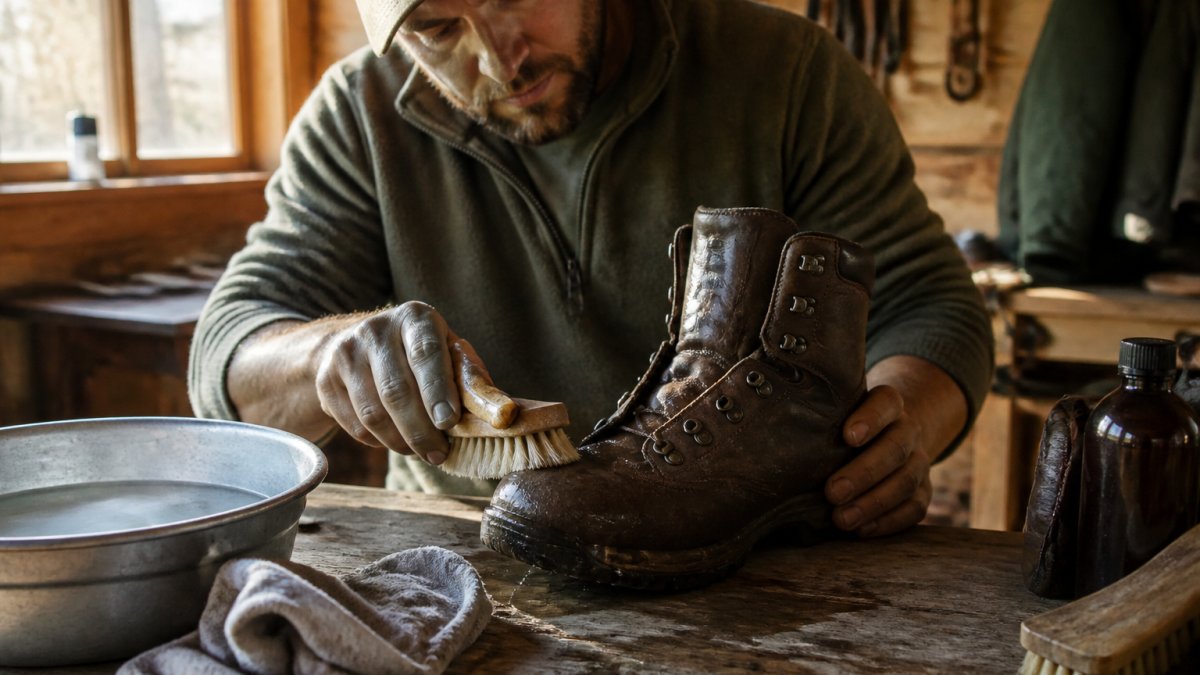
Brush the heel, toe, and sides of each boot, using a brush suitable for the material. Suede and nubuck may require a specialized brush to avoid damaging their texture.
Removing loose debris before cleaning helps prevent dirt from spreading across the leather when moisture is added.
Cleaning the Leather Uppers and Sole
Use a boot cleaner recommended for your type of leather, following the product's instructions. Some cleaners are applied with a damp cloth or brush, while others require a different method.
Work gently across the leather uppers, paying attention to seams, creases, and areas around the laces. Avoid aggressive scrubbing, which can damage certain leather finishes.
Clean the rubber outsoles separately with a brush and water to remove mud, small stones, and other debris caught in the tread.
For stubborn stains or salt deposits, consult the boot manufacturer's cleaning recommendations rather than using harsh household chemicals.
Remove any remaining cleaner as directed by the product label, then allow the boots to dry properly before continuing with the next care step.
How to Dry Wet Hiking Boots Properly
Proper drying is an important part of caring for leather hiking boots. Excessive heat can damage leather, adhesives, and other boot materials.
Start by removing the insoles if they're removable, loosening the laces, and opening the boots to improve airflow.
If the boots are very wet, gently blot away excess moisture with a dry towel. You can loosely place clean, absorbent paper inside to help collect moisture, replacing it as needed. Avoid tightly stuffing the boots or leaving damp paper inside for long periods.
Place the boots in a well-ventilated area at room temperature, away from direct sunlight, heaters, fireplaces, and other strong heat sources.
Drying time varies depending on the materials, humidity, airflow, and how wet the boots are. Allow them to dry thoroughly before storing or wearing them again.
Check the insoles separately and make sure they're completely dry before putting them back into the boots.
How to Condition Leather Hiking Boots
Leather is skin. Just like your own skin, it needs moisture to stay supple and healthy. Conditioning prevents cracking and keeps the leather flexible.
Choose a leather conditioner designed for hiking boots or work boots. Apply a small amount to a clean cloth and work it into the leather uppers using circular motions. Use thin layers rather than one thick coat.
Pay special attention to areas that flex and bend:
- The toe box
- The heel
- The ball of the foot
- Around the ankle collar
Let the conditioner soak in for 15 to 20 minutes. Wipe away any excess with a clean cloth. The leather should look slightly darker and feel supple, not greasy.
Conditioning every 3 to 6 months keeps your boots in good shape. More frequent conditioning is fine if you hike often or in dry climates where leather dries out faster.
How to Waterproof Leather Hiking Boots
Leather hiking boots are exposed to dirt, moisture, and repeated bending during outdoor activities. Depending on the type of leather and how the boots are made, occasional conditioning may help maintain the leather's flexibility and appearance.
Not every leather hiking boot needs conditioner, however. Before applying any treatment, check the manufacturer's care instructions.
Choosing and Applying a Conditioner
For boots that require conditioning, choose a product specifically recommended for their leather type.
- Clean the boots and follow the manufacturer's instructions about whether the leather should be dry or slightly damp before treatment.
- Apply a small amount of compatible conditioner using the method recommended on the product label.
- Work gently across the appropriate leather surfaces, paying attention to areas that flex during walking.
- Allow the treatment to absorb for the recommended time.
- Remove any excess product if directed.
Avoid applying excessive conditioner. Overconditioning can change the leather's appearance or affect its performance.
Suede and nubuck may require different care products than smooth leather. Some conditioners can darken leather or change its texture, so test a small, inconspicuous area when appropriate.
How Often Should You Condition Hiking Boots?
There is no single conditioning schedule that works for every pair of boots.
The frequency depends on the leather, the manufacturer's recommendations, how often the boots are worn, and the conditions they're exposed to.
Inspect your boots regularly and condition them only when appropriate for the material.
Key Takeaway: Proper leather care starts with knowing your boots. Cleaning, drying, and using compatible treatments when needed can help maintain their condition without unnecessary product buildup.
Storage and Ongoing Care
Proper storage helps keep hiking boots ready for the next outdoor adventure.
Before putting your boots away, make sure they're clean and completely dry. Store them in a cool, dry, well-ventilated location away from direct sunlight, heaters, and damp areas where mold may develop.
If needed, use suitable boot supports or loosely placed clean paper to help maintain their shape during storage. Avoid leaving damp material inside the boots.
Inspect Your Boots Regularly
Before a new hiking season or after a demanding trip, take a few minutes to inspect your boots.
- Check the leather uppers for cracking, unusual wear, or other damage.
- Look for loose stitching or separation around the seams.
- Examine the connection between the upper and the sole.
- Check the outsole tread for excessive wear.
- Inspect laces, eyelets, and insoles for damage.
Cleaning off mud and debris after outdoor activities also makes it easier to spot problems before they become more serious.
Watch Out
If you notice the sole separating from the upper, significant cracking, or other structural damage, stop using the boots for demanding hikes until they've been assessed.
A qualified footwear repair professional or the boot manufacturer can help determine whether repair is appropriate. Not every type of hiking boot can be repaired safely or economically.
Troubleshooting Common Boot Problems
Leather is cracked or splitting.
Cracking can develop from wear, repeated flexing, environmental exposure, or improper care. Conditioner may help maintain certain types of leather, but it cannot repair existing cracks or restore damaged material.
Check the manufacturer's care recommendations before applying treatment. If cracks are deep, spreading, or affecting the boot's structure, consult the manufacturer or a qualified footwear repair professional.
Boots smell like mildew or mold.
Unpleasant odors can develop when moisture remains trapped inside boots or they're stored in damp conditions.
Remove the insoles if possible and allow the boots to dry thoroughly in a well-ventilated area. Clean them using products suitable for their materials.
If you notice visible mold, persistent musty odors, or significant interior damage, contact the manufacturer for cleaning guidance or consider replacing the boots.
Water soaks into the leather instead of beading up.
If water no longer beads on the outer surface, the water-repellent treatment may need refreshing.
Clean the boots and apply a compatible treatment according to the manufacturer's instructions. Remember that exterior water-repellent treatments do not repair damaged waterproof membranes, seams, or other structural problems.
The sole is separating from the leather.
A separating sole can affect traction, stability, and weather protection.
Stop using the boots for demanding outdoor activities until the damage has been assessed. Contact the manufacturer or a qualified footwear repair professional to determine whether the boots can be repaired.
Not all hiking boot soles are designed to be reattached or replaced.
Leather is stiff and uncomfortable.
Stiffness can result from the type of leather, changes in its condition, or the construction and fit of the boot.
Check the manufacturer's care recommendations before applying conditioner. If conditioning is appropriate, use a compatible product sparingly and follow the instructions.
If the boots cause persistent discomfort, rubbing, or pressure, the issue may be related to fit rather than leather care. Conditioning won't correct an improperly fitting boot.
Keep Your Hiking Boots Ready for the Next Adventure
Taking care of leather hiking boots doesn't have to be complicated. A little attention after a muddy hike, a rainy weekend, or a long day in the woods can help keep your boots in good condition.
Start with the basics: remove dirt, clean the leather with suitable products, allow the boots to dry properly, and inspect them for signs of wear. When conditioning or water-repellent treatment is needed, choose products recommended for your specific boots.
Whether you're heading down a hiking trail, preparing for deer camp, or spending a weekend exploring the outdoors with family, dependable footwear is an important part of being prepared.
At Rack & Ridge, we believe getting outdoors is about more than the gear you bring. It's about the places you explore, the traditions you share, and the memories you make along the way.
Explore more practical outdoor tips and inspiration in The Ridge Journal.
Built for the Backwoods.
Frequently Asked Questions
How often should you condition leather hiking boots?
There is no universal conditioning schedule for leather hiking boots. How often they need treatment depends on the type of leather, how frequently they're worn, and the conditions they're exposed to. Some boots require occasional conditioning, while others need different care products. Check the manufacturer's instructions and inspect your boots regularly. Avoid overconditioning, which can affect the leather's appearance and performance.
Can I use Dawn dish soap to clean my leather hiking boots?
It's generally better to use a cleaner specifically recommended for your hiking boots rather than Dawn or another household dish soap. Some detergents may affect leather finishes or remove protective treatments. For routine cleaning, start by brushing away loose dirt and follow the boot manufacturer's cleaning instructions. If you've already used dish soap, remove any remaining residue as directed by the manufacturer. Don't automatically apply conditioner afterward, since not every leather type requires it.
How long does it take for leather boots to dry out?
Drying time varies depending on how wet the boots are, their materials, room temperature, humidity, and airflow. Remove the insoles if possible, loosen the laces, and place the boots in a well-ventilated area at room temperature. Avoid fireplaces, heaters, hair dryers, and direct sunlight, which may damage leather or other boot materials. Allow the boots and insoles to dry completely before wearing or storing them.
How do you waterproof leather hiking boots?
Start by cleaning your boots and checking the manufacturer's care instructions. Choose a water-repellent treatment compatible with the leather type and boot construction, then follow the product's application and drying directions. Smooth leather, suede, and nubuck may require different treatments. Keep in mind that exterior treatments help restore water repellency but cannot repair damaged waterproof membranes, seams, or other structural problems. Reapply treatment when needed according to the manufacturer's guidance.