

Table of Contents
- Why Country Home Decor Needs a Different Care Routine
- Cleaning Reclaimed Wood Furniture Without Damaging the Patina
- Best Practices for Farmhouse Textile Care
- Protecting Natural Materials and Ceramic Accents
- Seasonal Country Home Maintenance Checklist
- Common Mistakes That Ruin Rustic Finishes
- Keep Your Country Home Decor Welcoming Year-Round
- Frequently Asked Questions
Last Updated: September 6, 2026
Why Country Home Decor Needs a Different Care Routine
Country home decor is a design approach built on natural materials, reclaimed wood, and handcrafted textiles that gain character through age and use. Unlike sleek modern furnishings designed to look pristine forever, rustic pieces are meant to develop a patina, which means the standard cleaning rules you use elsewhere can actually cause permanent damage. This guide is built to help you avoid those costly mistakes.
The goal of maintaining this aesthetic is not to make everything look brand new, but to preserve the warmth and texture that make a country home feel lived-in. Most guides focus on styling ideas, but they skip the practical reality: what happens when the dog tracks mud across the linen sofa or a hot mug leaves a ring on the reclaimed wood side table? Below, we'll walk through the specific routines that protect your investment, along with the common pitfalls that ruin rustic finishes.
Cleaning Reclaimed Wood Furniture Without Damaging the Patina
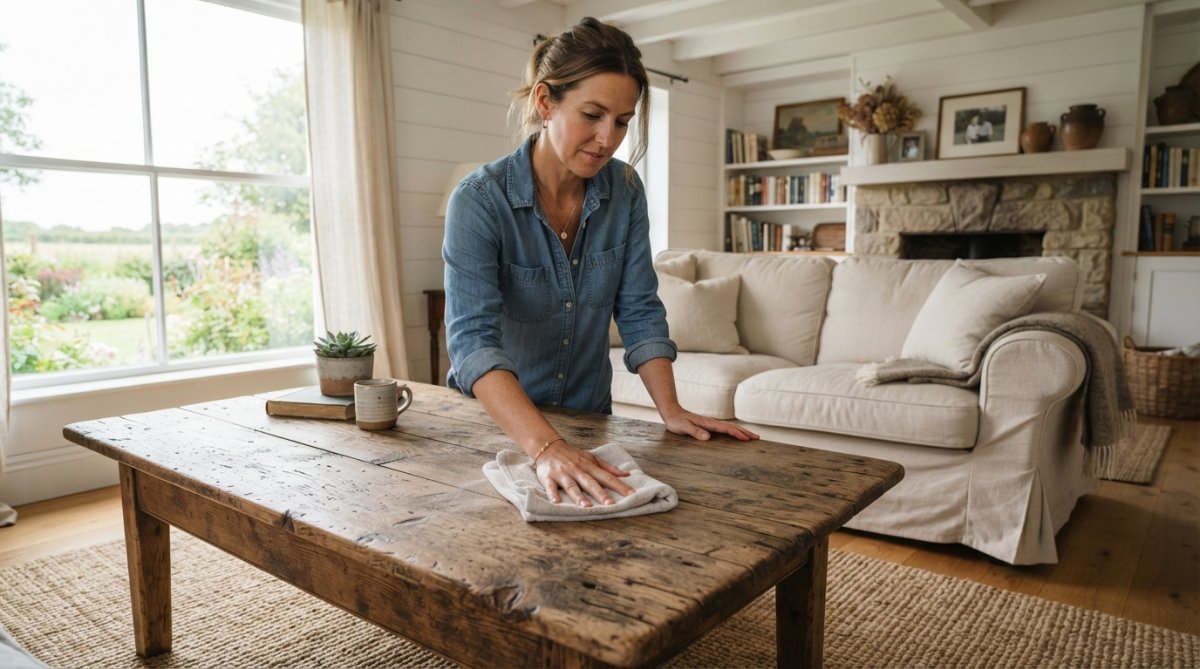
Reclaimed wood furniture is the backbone of most country home decor, prized for its weathered grain and architectural character. The single most important rule is to clean gently and frequently, because built-up grime requires harsh chemicals that strip the very finish you are trying to preserve. A consistent routine of dusting and light wiping will keep your pieces looking rich without the need for aggressive restoration.
Daily Dusting and Weekly Wiping
Dusting should be a daily habit, but the tool matters more than the frequency. Use a soft, dry microfiber cloth to lift dust and debris, as feather dusters tend to just push particles around and can scratch softer wood surfaces. For weekly wiping, dampen a cloth with water and a few drops of mild dish soap, wring it out thoroughly, and wipe in the direction of the wood grain.
Treating Stains and Water Rings
Water rings are the most common enemy of rustic wood tables, but they are not always permanent. For fresh rings, gently rub the area with a small amount of mayonnaise or a paste of baking soda and water, moving with the grain until the mark fades. For deeper stains, a mixture of equal parts white vinegar and olive oil can help condition the wood while lifting the discoloration.
Best Practices for Farmhouse Textile Care
Farmhouse textile care is a category that includes linen curtains, upholstered sofas, wool throws, and cotton quilts, each with its own cleaning needs. The common thread is that these natural fibers are durable but sensitive to high heat and harsh detergents, which cause shrinkage and fading. Always check the manufacturer's tag before washing, and when in doubt, choose the gentlest cycle available.
Washing and Drying Linens and Upholstery
For washable linens and cotton slipcovers, use cold water and a mild, eco-friendly detergent to protect the color and weave. Skip the fabric softener, as it coats natural fibers and reduces their breathability, and instead add a half-cup of white vinegar to the rinse cycle to soften and deodorize. Air drying is the safest method, but if you must use a dryer, select the lowest heat setting and remove items while they are still slightly damp to minimize wrinkles.
Freshening Rugs and Soft Furnishings
Area rugs and wool blankets do not need frequent washing, as over-washing damages the fibers. Instead, take them outside and shake them vigorously every few weeks to remove dust and dirt, and vacuum them regularly with a suction-only attachment. For spot cleaning, blot spills immediately with a clean, dry cloth and use a small amount of mild soap and water, working from the outside edge of the stain inward to prevent spreading.
Protecting Natural Materials and Ceramic Accents
Natural materials like rattan, jute, and ceramic accents add textural layers to a country home, but they each demand different protection strategies. Ceramic pieces are the easiest to care for, requiring only a damp cloth and mild soap, but they are prone to chipping, so handle them with care and store them with padding between stacked items. Woven baskets and jute rugs are more delicate; they should be vacuumed gently and kept away from excessive moisture, which causes mildew and warping.

Lighting plays a significant role in how these materials age. Direct, harsh sunlight will fade natural dyes and dry out wood and wicker over time. Use sheer curtains to diffuse strong afternoon light, and rotate ceramic and decorative pieces periodically so they age evenly. This simple habit preserves the curated look of your living space without any extra cleaning effort.
Seasonal Country Home Maintenance Checklist
The top-ranking articles treat 'seasonal' as an excuse to swap throw pillows. But for a country home, the seasons dictate how your materials expand, contract, and degrade. A proactive maintenance schedule is the difference between a patina that tells a story and a finish that simply looks worn out. Here is a month-by-month, task-specific routine that addresses the physical changes your home undergoes.
Spring (March-May): The Deep Reset and Pest Check
The primary goal of spring maintenance is to remove the residue of winter, both the soot from fireplaces and the dust from closed windows, before the humidity of summer arrives.
- Fireplace Ash and Soot: If you used your fireplace, the fine ash has settled into every fiber of your living room. Vacuum all upholstery and curtains with a HEPA-filter vacuum to trap the particles. Wipe down mantels and surrounding wood with a dry microfiber cloth. Do not use a damp cloth on soot; it turns the ash into a smear that is difficult to remove.
- Wood Panel and Beam Inspection: As the air warms, wood begins to expand. Check for any cracking that occurred during the dry winter months. Use a high-quality furniture oil, like Howard Feed-N-Wax, which contains beeswax and orange oil, to condition the wood. Apply it with a soft cloth, let it sit for 20 minutes, and buff. This restores moisture and prevents spring's fluctuating humidity from causing further splits.
- The Pest Prevention Walk: Spring is when insects emerge. Inspect the undersides of your furniture and the corners of your rugs for signs of carpet beetles or woodworms. A simple vacuuming of the underside of furniture and the edges of area rugs removes larvae before they become an infestation. This is a practical step that no styling guide mentions.
Summer (June-August): Humidity and Sun Management
Summer is the season of open windows and high humidity, which presents a different set of risks.
- The Humidity Ceiling: When indoor humidity consistently exceeds 60%, wood absorbs moisture and swells, which can cause drawers to stick and veneers to bubble (energystar.gov). Use a dehumidifier in the basement and main living areas to keep the level between 40% and 50% (the EPA). A simple hygrometer, available for under $15 at a hardware store, will help you monitor this.
- The Sun Shield Protocol: The summer sun is the most intense. If you have not installed UV-filtering window film, now is the time. Also, rotate your area rugs 180 degrees. This ensures that the side closest to the window, which fades faster, gets a break and ages evenly.
- Linen and Cotton Airing: Take advantage of the dry heat. Wash your linen curtains and cotton quilts, and line-dry them outside. The sun acts as a natural bleach and deodorizer. However, do not leave them out for more than a few hours, as prolonged direct sunlight will fade the dyes.
Fall (September-November): The Pre-Winter Fortification
Fall is about preparing for the dual assault of cold drafts and dry, forced-air heat.
- The Draft and Moisture Audit: Before you seal your windows, inspect the weatherstripping. A draft not only makes the room colder but also creates a microclimate of condensation on nearby wood surfaces, which can lead to mold. Replace any worn weatherstripping. This is a cheap fix that protects your decor from moisture damage all winter.
- Leather and Wood Conditioning: The dry heat of winter will pull moisture out of leather chair seats and wood table legs. Apply a leather conditioner, like Lexol, to your chairs in late October. For wood, apply a second coat of Feed-N-Wax. This creates a barrier that slows moisture loss.
- The Entryway Transition: Place a large, washable cotton rug (not a wool one, which is harder to clean) at every exterior door. This catches the salt and mud that would otherwise be tracked onto your wood floors and jute rugs. Salt is particularly damaging to wood finishes, so a barrier is essential.
Winter (December-February): The Protection Phase
Winter is not the time for deep cleaning; it is the time for protection and stabilization.
- The Humidifier Rule: Run a humidifier in the main living area to maintain 35-45% relative humidity (energy.gov). Without it, the dry air will cause wood to crack and wicker to become brittle. Check the water level daily and clean the unit weekly to prevent mineral dust from being dispersed into the air.
- The Weekly Dusting Cadence: With the house closed up, dust accumulates faster. Increase your dusting frequency to twice a week. Use a damp microfiber cloth to capture dust rather than pushing it around. This prevents the dust from acting as an abrasive on your wood and textile surfaces.
- The 'No-Heat' Zone: Move any delicate ceramic or glass pieces away from radiators and heat vents. The rapid temperature fluctuations can cause stress fractures. Also, ensure that no furniture is blocking a heat vent, as this forces the heat to redirect and can create a hot spot that dries out the wood on the back of the piece.
Common Mistakes That Ruin Rustic Finishes
The most common mistake with rustic furniture is treating it like a modern, sealed surface and reaching for all-purpose cleaners or disinfectant wipes. These products often contain bleach or ammonia, which will strip the patina and leave unsightly blotches that are difficult to reverse. Another frequent error is using abrasive scrubbers or steel wool, which scratches the wood and creates permanent grooves that collect dirt.
Over-washing textiles is equally damaging. Many families wash their linen curtains and quilts every month, not realizing that each wash breaks down the natural fibers and fades the earth tones that give farmhouse style its charm. A better approach is to spot clean when possible and reserve full washes for genuine soiling, which keeps your soft furnishings looking beautiful for years.
Keep Your Country Home Decor Welcoming Year-Round
Maintaining country home decor is less about constant cleaning and more about adopting a rhythm that respects the natural aging of your materials. By dusting reclaimed wood regularly, washing textiles sparingly, and following a simple seasonal checklist, you preserve the handcrafted charm that makes your home feel warm and inviting. The payoff is a living space that welcomes your family with a cozy atmosphere every single day, without the stress of constant upkeep.
Frequently Asked Questions
What are common mistakes in farmhouse decor maintenance?
Using harsh chemical cleaners on reclaimed wood is the biggest mistake. They strip the patina and natural oils that give rustic furniture its character. Another error is machine-washing delicate farmhouse textiles on hot cycles, which causes shrinkage and fading. Avoid soaking wood surfaces or leaving wet glasses on them without coasters. Finally, skipping seasonal upkeep lets dust and grime build up in natural fibers, making deep cleaning harder later.
How do you clean and maintain reclaimed wood furniture?
Start by dusting with a soft, dry cloth weekly to prevent grit from scratching the surface. For deeper cleaning of reclaimed wood furniture, mix a few drops of mild dish soap with water, dampen a cloth, and wipe along the grain. Dry immediately. Treat water rings with a dab of mayonnaise or a paste of baking soda and water, rubbing gently. Apply furniture wax or oil twice a year to keep the wood conditioned.
How often should you deep clean rustic home accessories?
Deep clean most rustic home accessories twice a year, ideally during your seasonal country home maintenance routine. Ceramic mugs and accents can be hand-washed monthly if used often. Woven baskets and decorative wood pieces need a thorough dusting and conditioning every six months. Wash fabric accessories like cushion covers and throws quarterly to prevent dust mites and odors from settling into the fibers.
What is the best way to keep farmhouse textiles looking fresh between washes?
Air them out regularly. Hang quilts and wool throws outside on a line in gentle shade for a few hours to release trapped moisture and odors. Vacuum upholstery and rugs weekly using an upholstery attachment to remove dust and pet hair. For spot cleaning, blot stains immediately with a clean cloth and cold water, avoiding rubbing. Sprinkle baking soda on rugs monthly, let it sit for 15 minutes, then vacuum to refresh fibers.
Caring for a country home means choosing quality pieces that are built to last and looking after them the right way. At Rack & Ridge, we curate home and lifestyle essentials that fit this slower, more intentional approach to living, from the rugged comfort of our Rack & Ridge collection to practical kitchen staples designed for everyday use. Join our email list to discover new arrivals and practical tips that celebrate your connection to the land and your family.