

Table of Contents
- Understanding Cast Iron Skillet Basics
- Cast Iron Skillet Sizes: Finding Your Perfect Fit
- Pre-Seasoned Cast Iron Skillet Options for New Cooks
- Cast Iron Skillet Weight: Handle It with Confidence
- Surface Texture and Cooking Performance
- Inspecting Your Skillet: New vs. Used
- Making Your First Purchase: A Beginner's Checklist
- Frequently Asked Questions
- Choosing Your First Cast Iron Skillet: Keep It Simple
Last Updated: October 9, 2026
Understanding Cast Iron Skillet Basics
There's something special about cooking with cast iron. Whether you're making breakfast at the cabin, preparing a meal after a long day outdoors, or cooking at home, a good cast iron skillet can become one of your most-used pieces of cookware.
If you're wondering how to choose the right cast iron skillet for beginners, start with a few basics: size, weight, seasoning, and how you plan to use it.
Cast iron is known for its durability and ability to retain heat. It takes time to warm up evenly, but once heated properly, it works well for everything from crispy potatoes and cornbread to burgers and steaks.
You don't need the biggest or most expensive skillet to get started. The right choice is one that fits your cooking needs, feels comfortable to handle, and is easy for you to maintain.
Cast Iron Skillet Sizes: Finding Your Perfect Fit
Choosing the right cast iron skillet size is one of the most important decisions for beginners. A skillet that's too small can make cooking crowded, while a larger skillet may be heavier and harder to handle.
Think about how many people you usually cook for, what meals you enjoy making, and whether you'll use your skillet at home, at the cabin, or around camp.
Common Beginner Sizes Explained
8-inch skillets: Great for smaller portions, frying an egg or two, or preparing a side dish. Their compact size also makes them convenient when cooking space is limited.
10-inch skillets: A practical starting point for many beginners. They offer enough room for everyday meals without taking up as much space as larger skillets.
12-inch skillets: A good choice for families or anyone who regularly cooks larger portions. The extra cooking surface is helpful for preparing multiple burgers, chicken pieces, or a hearty breakfast at the cabin.
14-inch skillets: Best suited for larger meals and group cooking. These skillets offer plenty of space but can be heavy, especially when filled with food.
For most beginners, a 10-inch or 12-inch skillet is a sensible place to start. The best choice depends on your cooking habits and how comfortable you are handling the weight.
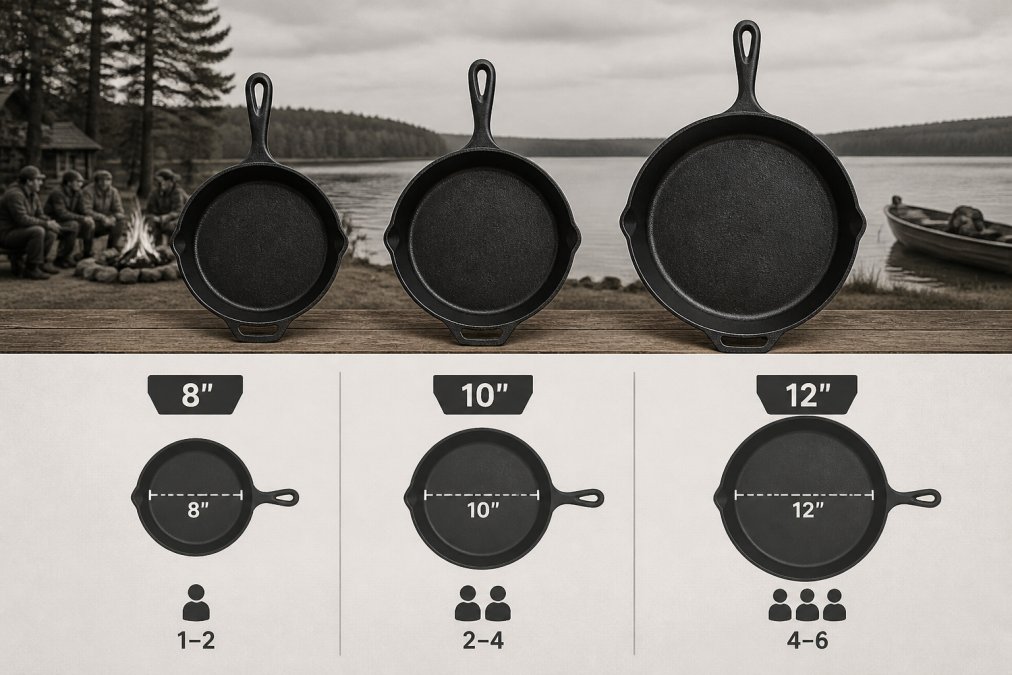
Comparison of 8-inch, 10-inch, and 12-inch cast iron skillets to help beginners choose the right size for home and camp cooking.
If you're choosing your first cast iron skillet, the decision often comes down to a 10-inch or 12-inch model. Both are useful, but each has advantages depending on how you cook.
A 10-inch skillet is a good option for smaller households, simple meals, and anyone who wants something easier to maneuver. It works well for eggs, grilled sandwiches, cornbread, and smaller portions of meat or vegetables.
A 12-inch skillet provides more cooking space, making it useful for family breakfasts, larger cuts of meat, and meals that need room for several ingredients. It's also a practical choice for preparing food at the cabin or cooking for a group.
Consider the Weight
Traditional cast iron skillets can be surprisingly heavy. A 12-inch skillet generally weighs more than a comparable 10-inch model, although the exact weight depends on the manufacturer and design.
Before buying, check the listed product weight and consider whether you can comfortably lift and move the skillet, especially when it's full of hot food.
Also check your stovetop and oven dimensions. Larger skillets take up more room, and their handles may affect how easily they fit inside an oven.
Which Size Is Best for Beginners?
Choose a 10-inch skillet if you typically cook smaller meals, have limited storage space, or prefer something more manageable.
Choose a 12-inch skillet if you regularly cook for a family, prepare larger meals, or want additional room for ingredients.
Neither size is automatically better. The right skillet is the one you'll enjoy using regularly.
Pre-Seasoned Cast Iron Skillet Options for New Cooks
When shopping for your first cast iron skillet, you'll often see two options: pre-seasoned and unseasoned. Understanding the difference can help you decide how much preparation you're comfortable doing before your first meal.
Pre-Seasoned vs. Unseasoned: What's the Difference?
Pre-seasoned skillets have a protective layer of seasoning applied during manufacturing. This seasoning is made by heating a thin coating of oil until it bonds to the iron.
Most pre-seasoned skillets can be used after following the manufacturer's initial cleaning instructions. They're a convenient choice for beginners who want to start cooking without seasoning a bare skillet from scratch.
Keep in mind that pre-seasoned doesn't mean completely nonstick. Proper preheating, cooking temperature, and a little cooking fat still make a difference.
Unseasoned skillets arrive without that protective cooking finish. They require seasoning before regular use to help protect the iron from rust and develop a cooking surface.
For most beginners, a pre-seasoned skillet is the easier starting point. It lets you focus on learning how to cook with cast iron rather than preparing the pan first.
Maintenance Expectations
Both types of cast iron need regular care.
After cooking, allow the skillet to cool enough to handle safely. Wash it with warm water, a brush or nonabrasive scrubber, and a small amount of mild dish soap when needed.
Dry the skillet thoroughly. If appropriate, apply a very thin layer of cooking oil before storing it in a dry place.
With regular use and proper care, the seasoning can be maintained and improved over time.
Cast Iron Skillet Weight: Handle It with Confidence
Cast iron skillets are known for their weight, and that's something every beginner should consider before buying.
A traditional 10-inch cast iron skillet may weigh around 4 to 6 pounds, while many 12-inch models weigh approximately 6 to 9 pounds. Actual weights vary by manufacturer, wall thickness, and design.
Heavier skillets generally have more thermal mass, which can help them retain heat when cold food is added. However, weight alone doesn't determine cooking performance.
Why Weight Matters
Think about how you'll use your skillet.
Will you move it between the stovetop and oven? Carry it outside for a meal at the cabin? Lift it while it's filled with food?
A heavy skillet can be awkward to handle, especially when hot.
Look for a comfortable main handle and, on larger models, a helper handle on the opposite side. Always use suitable heat-resistant protection when handling hot cast iron.
If possible, lift the skillet before buying it. Imagine moving it from the stovetop to the oven while keeping it steady.
Beginner Tip: Choose a skillet you can comfortably control, not simply the largest or heaviest one available. A manageable skillet is more enjoyable to use regularly. Beginners often underestimate how much weight matters. Pick up a skillet before buying if possible. Lift it with one hand. Imagine holding it steady while flipping food or transferring it from stovetop to oven.
Surface Texture and Cooking Performance
Cast iron skillets can have smooth or slightly textured cooking surfaces. You'll find both styles among new and vintage cookware.
Some vintage skillets have smooth, machined cooking surfaces, while many modern cast iron skillets have a more textured finish from the casting process.
Does Surface Texture Affect Cooking?
Smooth surfaces: Some cooks prefer the feel of a smooth cooking surface, particularly when using a spatula or cleaning the skillet.
Textured surfaces: A slightly rough surface is common on many modern cast iron skillets. These pans can also perform very well when properly seasoned and used.
Neither finish automatically guarantees better browning or prevents food from sticking.
Cooking temperature, preheating, seasoning, and the amount of cooking fat all influence how food behaves in the pan.
Which Surface Is Best for Beginners?
Don't worry too much about choosing between smooth and textured cast iron.
Instead, look for a well-made skillet with a sound cooking surface, comfortable handles, and a size that fits your needs.
Both finishes can work well for everyday meals, whether you're cooking breakfast at home or making a hearty supper at deer camp.
Inspecting Your Skillet: New vs. Used
Whether you're buying a new cast iron skillet or searching for a vintage one at a flea market, knowing what to inspect can help you make a better purchase.
What to Look for When Buying
For new skillets: Check the manufacturer's specifications for size, weight, and compatible cooking surfaces. Look for visible cracks, manufacturing defects, or damage to the cooking surface. Make sure the handles are comfortable and the skillet sits appropriately on your intended stovetop.
For used skillets: Inspect the entire pan carefully, including the bottom, sides, handle, and cooking surface. Look for cracks, significant corrosion, and signs of damage.
Some used skillets may have uneven or worn seasoning. This isn't necessarily a reason to reject them, since seasoning can often be restored.
However, be cautious with cookware that has an unknown history. Older cast iron may have been used for purposes other than food preparation. If you cannot establish that a used skillet is suitable for cooking, choose another pan.
Common Damage Signs to Avoid
Deep pitting: Small marks or minor surface imperfections aren't always a problem, but significant corrosion can damage the cooking surface and make restoration difficult.
Cracks: Avoid skillets with visible cracks. Heating a damaged pan can create safety concerns, and seasoning will not repair structural damage.
Warping: Check whether the skillet sits steadily on a flat surface. A warped bottom can affect contact with certain stovetops, particularly smooth glass or induction surfaces.
Rust: Light surface rust can often be removed and the skillet reseasoned. Extensive corrosion may require more work than a beginner wants to take on.
Making Your First Purchase: A Beginner's Checklist
Use this guide when you're ready to buy.
Factor |
What to Check |
Why It Matters |
|---|---|---|
Size |
10-inch for most people; 12-inch if cooking for groups |
Affects cooking surface and weight |
Weight |
Lift it; make sure you can handle it comfortably |
Heavy pans tire your arm; light pans heat unevenly |
Surface |
Smooth or textured; no bare spots or damage |
Affects seasoning and cooking performance |
Seasoning |
Even color, no flaking; dark finish is ideal |
Poor seasoning means more sticking and prep work |
Handle |
Comfortable grip; secure attachment to pan |
Unsafe handles cause burns or spills |
Condition |
No cracks, deep pits, or warping |
Damage affects safety and cooking |
Price |
Compare new vs. used; check return policy |
New costs more but comes with warranty; used is cheaper but as-is |
Before buying, ask yourself a few simple questions. How many people will I usually cook for? Will I use the skillet on the stovetop, in the oven, or while camping? Do I have enough storage space, and can I comfortably handle its weight?
Your first cast iron skillet doesn't need to be expensive or fancy. A dependable, pre-seasoned 10-inch or 12-inch skillet is a practical starting point for many beginners.
With regular use, cleaning, and proper care, a good cast iron skillet can become a favorite for everyday meals, cabin breakfasts, and outdoor cooking traditions.
The best skillet isn't necessarily the biggest or most expensive. It's the one you'll actually enjoy cooking with.
Frequently Asked Questions
What size cast iron skillet is best for a beginner?
A 10-inch cast iron skillet is a practical starting point for many beginners. It's a versatile size for eggs, cornbread, smaller portions of meat, and everyday meals. If you regularly cook for a family or prepare larger meals at the cabin, a 12-inch skillet provides more cooking space. Consider your stovetop size, storage space, and how comfortably you can handle the skillet's weight before choosing.
Is a pre-seasoned cast iron skillet good for beginners?
Yes! A pre-seasoned cast iron skillet is a convenient choice for beginners because it already has a protective layer of seasoning applied by the manufacturer. After following the initial cleaning instructions, you can usually start cooking without seasoning the pan from scratch. Pre-seasoned doesn't mean completely nonstick, though. Proper preheating, cooking temperature, and regular care will help you get the best results.
How heavy should a cast iron skillet be?
The right weight depends on what you can comfortably handle. Many traditional 10-inch cast iron skillets weigh approximately 4 to 6 pounds, while 12-inch models may weigh around 6 to 9 pounds. Actual weights vary by manufacturer and design. Before buying, check the product specifications and consider whether you can safely lift the skillet when it's filled with food. Larger skillets with helper handles can be easier to move using both hands.
What should I look for when buying a cast iron skillet?
Look for a skillet that fits your cooking needs, feels comfortable to handle, and has no visible structural damage. Check the size, weight, handles, and cooking surface. Both smooth and textured cast iron can cook well when properly seasoned. If buying used, inspect carefully for cracks, significant corrosion, and warping, and make sure the skillet has a trustworthy food-use history. For most beginners, a new pre-seasoned skillet is a convenient starting point.
Choosing Your First Cast Iron Skillet: Keep It Simple
Choosing your first cast iron skillet doesn't have to be complicated. Start with a size that fits your cooking needs, a weight you're comfortable handling, and a pan that's easy to maintain.
For many beginners, a pre-seasoned 10-inch or 12-inch skillet is a practical choice. Both offer plenty of opportunities to learn, whether you're cooking breakfast at home, making cornbread at the cabin, or preparing a hearty meal after a long day outdoors.
And remember, you don't need the most expensive skillet on the shelf. A little practice, proper cleaning, and regular care can go a long way toward making cast iron cooking part of your everyday routine.
At Rack & Ridge, we believe some of the best memories are made around a meal shared with family and friends. From early mornings at deer camp to quiet weekends at the cabin, those simple traditions are worth keeping.
Explore more outdoor cooking tips, practical guides, and inspiration in The Ridge Journal.
Built for the Backwoods.