

Table of Contents
- Why Some Outdoor Gear Lasts Decades and Some Lasts a Season
- Durable Outdoor Clothing Materials: What to Look For on the Tag
- Construction Quality: Stitching, Seams, and Hardware That Hold Up
- How to Maintain Outdoor Gear So It Outlives the Price Tag
- Repair or Replace? A Decision Framework for Worn Gear
- What to Look for in an Outdoor Gear Warranty
- How to Choose Long-Lasting Outdoor Gear Without Overpaying
- Conclusion
- Frequently Asked Questions
Last Updated: September 21, 2026
Why Some Outdoor Gear Lasts Decades and Some Lasts a Season
Outdoor gear earns its keep when you actually put it to work. A jacket might look great online, but a few cold mornings in the deer stand, muddy weekends at camp, or long days on the water will quickly show you how well it was really built.
Learning how to choose long lasting outdoor gear means looking past the marketing and paying attention to the things that usually fail first: fabric, seams, zippers, buckles and coatings. Those details tell you a lot more about how gear will hold up than a fancy product photo ever will.
Durable Outdoor Clothing Materials: What to Look For on the Tag
You’ll often see “denier” listed when comparing outdoor fabrics. It describes the thickness or weight of the fibers used in the material. A higher denier can mean a heavier, tougher fabric, but don’t judge durability by that number alone. The type of fiber, weave, coatings and overall construction all play a part in how well gear handles years of outdoor use.
Synthetic Fibers: Denier, Abrasion Resistance, and Tear Strength
Nylon and polyester are common in outdoor gear for good reason. They dry quickly and can stand up well to abrasion, brush and repeated use. But the material itself is only part of the story.
-
Look for construction details such as:
- Ripstop weave: a reinforced grid designed to help keep small tears from spreading.
- Reinforced panels: extra material in high-wear areas such as knees, elbows, seats and the bottom of packs.
- Tightly woven fabric: especially useful where the gear will regularly rub against brush, trees or equipment.
Natural Fibers and Blends: Where They Still Win
Wool still has a well-earned place in outdoor clothing, especially when warmth and odor control matter. It can retain insulating ability when damp, making it a solid choice for base layers, socks and cold mornings in the deer stand.
Blends can give you the best of both worlds — the comfort and warmth of natural fibers with the durability, stretch and faster drying of synthetics.
Construction Quality: Stitching, Seams, and Hardware That Hold Up
Good construction is often easier to spot than you think. Look for tight, even stitching without loose threads, skipped stitches or puckering. Areas that take the most abuse — pocket corners, straps, knees, elbows and other stress points — should have reinforced seams, bar tacks or extra stitching designed to handle repeated use.
Hardware is another place where quality matters. Zippers, buckles, snaps and cord locks get used over and over, often with cold or gloved hands. They should feel solid and operate smoothly without sticking, separating or feeling flimsy.
Look for:
- Quality zippers that move smoothly and stay aligned
- Reinforced stitching or bar tacks around pockets, straps and other stress points
- Buckles, snaps and drawcord hardware that feel secure and are easy to operate
How to Maintain Outdoor Gear So It Outlives the Price Tag
Even well-made outdoor gear won't last if it isn't cared for properly. Always start with the manufacturer's care instructions, especially for waterproof jackets and technical fabrics. Different materials and coatings may require different cleaning methods, so don't assume everything belongs in a normal wash cycle.
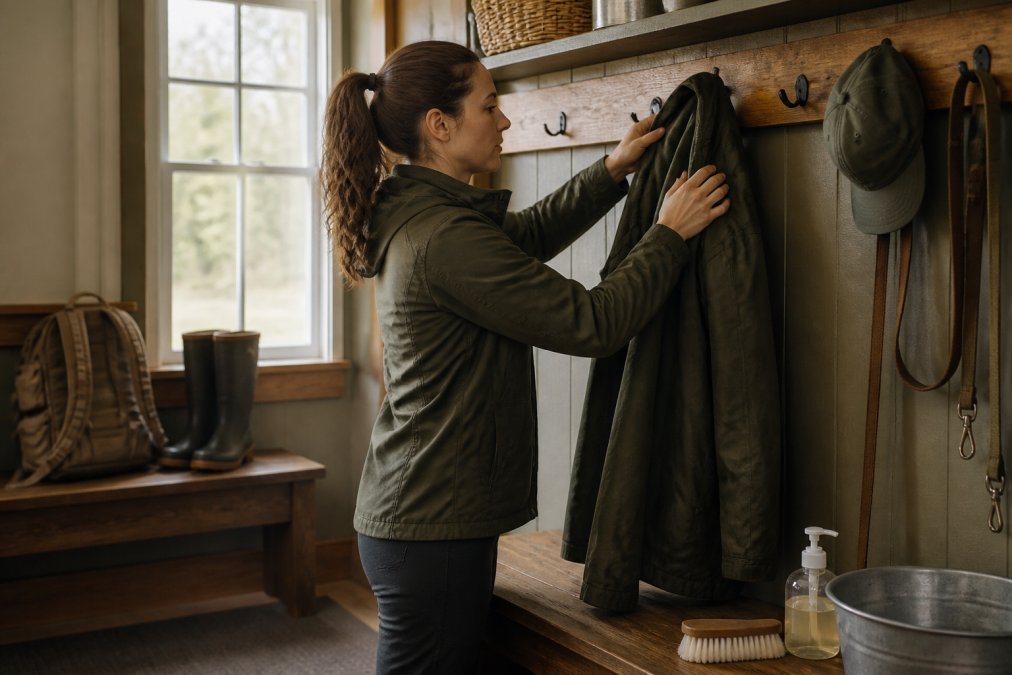
Person cleaning a rain jacket on a rack to maintain long-lasting outdoor gear in a sunlit mudroom.
What Is Actually Breaking Down Your Gear
Most outdoor gear takes a beating from a few simple things: moisture, sunlight, dirt and repeated friction.
Putting gear away damp can damage coatings and create odors or mildew. Leaving packs and clothing in direct sunlight for long periods can fade and weaken materials. And dirt, sand and grit can slowly wear away at fabric as you move.
That's why one of the easiest ways to make outdoor gear last longer is also one of the simplest: clean it when needed, let it dry completely, and store it somewhere cool and dry.
Washing, Reproofing, and Storing Technical Apparel
The best rule for washing outdoor clothing is simple: check the care tag first. Technical fabrics, waterproof membranes and coatings don't always respond well to the same products or wash cycles as everyday clothing.
A few good habits can help your gear last longer:
- Wash only when needed and use a cleaner recommended for that type of garment.
- Avoid fabric softeners and dryer sheets on technical outerwear unless the manufacturer specifically allows them.
- Let gear dry completely before putting it away.
- If a waterproof shell stops beading water, check the manufacturer's instructions for restoring its water-repellent finish.
- Store jackets and other apparel hanging or loosely folded in a cool, dry place rather than compressed for months at a time.
Repair or Replace? A Decision Framework for Worn Gear
Outdoor gear doesn't have to look brand new to keep doing its job. A small tear, worn zipper or damaged buckle doesn't always mean it's time to replace the whole thing. Sometimes a simple repair can give a favorite jacket, pack or pair of pants several more seasons of use.
Before replacing damaged gear, take a look at what actually failed and whether the rest of the item is still in good condition. For common clothing damage, our guide on how to repair torn work pants and jackets covers a few practical fixes.
Here are a few common problems and a good place to start:
Problem |
Possible next step |
Repair or Replace |
|---|---|---|
Small tear in shell |
Patch or tape |
Repair |
Broken zipper pull |
Replace slider |
Repair |
Failed DWR coating |
Reproof |
Repair |
Delaminated membrane |
check manufacturer repair options |
Replace |
Blown seam on cheap shell |
check manufacturer repair options |
Replace |
Worn sole on boots |
Resole |
Repair |
When safety or weather protection is involved, use a little more caution. If damage affects the structural integrity of the gear, waterproof membrane, load-bearing straps or another critical component, check with the manufacturer or a qualified repair service before relying on it in the field.
What to Look for in an Outdoor Gear Warranty
Before you buy, check a few things: who the warranty covers, how long coverage lasts, what qualifies as a defect, whether proof of purchase is required, who pays shipping, and whether the company offers repairs as well as replacement.
It can also be worth saving a copy of the warranty information when you purchase expensive gear, since policies may change over time.
How to Read an Outdoor Gear Warranty
Start with these questions, in this order:
- Who is covered? "Original purchaser only" language means the warranty dies the moment you sell or gift the item. That kills resale value and tells you the brand is protecting itself, not the product.
- What is the claim window? A true lifetime warranty has no end date. A "limited lifetime" warranty usually covers defects for as long as the product is made, or for a set number of years. A one- or two-year window on a shell is a red flag for a garment marketed as durable.
- What counts as a defect? Look for "normal wear and tear." That exclusion is broad enough to cover almost anything a warranty claim would be about, zipper failure, seam separation, coating loss. If the policy leans on that phrase, assume it covers manufacturing mistakes only, not durability.
- What proof do they require? A receipt requirement with no digital option is a barrier, not a policy. Brands that want to honor claims make it easy.
- Who pays shipping? A warranty that requires you to ship the item at your own expense for evaluation is a soft denial for anything but a high-value item.
- Is repair offered, or only replacement? Brands that repair are usually the ones that built the product to be repaired, a durability signal in itself.
A useful habit: before you buy, screenshot the warranty page. Policies change, and the version that applied on your purchase date is the one that matters.
Buying Second-Hand Outdoor Gear: What to Check
- Seams: Check for pulled stitches, loose seam tape, puckering or areas where sealing has started to separate.
- Zippers. Run every zipper the full length, both directions. Listen for grinding, and check that the slider doesn't separate the teeth when you pull sideways.
- Waterproof materials: Look for peeling, bubbling, worn coatings or obvious damage. If you're unsure about an older waterproof garment, check the manufacturer's care and repair guidance.
- Foam and padding. Foam in packs, straps, and boot collars degrades with age. Press it. If it crumbles or stays compressed, the piece is closer to end-of-life than the seller is letting on.
- Smell. Mildew and smoke are hard to remove and often signal storage problems that have already done damage.
- Provenance. Ask how it was stored, how often it was used, and whether it was ever repaired. A seller who can answer clearly is usually worth buying from.
For care and material standards, REI's gear care and repair resources offer practical guidance on extending gear life.
How to Choose Long-Lasting Outdoor Gear Without Overpaying
You don't always have to buy the most expensive gear to get something that lasts. A better approach is to spend your money on the features that matter for how and where you'll actually use it.
For a hunter sitting through cold November mornings, an angler dealing with wind and rain, or a family spending weekends at camp, durability means different things. Think about the conditions your gear will face most often, then pay for the construction and features that help it handle those conditions.
- For example, if wet fields, muddy trails and unpredictable weather are part of your outdoor routine, choosing the right boots matters more than simply choosing the most expensive pair. Our guide to choosing waterproof boots for muddy fields breaks down what to look for in waterproofing, traction, fit and durability.
-
Before paying more, ask yourself three things:
- Will I actually use the extra features? More pockets, specialized materials and technical features aren't automatically better if they don't fit the way you hunt, fish or spend time outdoors.
- Is the important stuff built well? Pay attention to seams, zippers, soles, buckles and high-wear areas before worrying about the logo on the tag.
- Can I maintain or repair it? Gear that can be cleaned, repaired or have worn components replaced may give you more useful life than something designed to be replaced when one part fails.
Conclusion
Good outdoor gear doesn't have to be the most expensive gear on the rack. What matters is choosing equipment that fits the way you spend time outdoors, is built well in the places that matter, and can handle more than a season or two of real use.
Look closely at the materials, seams, hardware and repairability before you buy. Then take care of what you own. A little maintenance and an occasional repair can go a long way toward keeping trusted gear around for more hunts, more days on the water, more weekends at camp and more memories outdoors.
Because the best gear isn't always the newest gear. Sometimes it's the gear that's been there for the stories.
Frequently Asked Questions
What materials should I look for in durable outdoor gear?
There isn't one material that's best for every situation. Nylon and polyester are commonly used because they can offer good abrasion resistance and quick drying, while wool can be a strong choice for warmth and odor control. Look at the material along with the weave, reinforcement, stitching and overall construction.
Does more expensive outdoor gear last longer?
Not necessarily. Price can reflect materials, features, design and brand positioning as well as durability. Focus on whether the construction and features make sense for how you'll actually use the gear rather than assuming the highest price means the longest life.
When should I repair outdoor gear instead of replacing it?
Small tears, worn zipper components and some damaged hardware may be repairable when the rest of the item is still in good condition. If the damage affects a critical structural or safety component, check with the manufacturer or a qualified repair service before continuing to use it.
How can I make my outdoor gear last longer?
Follow the manufacturer's care instructions, clean gear when needed, let it dry completely before storage and repair small problems before they become bigger ones. For waterproof clothing, follow the manufacturer's guidance for maintaining or restoring its water-repellent finish.
Choosing outdoor gear that lasts comes down to knowing what to look for, buying for the conditions you'll actually face, and taking care of what you own. Look beyond the marketing and pay attention to materials, seams, hardware, fit and repairability. That's the kind of practical outdoor knowledge we share here at The Ridge Journal — helping you spend more time outside and get more from the gear you bring along.
The best rule for washing outdoor clothing is simple: check the care tag first. Technical fabrics, waterproof membranes and coatings don't always respond well to the same products or wash cycles as everyday clothing.
A few good habits can help your gear last longer:
- Wash only when needed and use a cleaner recommended for that type of garment.
- Avoid fabric softeners and dryer sheets on technical outerwear unless the manufacturer specifically allows them.
- Let gear dry completely before putting it away.
- If a waterproof shell stops beading water, check the manufacturer's instructions for restoring its water-repellent finish.
- Store jackets and other apparel hanging or loosely folded in a cool, dry place rather than compressed for months at a time.