

Table of Contents
- What Essential Clothing for Rural Living Actually Looks Like
- Durable Workwear for Farm Life: What to Prioritize
- Durable Outerwear Essentials for All-Weather Protection
- Footwear for Farm and Field: Boots That Go the Distance
- How to Layer for Rural Weather Without Overheating or Freezing
- Inclusive Sizing and Sustainable Sourcing for Rural Gear
- Maintaining Outdoor Clothing So It Lasts for Years
- Building Your Essential Clothing List for Rural Living by Season
Last Updated: August 18, 2026
What Essential Clothing for Rural Living Actually Looks Like
Essential clothing for rural living is a functional wardrobe system built around durability, weather protection, and the physical demands of outdoor work. At g&s Essentials, we've spent years helping Midwestern families build wardrobes that hold up to real conditions: muddy fields, unpredictable weather, long days in the barn, and everything in between.
This guide focuses on what actually works when you're pulling fence posts at 7 a.m. or checking on livestock in a cold drizzle. The essential clothing framework comes down to three priorities: materials that handle abrasion and moisture, a layering system that adapts to shifting temperatures, and construction that survives repeated hard use.
Durable Workwear for Farm Life: What to Prioritize
Durable workwear starts with one question: where does the garment fail first? For most people, it's the knees, the seat, and the seams. Any workwear worth buying should have reinforced knees, bar-tacked stress points, and stitching that doesn't unravel after a season.
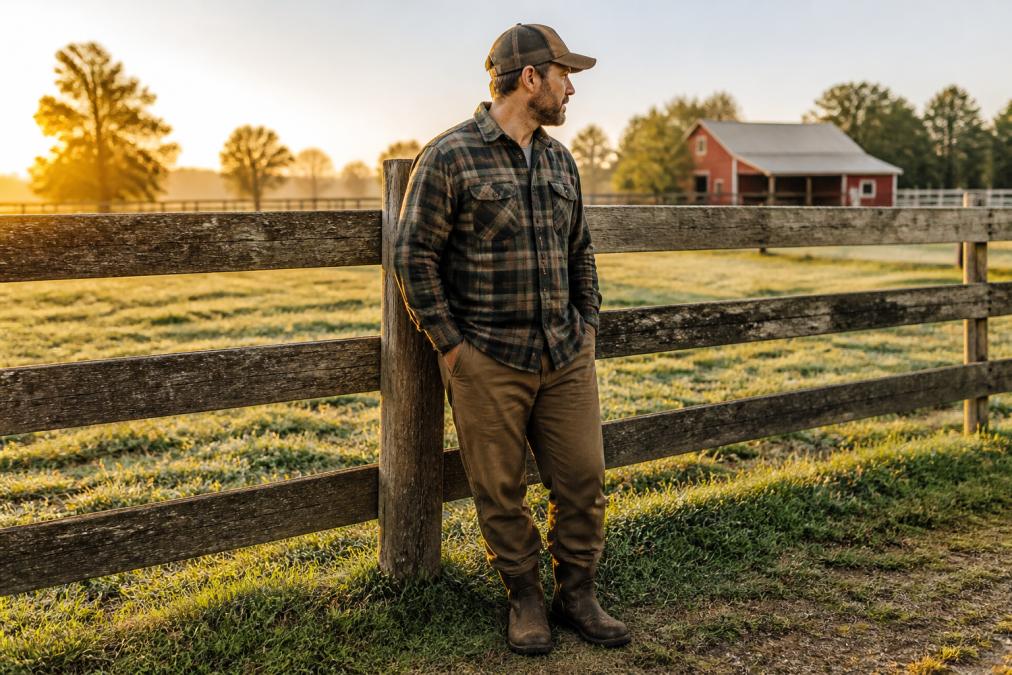
Look for heavy-duty cotton canvas, duck cloth, or denim with a tight weave. These materials resist abrasion from rough surfaces, fence wire, and hay bales far better than lighter synthetics. Pure cotton remains the workhorse fabric for most farm tasks because it breathes and handles heat without melting or pilling.
Pants and Bottoms Built for Hard Use
The biggest mistake people make with farm pants is buying regular jeans. Standard denim wears out fast under genuine manual labor. What you actually need:
- Duck cloth or canvas work pants with reinforced knees and a gusseted crotch for full range of motion
- Heavy-duty denim in at least 12-oz weight; lighter denim tears at contact points within months
- Over-the-ankle coverage so debris, seeds, and water don't get into your boots
The Judy Blue Full Size High Waist Distressed Straight Jeans from g&s Essentials offer a flattering, durable cut that transitions from field to town. For dedicated field work, prioritize function over style: cargo pockets add genuine utility, and a reinforced seat panel adds years to a pair of work pants.

Tops, Flannels, and Mid-Layers That Pull Double Duty
Flannel is the most underrated fabric in a rural wardrobe. A quality flannel shirt works as a standalone layer in mild weather, a mid-layer under a jacket when temperatures drop, and a comfortable work shirt that softens with every wash. Look for 100% cotton flannel with reinforced button plackets.
The Rack & Ridge Outdoor Hoodie with Hunting Antler Logo brings fleece-lined utility that moves from the field to the truck cab without looking purely utilitarian. At $55.54, it's built for the outdoors with heritage style that works anywhere.
Durable Outerwear Essentials for All-Weather Protection
The wrong outerwear decision will ruin your day faster than almost anything else in your wardrobe. A jacket that's waterproof but not breathable turns into a sauna during physical work. One that's breathable but not windproof fails the moment a cold front moves through. Durable outerwear needs to solve all three problems at once: waterproof, breathable, and windproof.
Waxed cotton is the heritage standard for good reason. It's naturally water-resistant, becomes more supple with age and use, and can be re-waxed when the treatment wears off. A quality waxed cotton jacket handled properly will outlast a decade of synthetic alternatives.
Modern waterproof-breathable shells use membrane technology to block water while venting moisture vapor. These are lighter and easier to care for, but they require periodic reproofing with a DWR (durable water repellent) treatment. According to the Textile Exchange's fiber and materials reports, a jacket that hasn't been reproofed can lose most of its water resistance even if the membrane is intact.
For most rural households, the smart move is owning both: a waxed cotton barn coat for daily outdoor tasks, and a lighter waterproof shell for active work in rain.
Footwear for Farm and Field: Boots That Go the Distance
Footwear is where rural living budgets go wrong most often. People spend too little, replace boots constantly, and never develop the broken-in, foot-shaped fit that only comes from quality pairs worn over years.
The essential categories for farm and field footwear:
- Rubber muck boots for wet, muddy conditions, waterproof by design and easy to clean
- Over-the-ankle leather work boots with a steel or composite toe for daily barn and field work
- Insulated winter boots rated for the coldest temperatures you'll realistically face
- Casual or indoor footwear for the transition between outdoor work and home
Muck boots deserve more credit than they get. A good pair of knee-high rubber boots handles everything from flooded pastures to muddy spring fields without the break-in period or maintenance requirements of leather.
For indoor comfort after a long day outdoors, the Minnetonka Alpine Sheepskin Moc from g&s Essentials is worth noting. Sheepskin-lined with a suede upper and rawhide lace, it's the kind of slipper that actually earns its place in a working household.
According to the American Podiatric Medical Association's footwear guidance, proper fit and adequate ankle support are the two most important factors in work boot selection for people on their feet all day.
How to Layer for Rural Weather Without Overheating or Freezing
A layering system for rural weather is a three-part approach that lets you add or remove insulation as conditions change throughout the day. You might start a morning at 28°F feeding livestock, warm up to 45°F by midday while doing physical work, and cool back down quickly when you stop moving. A three-layer system handles all of those transitions.

Base Layer: Moisture-Wicking Foundation
The base layer's only job is to move sweat away from your skin. Once moisture sits against your body, you lose heat rapidly. Choose moisture-wicking fabrics: merino wool or synthetic polyester blends. Merino is the better option for odor resistance and temperature regulation. Avoid cotton base layers for active outdoor work; cotton absorbs and holds moisture, which works against you in cold conditions.
Mid-Layer: Insulation That Moves With You
The mid-layer traps warm air close to your body. Fleece is the most practical option for farm work: it insulates even when damp, dries quickly, and doesn't restrict movement. A heavy fleece hoodie like the Rack & Ridge options works perfectly here. For farm and field use, synthetic insulation or fleece is more reliable than down, which loses insulation value when wet.

Outer Layer: Windproof and Waterproof Defense
The outer layer blocks wind and precipitation. It should be windproof and waterproof at minimum, breathable if budget allows. A lighter shell that you can stuff into a bag and pull out when weather changes is often more useful than a heavy insulated jacket.
Inclusive Sizing and Sustainable Sourcing for Rural Gear
Most workwear is designed for one body type. Women doing the same physical work as men have historically been stuck with ill-fitting options. This is changing. Many workwear manufacturers now offer extended sizing, women-specific cuts with appropriate proportions, and gender-neutral options that prioritize function over gendered design. Look specifically for brands that list inseam, rise, and hip measurements rather than just waist size.
On the sourcing side, rural communities are often directly affected by poor environmental and labor practices in textile manufacturing. According to the Environmental Protection Agency's overview of textile waste and sustainability, the textile industry generates significant waste at every stage of production. Buying fewer, better-quality pieces that last longer is both the practical and more sustainable choice.
Look for:
- Brands that disclose their manufacturing location and labor standards
- Natural fibers like cotton, wool, and linen that biodegrade at end of life
- Certifications like OEKO-TEX or the Global Organic Textile Standard (GOTS) for chemical safety
Maintaining Outdoor Clothing So It Lasts for Years
Maintaining outdoor clothing is the part of rural wardrobe management that most guides ignore completely, and it's the reason good gear fails prematurely. A waxed cotton jacket that's never been reproofed, leather boots that have never been conditioned, or a waterproof shell washed with fabric softener will all fail well before their time.
Washing and Reproofing Waxed Cotton and Waterproof Fabrics
Waxed cotton should not be machine washed. Use a damp cloth to spot-clean mud and debris, and allow it to dry naturally away from direct heat. When the wax treatment starts to wear, apply fresh wax using a tin of specialist wax treatment, working it into the fabric with your hands and warming the garment gently to help the wax penetrate.
Waterproof-breathable shells can be machine washed, but use a technical wash product designed for waterproof fabrics. Standard detergents and fabric softeners clog the membrane and destroy breathability. After washing, tumble dry on low heat or iron on a low setting to reactivate the DWR coating. When DWR reactivation stops working, apply a spray-on or wash-in DWR treatment.
| Garment Type | Wash Method | Reproofing Frequency | Key Mistake to Avoid |
|---|---|---|---|
| Waxed cotton | Spot clean only | Every 1-2 seasons | Machine washing destroys wax |
| Waterproof shell | Machine wash (technical wash) | Every 20-30 washes | Fabric softener clogs membrane |
| Fleece mid-layer | Machine wash cold | Not applicable | High heat causes pilling |
| Canvas/duck work pants | Machine wash cold | Not applicable | Hot dryer shrinks and stiffens |
| Leather boots | Wipe clean, condition | Every 2-3 months | Skipping conditioning causes cracking |
Basic Repair and Mending for Workwear
The ability to repair clothing extends its life dramatically and saves money over time. Most workwear repairs are straightforward:
- Blown seams: Re-stitch with heavy-duty thread using a reinforced stitch pattern.
- Torn knees: Iron-on denim patches work for quick fixes. For durability, sew a patch to the inside of the knee before the tear fully opens.
- Missing or broken buttons: Replace with metal or resin buttons that match the original diameter.
- Small holes in outerwear: Fabric repair tape designed for waterproof fabrics seals small holes without compromising the membrane.
A small mending kit, needles, heavy-duty thread in several colors, iron-on patches, and spare buttons, costs very little and can extend the life of a garment by years.
Building Your Essential Clothing List for Rural Living by Season
Building a complete essential clothing wardrobe doesn't happen all at once. Prioritize the pieces that address your most immediate needs, then fill in gaps as seasons change.
| Season | Priority Pieces | Key Fabrics | What to Skip |
|---|---|---|---|
| Spring | Waterproof shell, muck boots, flannel shirts | Waxed cotton, rubber, cotton flannel | Heavy insulated coats |
| Summer | Moisture-wicking base layers, canvas work pants, sun hat | Cotton, linen, lightweight synthetics | Fleece mid-layers |
| Fall | Fleece hoodie, layering base layers, waterproof boots | Fleece, merino wool, leather | Ultra-light shells |
| Winter | Insulated outer layer, thermal base layers, insulated boots | Down or synthetic fill, merino wool | Uninsulated rubber boots |
The throughline across all seasons is the same: prioritize function, choose durable materials, and buy fewer pieces of higher quality. A rural wardrobe built on these principles serves you for years, not months.
For fall and winter specifically, a quality fleece hoodie is the single most versatile piece you can own. The Rack & Ridge "Earn Your Antlers" Hoodie handles the mid-layer role across a wide temperature range and transitions naturally from field work to casual wear, exactly the kind of dual-purpose utility that makes sense in a working wardrobe.

The real measure of essential clothing for rural living isn't how it looks on the rack. It's how it performs after two years of hard use, regular washing, and every kind of weather the land can throw at it. Build your wardrobe with that standard in mind, and the pieces you invest in will earn their place every single day.
Frequently Asked Questions
What is rural attire, and how is it different from regular casual clothing?
Rural attire is clothing built around function first. Where regular casual wear prioritizes comfort or style, rural clothing must handle mud, thorns, temperature swings, and physical labor. Think reinforced knees, abrasion-resistant fabrics like canvas or waxed cotton, over-the-ankle boots, and layering systems that adapt from a cold morning to a warm afternoon. Style still matters, heritage pieces like flannel and tweed have stayed perennial precisely because they work, but every item earns its place by performing a job.
What are the best fabrics for rural living and farm work?
For essential clothing for rural living, prioritize fabrics that hold up under hard use. Waxed cotton sheds water and resists abrasion. Heavy-duty denim and canvas handle reinforced knees and repeated washing. Flannel and wool offer thermal regulation without bulk. For base layers, moisture-wicking synthetics or merino wool keep you dry during physical work. Avoid thin cotton alone in wet or cold conditions, it loses its insulating value when wet and dries slowly, which becomes a comfort and safety issue on long outdoor days.
How do you build a durable wardrobe for farm and outdoor work without spending a fortune?
Start with the items you use every day: one or two pairs of work pants with reinforced knees, a set of moisture-wicking base layers, a heavy-duty flannel or mid-layer, a waterproof outer shell, and a reliable pair of muck boots or work boots. Buy fewer pieces at higher quality rather than replacing cheap gear every season. Learning basic repair and mending, patching knees, restitching seams, extends the life of workwear significantly. Hoodies like the Rack & Ridge Outdoor Hoodie at $55.54 offer warmth and durability at a reasonable price point.
What seasonal clothing is essential for rural life in colder climates?
Winter demands a complete layering system: a moisture-wicking base layer against your skin, a fleece or quilted insulation mid-layer, and a windproof, waterproof outer shell. Thermal socks and insulated, waterproof boots rated for low temperatures are non-negotiable for farm work in freezing conditions. A heavy-duty hoodie, such as the Earn Your Antlers Hoodie from Rack & Ridge at $62.58, works well as a mid-layer under a shell or as standalone outerwear in milder cold. Add a knit cap and work gloves rated for wet conditions to round out a cold-weather kit.
How do you balance style and utility in country clothing?
The best rural wardrobe pieces do both naturally. Heritage styles, waxed cotton jackets, flannel shirts, straight-leg denim, tweed, have stayed in rotation for decades because they look good and perform. Distressed denim like the Judy Blue High Waist Straight Jeans ($67.12) pairs well with work boots and holds up to daily wear. The key is choosing pieces with functional design details: durable stitching, reinforced stress points, and breathable construction. When a garment works hard and looks the part, you don't have to choose between the two.
How often should you wash and reproof waxed cotton or waterproof outdoor clothing?
Waxed cotton should be cleaned with a damp cloth and cold water, never machine washed or tumble dried, as heat strips the wax treatment. Reproof with a fresh application of wax paste at the start of each heavy-use season, or whenever water stops beading on the surface. For DWR-treated waterproof shells, machine wash on a gentle cycle with a technical cleaner, then tumble dry on low heat to reactivate the DWR coating. Reproofing spray can restore water repellency between seasons. Staying on top of this extends garment life by years.
Rural living demands a wardrobe that works as hard as you do. g&s Essentials was built for exactly this, a Midwestern family brand with the Rack & Ridge outdoor collection and Sarah's Next Chapter Boutique, offering apparel that balances genuine field performance with the heritage style that fits country life. Join our email list to get seasonal wardrobe guides, care tips, and new arrivals from the Rack & Ridge collection delivered straight to your inbox.
This article was written using GrandRanker