

Table of Contents
- Start With the Duck Hunting Layering System
- What to Wear Duck Hunting in Cold Weather
- Duck Hunting Clothing Checklist Before You Leave the Truck
- Water-Resistant vs. Waterproof: Know the Difference
- Early, Mid, and Late Season in the Midwest
- Waders, Boots, Socks, and Safety in the Water
- Common Layering Mistakes That Leave You Cold
- Conclusion
- Frequently Asked Questions
Last Updated: October 18, 2026
Start With the Duck Hunting Layering System
Duck hunting clothes work best as a system, not a single purchase. A layering system is three jobs stacked on top of each other: move sweat off your skin, trap warm air in the middle, and block wind, rain, and mud on the outside. Get those three right and you can hunt a 30-degree morning and a 65-degree afternoon with the same kit.
A duck blind punishes bad clothing choices faster than almost any other hunt. You sit still for hours, you're often near or in water, and the weather rarely holds steady from first light to packing up.
Here's what most guides get wrong: they hand you a shopping list without explaining why each piece exists. Below, we'll walk through each layer, then cover cold weather, a pre-truck checklist, waterproof versus water-resistant, season-by-season picks, water safety, and the mistakes that leave hunters shivering.
Base Layer: Move Sweat Away From Your Skin
The base layer's only job is moisture management. Cotton holds sweat against your skin and stays wet, which is exactly what you don't want in a cold blind. Choose merino wool or a synthetic fabric like polyester or polypropylene. Merino wool regulates temperature well and resists odor across a long sit. Synthetics dry fast and cost less. Lightweight is right for early season, midweight for the cold.
Midlayer: Trap Warm Air Without Bulk
The midlayer insulates. A fleece or a heavyweight hoodie works well here because it holds warm air close without turning you into a stuffed jacket. This is the layer you shed when you're humping decoys in and add back once you're seated. Bulk matters: if your midlayer is too thick, you lose the mobility you need to swing on birds.
Outer Layer: Block Wind, Rain, and Mud
The outer layer is your shell. It stops wind from stripping your warmth and keeps rain and mud off the insulation underneath. Look for a jacket that's quiet enough to move in and roomy enough to fit over your midlayer. Camouflage helps you blend into your surroundings, but no pattern guarantees birds won't spot you.
What to Wear Duck Hunting in Cold Weather
Cold-weather duck hunting is a different problem than cold-weather deer hunting.
Start with a moisture-wicking base layer in merino wool or a synthetic like polyester or polypropylene. Cotton is the one fabric to leave at home, because it holds sweat and water against your skin and stops insulating once it is wet.

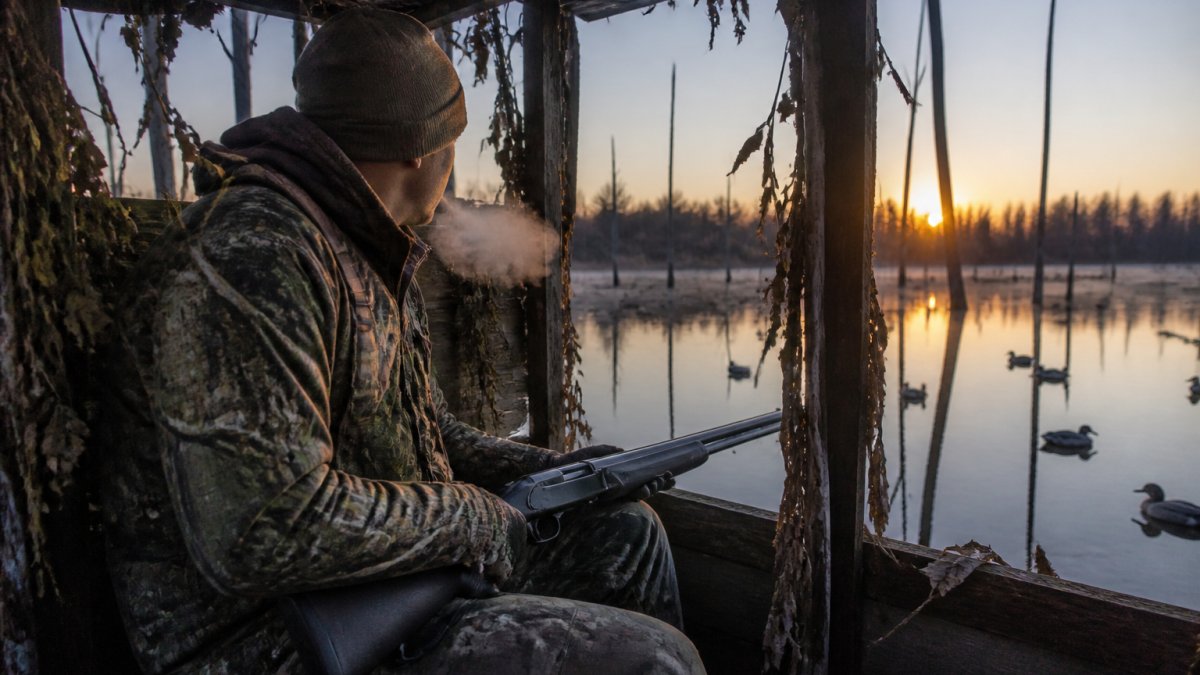
Hands. Your hands are the hardest part. You need enough warmth to sit still but enough dexterity to load, call, and shoot.
Head and face. A warm beanie or watch cap traps heat, and a neck gaiter or face covering keeps wind off your cheeks and neck during a long sit.
Feet. This is where cold mornings are won or lost. Insulated boots should fit with your cold-weather socks on, not your thin summer socks. Wool or a wool-synthetic blend moves moisture and stays warm when damp; cotton socks do the opposite.
Core temperature control. The biggest cold-weather mistake is dressing for the sit before you have done the work. Walking in, setting decoys, and breaking ice all generate heat.
A simple cold-weather stack for a long sit looks like this: midweight merino or synthetic base layer top and bottom, a fleece or heavyweight hoodie midlayer, a wind- and water-resistant shell, insulated boots, wool socks plus a spare pair, shootable gloves with a warmer option in the pocket, a beanie, and a neck gaiter or face covering. Adjust up or down based on how cold it actually is and how much moving you will do.
Duck Hunting Clothing Checklist Before You Leave the Truck
Run this checklist before you leave the truck so nothing stays behind in the cab. A forgotten glove or sock can end a hunt early.
- Moisture-wicking base layer top and bottom
- Insulating midlayer (fleece or heavyweight hoodie)
- Wind- and water-resistant outer shell
- Waders, fitted and checked for leaks
- Insulated boots that fit with your socks
- Wool or synthetic socks, plus a spare pair
- Gloves you can shoot in
- Beanie or warm hat
- Face covering or neck gaiter
- Camo layer appropriate to the season
- Life jacket if you're hunting from a boat
- Dry bag with a spare base layer
Condition |
Base Layer |
Midlayer |
Outer Layer |
Extras |
|---|---|---|---|---|
Early season, warm |
Lightweight synthetic |
None or light tee |
Light shell |
Thin gloves, cap |
Midseason, wet and windy |
Midweight synthetic or merino |
Fleece |
Water-resistant shell |
Neck gaiter, waterproof gloves |
Late season, cold |
Midweight merino |
Heavyweight hoodie |
Insulated shell |
Insulated boots, wool socks, face covering |
Water-Resistant vs. Waterproof: Know the Difference
These two labels get used almost interchangeably in marketing, but they describe different things. Understanding the difference helps you decide what you actually need for your hunting style.
Water-resistant fabric slows water down. It sheds mist, light rain, spray, and splashes for a while, usually because of a durable water repellent (DWR) finish on the face fabric or a tight weave. It is not built to keep water out under steady rain or extended exposure, and once the finish wears or the fabric wets through, it stops resisting.
Waterproof fabric is built to keep water out, typically through a coated or laminated layer bonded to the fabric, with sealed or taped seams so water cannot sneak in through the stitching. The seams are the tell. A jacket can have a waterproof membrane and still leak at the shoulders and hood if the seams are not sealed.
Breathability is the trade-off. A fully waterproof layer blocks water, but it can also trap moisture vapor from your body. That is why waterproof shells are usually paired with a moisture-wicking base layer and a midlayer that moves sweat away from your skin.
When each is enough. For a dry, cold morning in a blind, a water-resistant shell over good insulation is often plenty. For a rainy forecast, a boat hunt with spray, or sitting in flooded timber, waterproof is the safer call. Neither label tells you how a garment will perform in your specific conditions.
Early, Mid, and Late Season in the Midwest
Midwestern duck season swings from humid September teal hunts to freezing December mornings, so your clothing needs change with the calendar. Build around the temperature and your activity level, not the date on the license.
Early Season: Heat Is the Enemy
Early season is about heat safety and moisture. Wear a lightweight, breathable base layer and skip the heavy insulation. A light shell for dew and mosquitoes beats a jacket you'll sweat through by 8 a.m. Overheating early in the day is one of the fastest ways to get chilled later.
Midseason: Wet and Windy
Midseason brings the wet, windy days that test your shell. This is where a water-resistant or waterproof outer layer earns its keep. Add a midweight base layer and a fleece, and keep a spare pair of socks in a dry bag.
Late Season: Cold That Sits With You
Late season is the long-sit test. Cold that sits with you for four hours demands real insulation, insulated boots, wool socks, and coverage for your hands, head, and face. Layer up, but plan to vent or shed a layer if you're moving decoys.
Waders, Boots, Socks, and Safety in the Water
Safety comes before comfort when you're hunting around water. Wear properly fitted waders so you can move without tripping, and check them for leaks before the season. Wear an appropriate life jacket any time you're in a boat, and move slowly and deliberately in water. Never wade beyond your comfort or ability, and tell someone where you're hunting.
Boots should fit with your cold-weather socks, and wool or synthetic socks keep feet drier than cotton. Our Wool BEAST Heavy OTC Sock is built with merino wool to wick moisture and resist odor on long sits. Regulations vary by state, so check your state wildlife agency for current rules, including any clothing requirements, before you head out. The U.S. Fish & Wildlife Service and your state agency are the sources to trust.

Common Layering Mistakes That Leave You Cold
The most common layering mistake is overdressing for the walk in and sweating before you ever sit down. Wet base layers pull heat away from your body for the rest of the morning. Other frequent errors: wearing cotton against your skin, skipping the shell on a windy day, and forgetting that hands and heads lose heat fast. Pack a spare base layer and socks in a dry bag, and dress in layers you can actually remove.
Conclusion
Cold hands and wet socks can cut a good morning short, but the right duck hunting clothes keep you in the blind longer. Start with a moisture-wicking base layer, add insulation, seal it with a shell, and gear up for your season and your water. Explore Rack & Ridge's outdoor apparel, camo hats, and comfortable layers at rackandridge.com. Visit The Ridge Journal for more practical outdoor tips, hunting traditions, and seasonal guides.
Frequently Asked Questions
What should you wear under duck hunting waders?
Start with a moisture-wicking base layer top and bottom, synthetic or merino, never cotton. Add a midlayer like fleece or wool depending on temperature. Waders trap heat, so dress lighter than you would in bibs and a jacket; you can always add a layer at the truck. Avoid bulky jeans under waders, which bunch up, restrict movement, and hold moisture against your legs once you start sweating on the walk in.
How should you layer clothes for cold-weather duck hunting?
Use three layers and adjust as the morning warms. A wicking base layer moves sweat off your skin, a fleece or wool midlayer holds warmth, and a windproof, waterproof outer shell blocks the weather. Carry a packable layer in your blind bag so you can strip down after the walk in and add it back when you sit still. The goal is staying dry and avoiding the sweat that turns cold once you stop moving.
What is the difference between water-resistant and waterproof duck hunting clothes?
Water-resistant fabric sheds light rain and spray for a while but will eventually soak through in steady rain or when you sit in water. Waterproof fabric is built to keep water out entirely, usually with a membrane or sealed seams. For boat hunting and wet blinds, waterproof is the safer choice. Check the label and care instructions, and remember that dirt and wear can reduce how well any fabric repels water.
Do you need waders for duck hunting?
Not always, but they help in many setups. If you are wading to set decoys, crossing shallow water, or hunting a flooded field, waders keep you dry and warm. In a dry blind or layout boat, waterproof bibs and boots may be enough. Make sure waders fit properly so you can move safely, and wear a life jacket any time you are in a boat or around deep water.
What should you wear duck hunting in early season?
Early season calls for lightweight, breathable clothing. A thin moisture-wicking base layer, a light shirt or hoodie, and a packable wind or rain shell cover most mornings. Bring a light face mask and gloves for mosquitoes, and choose camo that matches the green and brown cover around your setup. Overheating is the bigger risk early, so keep layers easy to remove and carry water.