

Table of Contents
- What a Deer Grunt Call Actually Does
- Deer Grunt Call Sounds: Contact, Buck, Doe, and Fawn
- How to Use a Grunt Call in the Field
- When to Use a Deer Grunt Call During the Season
- How Often to Grunt for Deer Without Overcalling
- Blind Calling vs. Calling at a Visible Buck
- Troubleshooting: When a Buck Doesn't Respond
- Practice, Maintenance, and Reading the Response
- Frequently Asked Questions
Last Updated: October 6, 2026
What a Deer Grunt Call Actually Does
A deer grunt call is a small tube you blow through to copy the sounds whitetails make on their own. That's it. No batteries, no app, no learning curve you can't handle in an afternoon.
The grunt call is one of those tools that sparks more debate than almost anything else in the pack. Some hunters swear by them. Others leave them home.
What a Grunt Imitates in the Deer World
Whitetails use a variety of vocalizations when communicating with one another. Bucks, does, and fawns can all make grunts, bleats, and other sounds in different situations.
That's what a hunter is trying to imitate with a deer call — a sound that could naturally come from another deer in the area.
The goal isn't necessarily to make a buck charge into range. Sometimes a call simply gets a deer's attention or encourages it to investigate. Other times, the deer may ignore the call completely. Keeping the sound natural and paying attention to the deer's reaction is more important than trying to force a response.
Deer Grunt Call Sounds: Contact, Buck, Doe, and Fawn
Most deer calls are designed to imitate several common whitetail vocalizations. Understanding the general differences between these sounds can help you choose a call that fits the situation.
Contact grunt: A softer grunt associated with normal communication between deer.
Buck grunt: Typically deeper than softer social grunts and commonly associated with buck communication, especially during the breeding season.
Doe bleat: A higher-pitched vocalization associated with does. Bleats can occur in different situations, so tone and context matter.
Fawn bleat: A higher-pitched sound used by young deer, including communication with does.
Some hunters also use a snort-wheeze, an aggressive buck vocalization often associated with confrontation or dominance. Because it's a more aggressive sound, it's generally used more selectively than a basic grunt.
Contact Grunts and Buck Grunts: What's the Difference?
Contact grunts are generally softer and can imitate normal social communication between deer. Buck grunts are typically deeper and may be used more during breeding-season interactions.
Rather than thinking of each grunt as having an exact meaning, think about the situation you're trying to imitate. A softer grunt can suggest a deer simply moving through the area, while a deeper buck grunt may create the impression of another buck nearby.
If you're new to calling, starting soft gives you a chance to see how deer in the area respond before becoming louder or more aggressive.
How to Use a Grunt Call in the Field
When using a grunt call, pay attention to tone, cadence, volume, and what's happening around you. The goal is to imitate a sound that fits naturally into the situation rather than simply making as much noise as possible.
Starting softly is a practical approach, especially when you don't know whether a deer may already be nearby. Make a short calling sequence, then give the woods time to settle while you watch and listen.
Wind matters too. A deer that becomes curious about a call may try to use the wind to gather more information before approaching, so consider your scent and likely travel routes when choosing where and when to call.
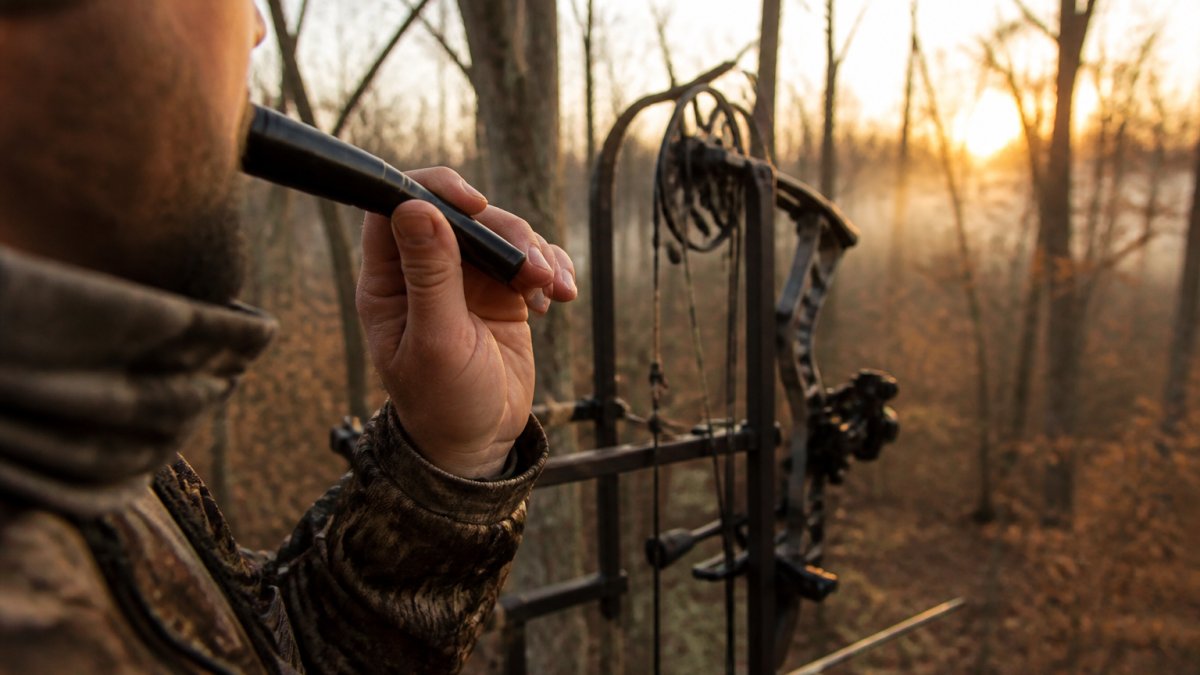
A Step-by-Step Calling Sequence for Common Setups
There isn't one calling sequence that works in every situation, but here's a simple approach you can experiment with:
- Check the wind. Think about where deer may approach from and where your scent is traveling.
- Start softly. Try one or two soft grunts rather than beginning aggressively.
- Pause and watch. Give the area time to settle and look carefully for movement.
- Adjust to the situation. If nothing responds, you can try another short sequence later rather than calling continuously.
- Pay attention to any deer you can see. Body language and movement can help you decide whether to call again or stay quiet.
- Avoid unnecessary calling once a deer is approaching. Sometimes the best move is to put the call down and let the situation develop.
When to Use a Deer Grunt Call During the Season
Deer behavior changes throughout the season, and calling strategies can change with it.
During the early season, softer calling may better match normal social behavior. As the pre-rut approaches and bucks become more active, hunters may experiment with buck grunts and other breeding-season vocalizations.
During the rut, calling can still get a deer's attention, but responses vary. A buck focused on a doe may ignore a call, while another buck may investigate.
Late-season deer may behave differently again as breeding activity changes and factors such as food, weather, and hunting pressure influence movement.
Hunting seasons and regulations vary by location and can change, so always check current rules with the appropriate state wildlife agency before heading out.
How Often to Grunt for Deer Without Overcalling
More calling isn't necessarily better. Repeated or aggressive calling can sound unnatural in some situations, particularly when deer are nearby or have already reacted to the call.
A good starting point is to use a short calling sequence and then spend more time watching and listening than calling. How long you wait before calling again can depend on visibility, terrain, hunting pressure, time of season, and whether you've seen or heard a deer respond.
In areas with heavy hunting pressure, a more subtle approach may be worth trying. Pay attention to what the deer are telling you rather than following a fixed calling schedule.
A good starting point is to use a short calling sequence and then spend more time watching and listening than calling. How long you wait before calling again can depend on visibility, terrain, hunting pressure, time of season, and whether you've seen or heard a deer respond.
In areas with heavy hunting pressure, a more subtle approach may be worth trying. Pay attention to what the deer are telling you rather than following a fixed calling schedule.
Blind Calling vs. Calling at a Visible Buck
Blind calling means using a grunt when you can't see a deer, while calling to a visible buck gives you the advantage of watching how that particular deer reacts.
Blind calling can be worth trying around travel corridors, fresh sign, or other areas where deer are likely to move. Keep the sequence short, then watch and listen.
With a visible buck, let his behavior guide what you do next. If he notices the call, watch his body language and direction of travel before calling again. Sometimes another subtle call may help; other times staying quiet is the better choice.
If a buck is with a doe during the rut, calling usually does more harm than good. Let him be.
Troubleshooting: When a Buck Doesn't Respond
No response is information, not failure. The trick is figuring out which kind of no-response you got, because each one calls for a different move. Here's how to read the four most common situations and what to do next.
Scenario 1: Total Silence, No Deer Seen
No response doesn't necessarily mean the call failed. A deer may not have heard it, may not be interested, or may simply be out of sight. Before changing your calling, think about the wind, weather, visibility, fresh deer sign, hunting pressure, and whether you're set up where deer are likely to travel.
What to do: Give the area time before calling again. Stay alert and continue watching likely approach routes. If nothing develops, you can adjust your strategy later rather than assuming louder or more frequent calling is the answer.
Scenario 2: A Buck Reacts and Stops
If a visible buck stops and looks toward the sound, you've gotten his attention. That doesn't tell you exactly what he'll do next, so avoid immediately reaching for the call again.
What to do: Stay still and watch his body language. Give him time to decide what he wants to do. If he begins moving naturally or starts approaching, additional calling may not be necessary. If he remains hesitant, another subtle call is an option, but let the deer's behavior guide the decision.
Scenario 3: A Buck Moves Downwind
Deer rely heavily on scent, and a buck that hears a call may move in a direction that allows him to gather more information before approaching. That makes wind direction an important part of any calling setup.
What to do: Stay still and avoid unnecessary movement or calling. Pay attention to where your scent is traveling and where the deer appears to be headed. If he moves downwind and detects you, the encounter may be over — but every situation is different.
This is one reason it's worth thinking about wind before you ever use the call. Calling can get a deer's attention, but it doesn't replace good positioning and scent awareness.
Scenario 4: A Buck Snorts and Bolts
A deer that snorts, bolts, or shows other obvious signs of alarm may have detected something it didn't like. That could be scent, movement, sound, or another disturbance in the area.
What to do: Avoid immediately responding with more calling. Stay quiet, pay attention to the wind and surroundings, and think about what may have alerted the deer. Making a note of the conditions, your setup, and how the deer reacted can help you make better decisions on future hunts.
Two Common Calling Mistakes
Almost every blown setup traces back to one of these:
-
Calling too aggressively. Starting loud or using aggressive calls in every situation can sound out of place. Start more subtly and adjust based on conditions and any deer response you observe.
Calling too frequently. Repeated calling can become unnatural and may give an approaching deer more opportunities to pinpoint the source. Use the call with a purpose, then spend time watching and listening.
When to Just Stop Calling
Some situations may be better left quiet. If a deer has already reacted negatively, hunting pressure is high, or a buck is focused elsewhere, continuing to call may not improve the situation. Sometimes patience, good positioning, and paying attention to what's happening around you are more useful than making another sound.
Practice, Maintenance, and Reading the Response
Practice, Maintenance, and Reading the Response
A grunt call becomes easier to use with practice. Spend some time learning how your particular call responds to different amounts of air pressure and how changing the tone or cadence affects the sound.
Practice soft grunts as well as slightly deeper calls so you're comfortable controlling the volume. Recording yourself and listening back can also help you hear differences that aren't as obvious while you're blowing the call.
Before the season, make sure the call is working properly and follow the manufacturer's instructions for cleaning, maintenance, and storage. Call designs and materials vary, so care recommendations can differ from one model to another.
In the field, the most important skill may be learning to watch what happens after you call. Pay attention to movement, body language, wind, and the direction a deer is traveling. Adjust based on what you observe rather than what you expected to happen.
Deer hunting rewards patience, and using a grunt call is no different.
If you're gearing up for hunting season, explore Rack & Ridge outdoor-inspired apparel, hats, and drinkware for time spent in the woods, at deer camp, and outdoors.
Frequently Asked Questions
What is the difference between a contact grunt and a buck grunt?
A contact grunt is generally a softer vocalization associated with normal communication between deer. Buck grunts are typically deeper and are commonly associated with buck communication, particularly during the breeding season. Deer can use vocalizations in different situations, so it's better to think of these as general types of sounds rather than calls with one exact meaning.
How far away can a buck hear a grunt call?
There isn't one reliable distance. How far a grunt carries can depend on the call, volume, wind, terrain, vegetation, and other background noise. Rather than trying to reach a specific distance, match your volume to the conditions and remember that a deer may be closer than you realize.
When should you use a deer grunt call during the rut?
Grunt calls are commonly used as bucks become more active during the pre-rut and rut, but deer don't respond the same way in every situation. A buck's interest can depend on breeding activity, hunting pressure, weather, nearby deer, and what he's already doing when he hears the call. Start with a call that fits the situation, watch for a response, and adjust from there.
How often should you grunt for deer without overcalling?
There's no single calling interval that works for every hunt. A practical approach is to make a short calling sequence and then spend more time watching and listening than calling. Terrain, visibility, hunting pressure, time of season, and a deer's response can all influence whether you call again. If a deer is already approaching, additional calling may not be necessary.