

Table of Contents
- Deer Camp Setup Checklist for Beginners: Start With the Space
- Your Deer Camp Packing List: Must-Haves vs. Optional Comforts
- A Hunting Camp Checklist for Water, Light, Heat, and Sanitation
- Deer Camp Food Ideas and a Simple Cooking Plan
- Deer Camp Safety Checklist: What to Check Before You Unpack
- Organizing a Small Cabin or Camper for Multiple Hunters
- A Beginner Timeline: One Week Out, the Day Before, and Arrival Day
- Making Deer Camp Welcoming for Families and Younger Hunters
- Frequently Asked Questions
Last Updated: October 12, 2026
Deer Camp Setup Checklist for Beginners: Start With the Space
A deer camp setup checklist for beginners starts with one honest question: where is everyone going to sleep, eat, and dry out? Get that answer right and the rest of the season falls into place.
At Rack & Ridge, we understand the difference between a setup that works and one that just looks good in a photo. The good news is that camp doesn't need to be fancy. It needs to be dry, warm, organized, and safe.
Below, we'll walk through the full deer camp setup, from picking your space to feeding a crowd to keeping everyone safe. We'll also give you a printable-style checklist you can run through before you leave the driveway and again when you pull in.
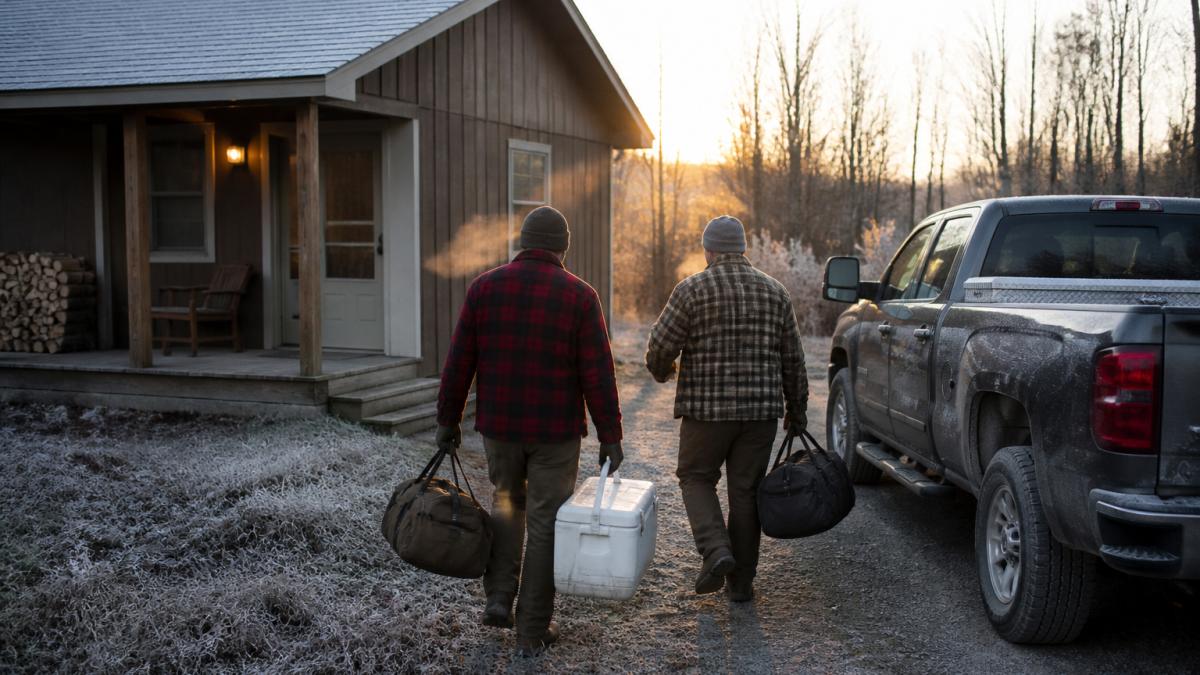
Cabin, Camper, or Wall Tent: Pick What Fits Your Group
The right shelter depends on group size, how long you're staying, and whether you have power.
- Cabin: Best for larger groups, longer stays, and mixed-age hunters. Needs a heat source, water plan, and a mudroom or entry area for boots.
- Camper or RV: Great for couples and small groups. Watch propane levels, water tank capacity, and ventilation if you're running a heater overnight.
- Wall tent with wood stove: Classic and roomy, but you'll need a level site and a properly installed tent-compatible stove and chimney system. Follow the manufacturer's clearance and ventilation requirements, and use appropriate fire and carbon monoxide safety precautions.
- Basic campsite: The simplest setup. You'll need a weather-appropriate tent, an insulated sleeping pad, a sleeping bag suited to the expected temperatures, and a dry place to store supplies.
A common mistake is sizing the shelter to the hunt instead of the group. Four hunters in a two-person camper gets old by day two.
Your Deer Camp Packing List: Must-Haves vs. Optional Comforts
Split your deer camp packing list into two piles: what you can't function without, and what makes camp nicer.
Must-haves:
- Sleeping bag rated for the coldest expected overnight low
- Sleeping pad or cot
- Two full changes of base layers
- Insulated boots and a spare pair of socks per day
- Headlamp plus a backup light
- First aid kit
- Cooler or portable cooler/freezer for food
- Water storage and a way to purify or haul water
- Propane or wood heat source with proper ventilation. Any heater must be approved for the specific shelter and used according to its instructions. Never use outdoor-only heaters, grills, or generators inside tents or enclosed sleeping areas.
- Carbon monoxide detector and smoke alarm
- Fire extinguisher
- Charged phone and a backup battery bank
- Valid hunting licenses, permits, and hunter-orange clothing that meets current state requirements.
- A map or offline navigation option, plus an emergency communication plan.
Optional comforts:
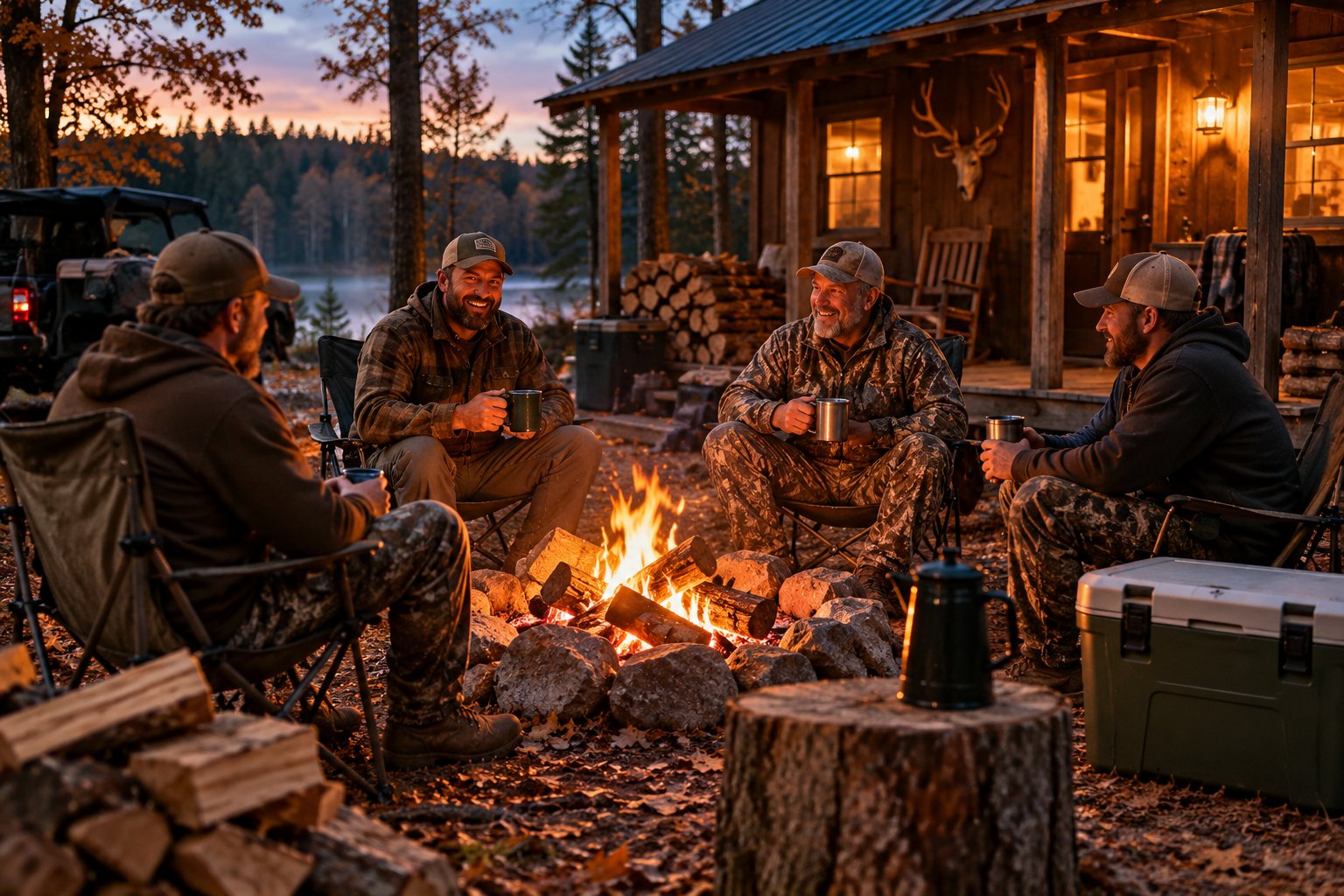
Rack & Ridge | Nothing like a night around the campfire telling stories
- Camp chair for around the fire
- Enamel mug for morning coffee
- Card deck for the kitchen table
- Portable grill for group meals
- Extra blanket for the bunk nobody claimed
Clothing and Personal Gear for Cold Mornings
Cold mornings are where beginners get humbled. Layering beats bulk every time.
Start with a moisture-wicking base layer, add an insulating mid-layer, then a wind-blocking outer layer. A heavyweight flannel works well as that mid-layer around camp, and a knit skull cap or beanie keeps heat where you lose it fastest.
Pack one dry set of clothes that stays in the truck, untouched, for the ride home.
A Hunting Camp Checklist for Water, Light, Heat, and Sanitation
A hunting camp checklist should cover the four utilities nobody thinks about until they fail: water, light, heat, and sanitation.
Water: Bring more than you think you need. Plan for drinking, cooking, and basic cleanup. If you're hauling from a spigot, use food-grade containers and keep them out of sunlight.
Light: Use lanterns for shared spaces and headlamps for personal use. Pack spare batteries and a backup light. Keep batteries dry and protected from extreme cold, and store loose batteries so their terminals cannot touch metal objects.
Heat: Use only heaters approved for your shelter or indoor space, following the manufacturer's instructions for installation, ventilation, and clearance. Never use outdoor-only heaters, camp stoves, grills, or generators inside tents, cabins, or enclosed sleeping areas. Install and test carbon monoxide detectors wherever fuel-burning equipment is used.
Sanitation: A five-gallon bucket with a snap-on toilet seat and bags works as a camp latrine. Bring hand sanitizer, a small trash bag system, and a designated handwashing station.
Deer Camp Food Ideas and a Simple Cooking Plan
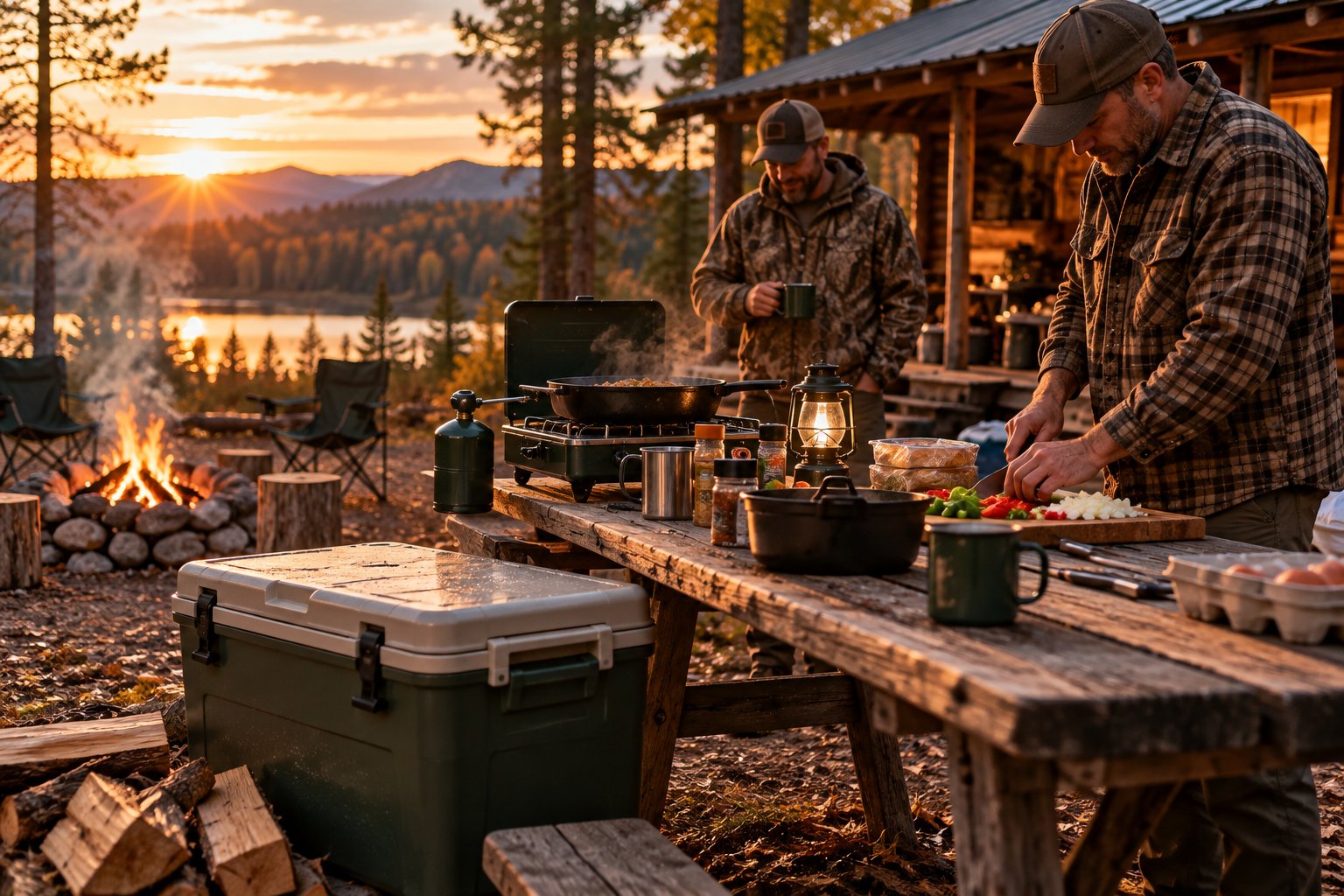
Deer camp food ideas work best when they're one-pot, make-ahead, and easy to reheat after a cold sit.
Plan meals around a simple rotation: one breakfast you can repeat, two or three dinners that scale, and snacks that don't require cooking. Chili, stew, breakfast burritos, and foil-packet meals all reheat well. Prep what you can at home: chop vegetables, brown meat, portion out dry ingredients, and label everything with the day it's for.
Assign one meal to one person per day. Nobody should be cooking every meal, and nobody should be standing around waiting either.
Keep perishable foods at 40°F or below using a cooler with plenty of ice or a properly powered portable refrigerator. Pack raw meat separately from ready-to-eat foods, and use a food thermometer when preparing meals. Check cooler temperatures regularly throughout your stay.
Deer Camp Safety Checklist: What to Check Before You Unpack
Before unpacking, take time to check your camp's heating, fire safety, food storage, and emergency plans. A few minutes of preparation can help prevent serious problems.
- Carbon monoxide detector installed and tested in any space with a fuel-burning heat source
- Smoke alarm installed and tested
- Fire extinguisher within reach of the stove and heat source
- Heater placement checked: clear of bedding, curtains, and gear
- Ventilation confirmed for any propane or wood heat
- Chimney or stovepipe inspected for blockages
- Food stored in sealed containers or a cooler, not left out
- Emergency contact list posted where everyone can see it
- Weather forecast checked for the full stay
- Local hunting regulations and land-use rules reviewed for the area
- Cell signal or satellite messenger plan confirmed with the group
Hunting seasons, licensing requirements, and land-use rules vary by state and change year to year (General Hunting Laws). Check the current regulations with your state's wildlife or natural resources agency before you go, and confirm whether the land you're hunting is public, private, or leased.
Safety Item |
Check When |
Why It Matters |
|---|---|---|
CO detector |
Before unpacking |
Fuel-burning heat in tight spaces |
Smoke alarm |
Before unpacking |
Catches stove and heater issues early |
Fire extinguisher |
Before unpacking |
Stove, heater, and campfire risk |
Ventilation |
Before use and regularly |
Helps reduce carbon monoxide risk when using approved heating equipment |
Food storage |
Daily |
Keeps spoiled food out of the rotation |
Weather forecast |
Morning and evening |
Cold snaps and storms move fast |
Emergency contacts |
On arrival |
Everyone knows who to call |
Organizing a Small Cabin or Camper for Multiple Hunters
Organization in a small space comes down to zones. Give every category of gear a home, and camp stays livable even with four or five people.
Set up a mudroom zone right inside the door: a boot tray, a rubber mat, and a hook for wet jackets. Boots come off here, not at the bunk.
Create a drying zone near the heat source but not against it. A simple line or a few hooks for base layers and gloves keeps damp gear from piling up on sleeping bags.
Designate a gear corner for packs, bows or firearms cases, and hunting clothes. Keep it away from the cooking area and out of walkways. Firearms should be unloaded and securely stored, with ammunition stored separately, following applicable laws.
For food, one shelf or one cooler per hunter works better than a shared pile. Label it.
A Beginner Timeline: One Week Out, the Day Before, and Arrival Day
A simple three-stage timeline keeps first-timers from forgetting the important stuff.
One week out:
- Confirm who's coming and how many nights
- Assign meals and sleeping spots
- Check all gear: heater, detector, extinguisher, lights, cooler
- Buy and prep food; freeze what you can
- Review regulations and land-use rules for your area
- Confirm hunting licenses, required permits, hunter education requirements, and hunter-orange rules for everyone participating in the hunt.
The day before:
- Load the truck and check the list twice
- Charge phones, batteries, and headlamps
- Fill water containers and propane tanks
- Check the weather forecast for the full stay
Arrival day:
- Run the safety checklist before unpacking
- Set up sleeping areas first, then kitchen, then gear zones
- Test heat, lights, and detectors
- Walk the group through the emergency plan
- Confirm that everyone knows the location of the first-aid kit, fire extinguisher, and emergency meeting point.
Making Deer Camp Welcoming for Families and Younger Hunters
Deer camp should feel like something kids want to come back to. That starts with comfort and clear expectations.
Give younger hunters a sleeping setup that's warm and familiar: a cot with their own bag, a pillow from home, and a spot to keep a bag of their own things.
Set age-appropriate safety expectations up front. Kids should know where the fire pit boundary is, which gear is off-limits, and who to check in with before wandering.
The traditions grow on their own: coffee in the morning, a shared meal at the table, cards after dark, stories around the fire.
Setting up your first deer camp takes a little planning, but it doesn't have to be complicated. Start with a safe, comfortable place, share the work, and make room for the moments that matter most—meals around the table, card games, campfire stories, and time together. Those are the memories that bring everyone back year after year.
Built for the Backwoods.
Frequently Asked Questions
What do you need for a beginner deer camp?
Start with the basics that keep you warm, fed, and safe: a sleeping bag rated for the forecast, a sleeping pad, layered clothing, boots, a headlamp with spare batteries, water, easy meals, a cooler, a first aid kit, a fire extinguisher, and a carbon monoxide detector if you are burning any fuel indoors. Add your hunting gear, license, and a charged phone with an emergency contact list. Everything else is comfort, not survival.
What should I pack for a hunting camp?
Build your deer camp packing list in three piles: personal gear, shared camp gear, and food. Personal gear covers clothing layers, boots, rain gear, toiletries, medications, and your hunting setup. Shared gear covers water, lighting, cooking equipment, coolers, trash bags, and cleaning supplies. Food should be prepped ahead so nobody is cooking from scratch after dark. Pack must-haves first, then add optional comforts like a camp chair or extra blanket if space allows.
What food should you bring to deer camp?
Pick meals you can cook once and eat twice. Chili, stew, pulled venison, breakfast casseroles, and foil packets all reheat well. Bring shelf-stable backups like peanut butter, crackers, and canned soup in case weather keeps you in. Pre-chop vegetables and precook any meat at home so camp cooking is assembly, not a project. Keep cold items in a cooler packed with ice or a 12-volt cooler, and store dry goods in sealed bins so mice and damp air stay out.
How do you keep a hunting cabin organized?
Give every category a spot on arrival day. Boots and wet clothing go on a mat or rack near the door, never on sleeping areas. Hunting gear stays on hooks or in bins by the door you actually leave from. Food goes in one designated cooler or cabinet, and personal bags stay at each person's bunk. Assign one shared cleanup task per hunter and do a five-minute tidy each evening. Small habits keep a tight cabin from turning into chaos by midweek.
How do you stay warm and safe at deer camp?
Dress in layers and bring extra socks, gloves, and warm bedding. Use only heating equipment approved for your shelter, and follow the manufacturer's instructions for ventilation and safe clearances. Never use outdoor-only heaters, grills, camp stoves, or generators inside enclosed sleeping areas. Install and test appropriate carbon monoxide detectors and smoke alarms, keep a fire extinguisher nearby, and check the weather before heading out. If you're using a wood stove, inspect the chimney, keep combustible materials away, and dispose of ashes safely.