

Table of Contents
- Quick Comparison: Top Functional Outdoor Gear for 2026
- How to Choose Outdoor Gear That Actually Works
-
Essential Camping Gear Checklist for Families
- Shelter and Sleep: The Two Systems That Decide the Trip
- Adaptive Fit and Inclusive Sizing
- Climate-Specific Adjustments
- Layering Systems for Changing Weather
- Navigation, Communication, and the 2026 Tech Layer
- Budget vs. Premium: Where the Money Actually Goes
- Testing Methodology: How to Judge Gear Before You Buy
- Rack & Ridge Picks: Functional Gear That Performs
- Maintenance Tips for Outdoor Equipment That Lasts
- Frequently Asked Questions
Last Updated: September 14, 2026
Quick Comparison: Top Functional Outdoor Gear for 2026
The best functional outdoor gear in 2026 comes down to three things: a trustworthy waterproof rating, a breathability number that keeps you from soaking in your own sweat, and construction that survives more than one season. This guide from Rack & Ridge covers what to buy, what to skip, and how to make each piece last.
Most gear guides rank products by brand name instead of the numbers on the tag. A 5,000 mm jacket and a 20,000 mm jacket are not the same product, even if they look identical on a hanger (rei.com).
| Gear Category | What to Check First | Why It Matters |
|---|---|---|
| Shell jackets | Waterproof mm + breathability | Decides rain protection vs. sweat buildup |
| Base layers | Fabric + moisture-wicking finish | Controls warmth when you're moving |
| Insulation | Synthetic vs. down | Wet-weather performance |
| Footwear | Traction + cushioning | Stability on wet ground |
| Hydration | Insulation + lid seal | Temperature retention on long days |
Match the rating to the weather you actually hunt, hike, and work in, not the weather you wish you had.
How to Choose Outdoor Gear That Actually Works
Choosing functional outdoor gear means matching three specs to your real conditions: waterproof rating, breathability rating, and packability. Many buyers over-buy waterproofing and under-buy breathability, then wonder why they're clammy by mid-morning.
Waterproof Ratings and Breathability Explained
A waterproof rating measures how much water pressure a fabric resists before moisture pushes through, in millimeters (rei.com). A breathability rating measures how much water vapor escapes from inside the garment, in grams per square meter over 24 hours. Read the two numbers side by side.
- 5,000 mm waterproofing handles steady rain and wet snow
- 10,000 mm and up handles sustained downpours and pressure from a pack strap
- 3,000 g/m² breathability suits low-output activities like sitting a stand
- 5,000 g/m² and up suits hiking, climbing, and hard miles
A jacket with high waterproofing and low breathability traps sweat; high breathability and low waterproofing lets rain through. Both numbers must clear the bar for your activity level.
Essential Camping Gear Checklist for Families
The essential camping gear checklist for a family breaks into four systems: shelter, sleep, layers, and hydration. Everything else is a comfort item. What separates a list that works from one that fails on night two is whether each item is sized and rated for the people and conditions actually on the trip. Here's the field-tested list:
- Shelter: tent with a full-coverage rainfly and sealed seams
- Sleep system: sleeping bags rated 10°F below your expected low
- Sleep pads with an R-value matched to ground temperature
- Base layer per person, synthetic or merino, no cotton
- Insulating mid-layer per person
- Waterproof shell per person
- Insulated bottles, one per person
- Headlamps with spare batteries
- First aid kit and repair tape
- Navigation device or paper map with compass
Cotton is the one fabric to leave home. It holds moisture against skin and stops insulating once wet, which is why synthetics and wool dominate every serious packing list (Dressing for Winter).
Shelter and Sleep: The Two Systems That Decide the Trip
Shelter and sleep are where families overspend on the wrong thing. A tent's hydrostatic head rating (millimeters, same scale as jacket waterproofing) tells you how much water pressure the fly resists: 1,200 mm handles typical rain, 3,000 mm and up handles sustained storms. A 5,000 mm bathtub floor with taped seams keeps ground moisture out; an unrated floor wicks it through.
Sleep systems are a math problem. Bag temperature ratings assume a pad with adequate R-value underneath; a 20°F bag over a bare ground pad performs like a 40°F bag. Match the pad to the season:
- R-value 1-2: summer only, warm ground
- R-value 3-4: three-season, the common default
- R-value 5 and up: cold ground, shoulder seasons, snow
Buy pads by body weight and sleep position: a 25-inch pad suits side sleepers and adults who roll; a 20-inch pad is fine for kids and back sleepers. Bag length should run to your height plus a few inches, too long means dead air space your body has to heat, too short compresses the footbox and kills loft.
Adaptive Fit and Inclusive Sizing
Most gear guides assume a single body type, which is why so many families end up with gear that binds or gaps. Fit is a functional specification: a shell tight across the shoulders can't layer over a mid-layer, and a too-narrow sleeping bag compresses its own insulation. Check the size range per garment, sizing isn't consistent across a single brand's line:
For kids, size up on shells and size true on sleep systems (a too-big bag loses warmth). For adults, look for garments that publish both a chest and a garment measurement, the difference is your layering room, the number that predicts whether a shell works over a puffy.
Climate-Specific Adjustments
The same checklist produces different gear in different conditions. In warm-wet conditions, breathability outranks waterproofing: a 20,000 mm shell with 3,000 g/m² breathability will soak you from the inside faster than rain soaks you from outside. Prioritize breathability at or above 5,000 g/m², pack a spare base layer per person, and choose a tent with a mesh-heavy inner and a fly that vents at both ends.
In arid, cold conditions, the priorities flip. Waterproofing matters less than wind resistance and insulation, because the threat is heat loss to wind and radiant cold. A soft shell with a 20,000 mm coating bonded to fleece, like the Logo Waterproof Soft Shell, handles cold, wet mornings and blocks wind, though its fleece lining dries slower if soaked. In dry cold, add a windproof shell over insulation and size your sleep pad up one R-value beyond what temperature alone suggests.

Layering Systems for Changing Weather
A layering system is three garments: a moisture-wicking base layer, an insulating mid-layer, and a weatherproof shell. The base layer moves sweat away from skin, the mid-layer traps warmth, and the shell blocks wind and rain while letting vapor escape. Skip the base layer and your mid-layer soaks; skip the shell and wind cuts through the insulation. Pack the shell even when the forecast is clear, a packable anorak that stuffs into its own pocket costs almost nothing in pack space.
Navigation, Communication, and the 2026 Tech Layer
Navigation and off-grid communication are the two categories families most often skip and most often need. A phone is not a navigation plan, carry a paper map and compass as primary, and treat a GPS device or phone app as backup.
For communication beyond cell coverage, satellite messengers and personal locator beacons (PLBs) are the two categories to know. A satellite messenger sends two-way text and can trigger an SOS; a PLB sends a one-way distress signal with no messaging. A satellite messenger needs a charged battery and an active plan; a PLB runs on its own battery for years with no subscription. For a family group, one satellite messenger per party plus a PLB as backup is a common pattern.
In 2026, the practical tech layer also includes a watch or wearable that tracks route and heart rate and syncs to a phone app. The value isn't the data, it's the pre-trip planning and post-trip record. Treat any AI-driven route suggestion as a starting point: verify it against a map, check the weather window, and confirm water and bailout points before you commit a family to it.
Budget vs. Premium: Where the Money Actually Goes
The gap between a $60 shell and a $270 shell is rarely the waterproof rating alone, it's the construction behind the rating. A 5,000 mm jacket at $114.18 and a 10,000 mm jacket at $272.48 differ in seam sealing, fabric layers, and membrane bonding, and those differences show up in year two, not week one. Spend up on items that fail structurally, shells, sleep pads, footwear. Save on items that fail cosmetically, hats, tumblers, stuff sacks.
Testing Methodology: How to Judge Gear Before You Buy
You can't field-test a jacket in a store, but you can read a spec sheet like a tester. Four checks separate a real rating from a marketing one:
- Seam sealing, look for taped or welded seams, not just a rating. A 10,000 mm jacket with sealed seams outperforms a 20,000 mm jacket with exposed stitching in real rain.
- Breathability units, confirm the number is in g/m²/24hr (sometimes MVP). A claim with no unit is not a claim.
- DWR finish, check for a durable water repellent finish and whether the brand tells you how to re-apply it. A shell you can't re-proof has a two-year life.
- Return policy, a brand confident in its ratings lets you return a wet-out shell.
Rack & Ridge Picks: Functional Gear That Performs
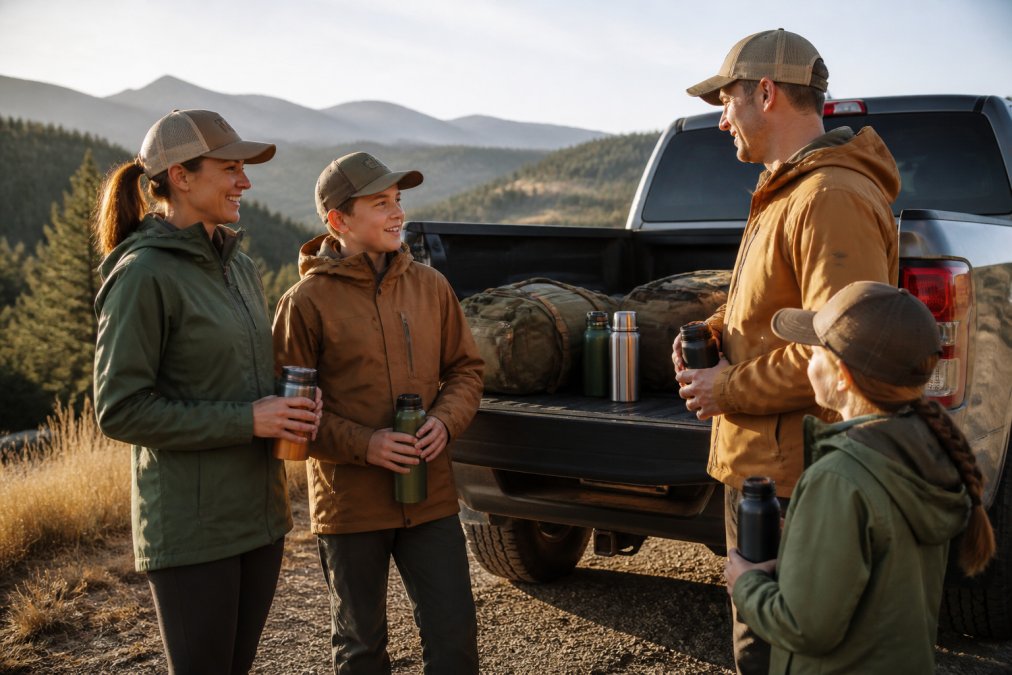
The Rack & Ridge collection from Rack & Ridge is built around field use rather than showroom looks. Every jacket in the line lists its waterproof and breathability ratings on the product page.
Jackets Built for Rain, Wind, and Cold
The Rack & Ridge Torrent Waterproof Jacket is the entry point at $114.18, with a 5,000 mm waterproof rating and 3,000 g/m² breathability. It packs into its own carry pouch, making it the jacket that lives in the truck. Best for spring and fall rain, not a sustained mountain downpour.

The Men's Tech Jacket at $272.48 doubles waterproofing to 10,000 mm and raises breathability to 5,000 MVP, with three-layer seam-sealed recycled polyester. This is the one for hard miles and all-day wet; the tradeoff is price and a stiffer hand feel out of the bag.

For cold, wet mornings, the Logo Waterproof Soft Shell Jacket at $130.60 is built with a waterproof shell and warm fleece lining. The fleece lining makes it warmer than its weight suggests, though it dries slower if soaked through.
Two more worth knowing: the Insulated Hooded Duck Cloth Work Jacket at $110.77 uses 12 oz enzyme-washed cotton duck cloth for cold-weather work where abrasion matters more than packability. The Packable Anorak at $58.95 is the grab-and-go layer for wind and light rain.
| Jacket | Waterproof | Breathability | Price | Best For |
|---|---|---|---|---|
| Torrent Waterproof | 5,000 mm | 3,000 g/m² | $114.18 | Everyday rain, truck layer |
| Men's Tech Jacket | 10,000 mm | 5,000 MVP | $272.48 | All-day wet, hard miles |
| Logo Soft Shell | 20,000 mm | 5,000 | $130.60 | Cold, wet mornings |
| Duck Cloth Work | Water-repellent | Insulated | $110.77 | Cold-weather work |
| Packable Anorak | Wind/rain resistant | Lightweight | $58.95 | Grab-and-go coverage |
Everyday Carry: Bottles, Tumblers, and Hats
Hydration and headwear get ignored in gear guides, yet they're the two items you touch most on any given day. The Oasis 32oz Insulated Water Bottle at $51.20 holds hot drinks up to 12 hours and cold up to 24 thanks to double-wall vacuum construction. It's hand wash only.
The 15 oz. Trailhead Travel Tumbler at $32.24 is the cup-holder companion, and it's dishwasher safe. For coverage, the Retro Mesh-Back Trucker Hat at $34.92 comes in sixteen colors with an adjustable snapback that fits most head sizes.
Maintenance Tips for Outdoor Equipment That Lasts
Maintenance tips for outdoor equipment come down to three habits: clean after use, re-proof before the season, and repair before you replace. Gear that gets washed and re-treated routinely outlasts gear that gets replaced every two years.
Washing a waterproof shell sounds wrong, but dirt and body oils clog the fabric's pores and kill breathability, and a clogged shell wets out. Follow the care tag: machine wash cold on gentle, tumble dry low, no bleach, no dry clean.
- Re-apply a DWR finish when water stops beading on the surface
- Store jackets loose on a hanger, never compressed in a stuff sack long-term
- Air out sleeping bags after every trip before storing
- Check seam tape annually and re-seal any lifting edges
- Patch small tears immediately with repair tape to stop them spreading
The Repair Workflow: Fix Before You Replace
Most outdoor gear failures are surface failures, not structural ones. A jacket with a re-sealed seam and fresh DWR performs like new for years, keeping it out of a landfill and saving the cost of a replacement.
Seam tape lifting. Clean with isopropyl alcohol, let dry fully, then press seam-sealing tape over the lifted edge with a warm iron on low heat (use a pressing cloth). Test with a splash of water before trusting it in rain.
DWR failure (wetting out). Wash the shell per the care tag first, DWR failure is often just dirt. If water still soaks in flat, apply a spray-on or wash-in DWR treatment and tumble dry low to reactivate it. Heat bonds most DWR finishes to fabric, which is why the dryer step matters.
Small tears and punctures. Clean the area, trim loose threads, and apply a repair patch or tape on both sides where possible. For down insulation, use a down-specific patch; for synthetic fill, standard repair tape holds. Patch immediately, a small tear under pack-strap pressure becomes a large one by trip's end.
Zipper failure. Most zipper failures are slider or pull failures, not teeth failures. A stuck slider can often be freed with a graphite pencil; a slider that no longer closes can sometimes be pinched gently with pliers. Damaged teeth need a gear repair shop.
Sleep pad leaks. Inflate the pad, submerge it in a bathtub, and mark the bubble. Clean and dry the spot, then apply a patch per the manufacturer's instructions. Most pad punctures are repairable; most valve failures are not.
Product-Specific Care: What Each Piece Needs
Care instructions are not universal. A few specifics from the Rack & Ridge line:
- Torrent Waterproof Jacket ($114.18): machine wash cold, gentle, tumble dry low. Re-proof when water stops beading. Packs into its own pouch, store it loose, not compressed, between trips.
- Men's Tech Jacket ($272.48): three-layer seam-sealed recycled polyester. Wash cold, gentle, no fabric softener (softener coats the membrane and kills breathability), tumble dry low to reactivate DWR.
- Logo Waterproof Soft Shell ($130.60): the fleece lining dries slower than a plain shell, so air it out fully after a wet day before storing. Wash cold, gentle, and avoid high heat, which can damage the bonded coating.
- Duck Cloth Work Jacket ($110.77): 12 oz enzyme-washed cotton duck cloth. Cotton duck is durable but slow to dry, air dry it, and re-wax or re-treat the fabric if it stops shedding water.
- Oasis 32oz Insulated Water Bottle ($51.20): hand wash only. Insulated bottles lose their vacuum seal if you run them through a hot dishwasher cycle. Hand wash the Oasis and it'll hold temperature for years. Machine wash it and you'll be buying a replacement.
- Trailhead Travel Tumbler ($32.24): dishwasher safe, unlike the Oasis. Check the lid gasket periodically and replace it if it stops sealing.
- Retro Mesh-Back Trucker Hat ($34.92): hand wash or spot clean; the mesh back and snapback adjuster hold up better when they're not run through a machine.
Storage and Off-Season Care
How you store gear matters as much as how you clean it. Compressing a sleeping bag in a stuff sack for eight months crushes the loft and permanently reduces warmth; store it loose in a cotton bag or hang it. Hang shells on a wide hanger so the membrane doesn't crack along a fold. Store sleep pads unrolled with valves open. Keep everything out of direct sun and away from a hot garage, UV and heat degrade coatings, membranes, and foam faster than use does.
When to Repair and When to Replace
Most gear is repairable until it isn't, and the line is structural. Repair when the failure is a seam, a surface coating, a small tear, a zipper slider, or a pad puncture. Replace when the failure is a delaminated membrane, a broken frame or stay, a failed pad valve, or a shell whose fabric has torn along a stress point more than once. A $15 repair on a $270 jacket is the best value in outdoor gear; the same repair on a $60 jacket already wetting out at the seams is money better put toward the upgrade.
Frequently Asked Questions
What are the top outdoor gear trends for 2026?
In 2026, functional outdoor gear focuses on durability, repairability, and climate-specific design. Shoppers are looking for waterproof ratings like 10,000 mm and breathability scores that match their activities. Expect to see more recycled fabrics, packable designs, and gear that transitions from field to town without looking out of place.
How do I choose functional outdoor gear for family activities?
Start by matching gear to your most common outings. For wet conditions, a jacket with a 5,000 mm waterproof rating like the Rack & Ridge Torrent works well. For layering, pick moisture-wicking pieces such as the Antler Embroidered Quarter-Zip. Consider packability and easy care, since families need gear that handles repeated use. Look for adjustable fits and sizes that accommodate different body types.
What makes outdoor gear 'functional' for everyday use?
Functional gear solves real problems: it keeps you dry, warm, or comfortable without extra bulk. Features like seam-sealed construction, adjustable hoods, and breathable fabrics make a difference. The Rack & Ridge Men's Tech Jacket, for example, uses a three-layer recycled polyester build with a 10,000 mm rating. Functional also means easy maintenance and versatile style that works beyond the trail.
How do I maintain my outdoor gear to ensure it lasts?
Follow care labels closely. Most waterproof jackets need a gentle cycle and low tumble dry to preserve the DWR finish. Avoid bleach and dry cleaning. For insulated bottles like the Oasis 32oz, hand wash to keep the vacuum seal intact. Store gear clean and dry, and repair small issues like loose seams or zippers before they worsen. Proper care extends gear life by years.