

Table of Contents
- What Matters in Hunting Apparel for Rugged Terrain
- How to Layer Hunting Apparel for Rugged Terrain
- A Versatile Outer Layer for Cool-Weather Hunts
- A Warmer Soft Shell for Cool, Damp Conditions
- A Rugged Insulated Layer for Cold Outdoor Days
- A Lightweight Soft Shell for Active Days Outdoors
- Durable Hunting Pants for Brush and Rocky Ground
- How to Maintain Technical Hunting Gear
- Frequently Asked Questions
Last Updated: September 23, 2026
What Matters in Hunting Apparel for Rugged Terrain
Rugged terrain puts hunting clothing to the test. Steep climbs, thick brush, cold sits, wind and changing weather can quickly expose gear that isn't suited for the conditions.
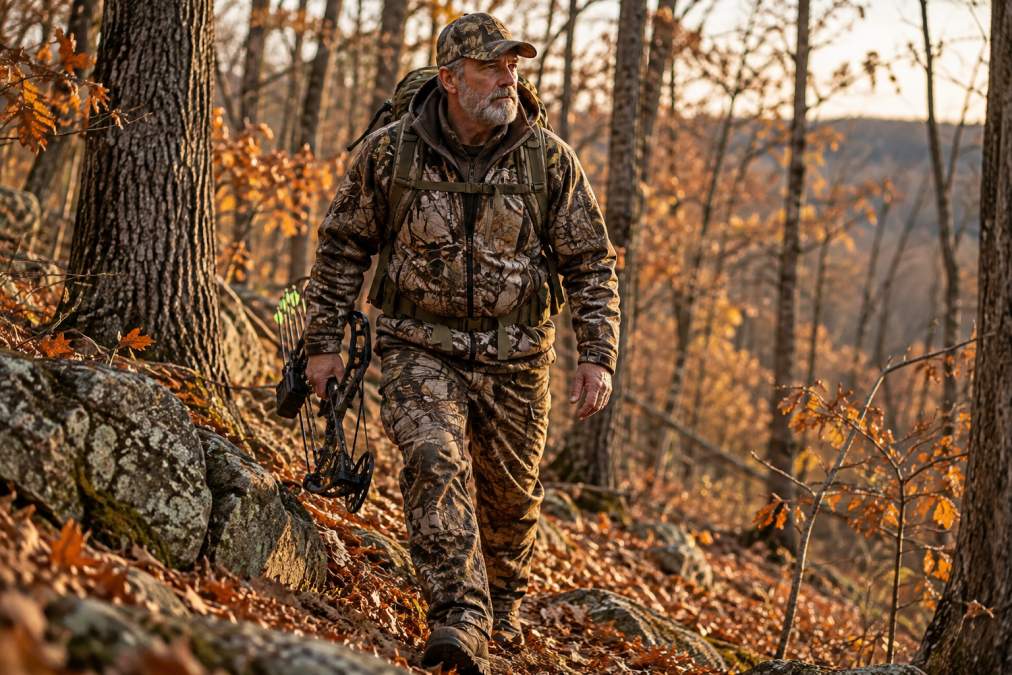
When choosing hunting apparel for rugged terrain, focus on four things: weather protection, durability, breathability and how well your layers work together. The right setup should help protect you from the elements without making it harder to move, climb or stay comfortable when your activity level changes.
Priority |
What to Check |
Why It Matters |
|---|---|---|
Weather protection |
Waterproof rating, taped seams, DWR finish |
Keeps rain and wet brush off your skin |
Durability |
Fabric weight, ripstop weave, reinforced stress points |
Survives rock, thorn, and repeated use |
Breathability |
Breathability rating, ventilation zippers |
Prevents sweat-soaked base layers on the climb |
Layering |
Base layer, mid-layer, outer shell compatibility |
Lets you adjust to changing temps and output |
How to Layer Hunting Apparel for Rugged Terrain
A good layering system gives you the flexibility to adjust as the weather and your activity level change. Start with a moisture-managing base layer, add an insulating mid-layer for warmth, and use an outer layer when you need protection from wind, rain or brush.
The key is being able to add or remove layers before you get too hot or too cold. What works during a slow morning in the stand may be too much when you're hiking through rough ground, climbing hills or pushing through thick cover. Build your layers around the conditions you expect and the amount of movement your hunt requires.
U.S. Forest Service guidance on outdoor safety and weather preparedness
A Versatile Outer Layer for Cool-Weather Hunts
Not every hunt calls for a heavy insulated jacket. On cool fall mornings, scouting trips, days around camp or milder hunts, a comfortable outer layer can be a useful part of your setup.
The Rack & Ridge Men's Embroidered Soft Shell Jacket gives you a clean outdoor layer that works well when you want something more substantial than a hoodie without jumping straight to heavy cold-weather gear.
For changing conditions, think of a soft shell as one part of your layering system rather than your only protection from the elements. Pair it with the right base and insulating layers for the temperature, wind and weather you're expecting.

Rack & Ridge | Logo Waterproof Soft Shell Jacket. The fleece lining makes it warmer than a pure shell, so it's not the pick for a fast, sweaty climb. Save it for the stand, the blind, or a slow walk-in.
A Warmer Soft Shell for Cool, Damp Conditions
When temperatures drop, a lined soft shell can add warmth without immediately reaching for a bulky winter coat. The Rack & Ridge Logo Waterproof Soft Shell Jacket pairs an outer shell with a microfleece lining, making it a useful option for cool mornings, time around camp, scouting trips and lower-activity days outdoors.
The adjustable hood and zippered pockets add practical weather protection and storage, while the fleece lining makes this a warmer option than an unlined shell.
For colder hunts or long periods of sitting still, build your clothing around a complete layering system rather than relying on one jacket to do everything. Your base layers, insulation, outer layer and expected weather all matter.
Rack & Ridge | Embroidered Soft Shell →
A Packable Rain Layer for Changing Weather
Weather can change quickly when you're spending a full day outdoors, which is why a packable rain layer can earn its place in your hunting bag. The Rack & Ridge Torrent Waterproof Jacket packs into its included carry pouch, making it easy to keep nearby when rain is in the forecast.
The jacket features a waterproof polyester shell, mesh lining through the body and hood, an adjustable zip-off hood, zippered pockets, adjustable cuffs and a drawcord hem.
Think of this as your weather-protection layer rather than your insulation. When temperatures drop, wear it over the appropriate base and mid-layers for the conditions.
A Rugged Insulated Layer for Cold Outdoor Days
Some outdoor days call for something heavier and tougher. The Rack & Ridge Insulated Hooded Duck Cloth Work Jacket is made from heavyweight 12 oz cotton duck cloth and insulated for added warmth in cooler conditions.
Its rugged workwear-style construction makes it a practical option for chores around camp, scouting, working outdoors and other cold-weather activities where durability matters.
For hunting, consider where and how you'll be using it. A heavier work-style jacket may make sense for slower-paced days, but hunters covering a lot of ground may prefer lighter, more breathable layers that are easier to adjust as activity levels change.

It's insulated to hold warmth on cold mornings when you have no choice but to keep moving.
A Lightweight Soft Shell for Active Days Outdoors
When you're moving more and don't need a heavy insulated layer, a lightweight soft shell can be a comfortable option. The Rack & Ridge Embroidered Soft Shell Jacket works well for cool mornings, scouting, walking into the woods, working around camp and other active days outdoors.
Its lighter construction also makes it easier to pair with base or mid-layers as conditions change. Rather than expecting one jacket to handle every situation, use it as part of a flexible layering system built around the weather and your activity level.

Durable Hunting Pants for Brush and Rocky Ground
Rugged ground can be hard on hunting pants. Thick brush, fallen timber, rocks and repeated kneeling all put extra wear on the fabric, so durability and freedom of movement matter.
Look for pants made with durable, tightly woven or ripstop-style fabrics, along with reinforcement in high-wear areas such as the knees and seat. Articulated knees or a gusseted crotch can also make climbing, crouching and stepping over logs more comfortable.
Fit matters too. You want enough room for a base layer when temperatures drop without creating unnecessary bulk or restricting movement. For more active hunts, ventilation features can also help you manage heat as your activity level changes.
A few things to check before you buy:
- Durable fabric: Look for materials designed to handle repeated contact with brush and rough ground.
- Reinforced knees and seat: Helpful in areas that see the most wear.
- Freedom of movement: Articulated knees, stretch or a gusseted crotch can make climbing and crouching easier.
- Ventilation: Useful when you're covering ground and building heat.
- Layer-friendly fit: Leave enough room for a base layer when conditions get colder.
How to Maintain Technical Hunting Gear
Good hunting apparel can last longer when it's cared for properly. Mud, moisture and repeated use are part of spending time outdoors, but how you clean, dry and store your gear matters too.
Always start with the manufacturer's care instructions, especially with waterproof or water-resistant jackets. Different fabrics, coatings and insulation can require different cleaning and drying methods.
After a wet or muddy hunt, give your gear a chance to dry completely before storing it. Clean it when needed according to the care label, check zippers and seams for damage, and store jackets and other layers clean and dry rather than leaving them damp or compressed in a hunting bag.
Frequently Asked Questions
What features make hunting apparel suitable for rugged terrain?
Look for a balance of durability, comfort, weather protection and freedom of movement. Reinforced high-wear areas, durable fabrics and a fit that lets you climb, crouch and move through cover comfortably can all be useful. Your ideal setup will also depend on the weather, terrain and how active you expect to be.
What's the quietest material for hunting clothes?
There isn't one material that's best for every hunt. Softer fabrics may produce less noise than some stiffer outer shells, but weather protection, warmth and durability matter too. Think about where you'll be hunting and choose your outer layers based on the conditions you expect.
How does fabric durability impact performance in the backcountry?
Thick brush, rocks, fallen timber and repeated kneeling can put extra wear on hunting clothing. Durable fabrics and reinforced high-wear areas can help clothing better handle those conditions. When choosing gear, pay particular attention to the knees, seat, seams, pockets and other areas likely to see repeated wear.