

Table of Contents
- There's No Single Best Age to Start Teaching Kids to Hunt
- Introducing the Outdoors vs. Participating in a Legal Hunt
- How to Introduce Kids to Hunting Through Everyday Outdoor Time
- Your Child Hunting Readiness Checklist
- Firearm and Archery Safety Around Kids
- Hunter Education Requirements for Youth: What Parents Should Know
- Hunting With Kids Tips for a Positive First Experience
- Conclusion: Passing Down the Tradition at Their Pace
- Frequently Asked Questions
Last Updated: October 12, 2026
There's No Single Best Age to Start Teaching Kids to Hunt
Ask ten hunting families about the best age to start teaching kids to hunt and you'll get ten different answers. That's because the real answer isn't a number. It's a mix of maturity, patience, and genuine interest.
At Rack & Ridge, our brand is built around deer camp, family traditions, and passing the outdoors down to the next generation. So this question comes up a lot. Here's the honest truth:some kids show interest at six, and some aren't ready at twelve. Age matters less than readiness.

There's also a big difference between introducing a child to the outdoors and putting them in a legal hunting situation. Those are two separate things, and mixing them up is where parents get frustrated.
This guide walks through age-friendly activities, a readiness checklist, safety basics, and what to expect from hunter education. Below, we'll show you exactly how to introduce kids to hunting without rushing them.
Introducing the Outdoors vs. Participating in a Legal Hunt
Introducing kids to hunting means building comfort with nature, wildlife, and camp life. Participating in a legal hunt means a child is old enough, trained enough, and legally allowed to carry equipment or take an animal.
Those are very different milestones.
One happens in your backyard. The other happens under state law.
Many parents skip straight to the second one. That's a mistake. A child who learns to sit still and watch deer from a distance will handle a real hunt far better later.
The U.S. Fish and Wildlife Service hunter education overview notes that safety training is the foundation of every responsible hunter, regardless of age.
So keep the two ideas separate in your head. Outdoor time builds the foundation. Legal hunting comes later, when your child and your state both say yes.
How to Introduce Kids to Hunting Through Everyday Outdoor Time
Everyday outdoor time is the best teacher. You don't need a license or a special trip. You need a trail, a pair of boots, and a little patience.
Start with simple, low-pressure activities:
- Nature walks where you look for tracks, scat, and rubs
- Sitting quietly to watch deer, squirrels, or birds
- Learning what deer eat and where they bed down
- Helping pack gear and prep for deer camp
- Practicing "quiet feet" and "still hands" games
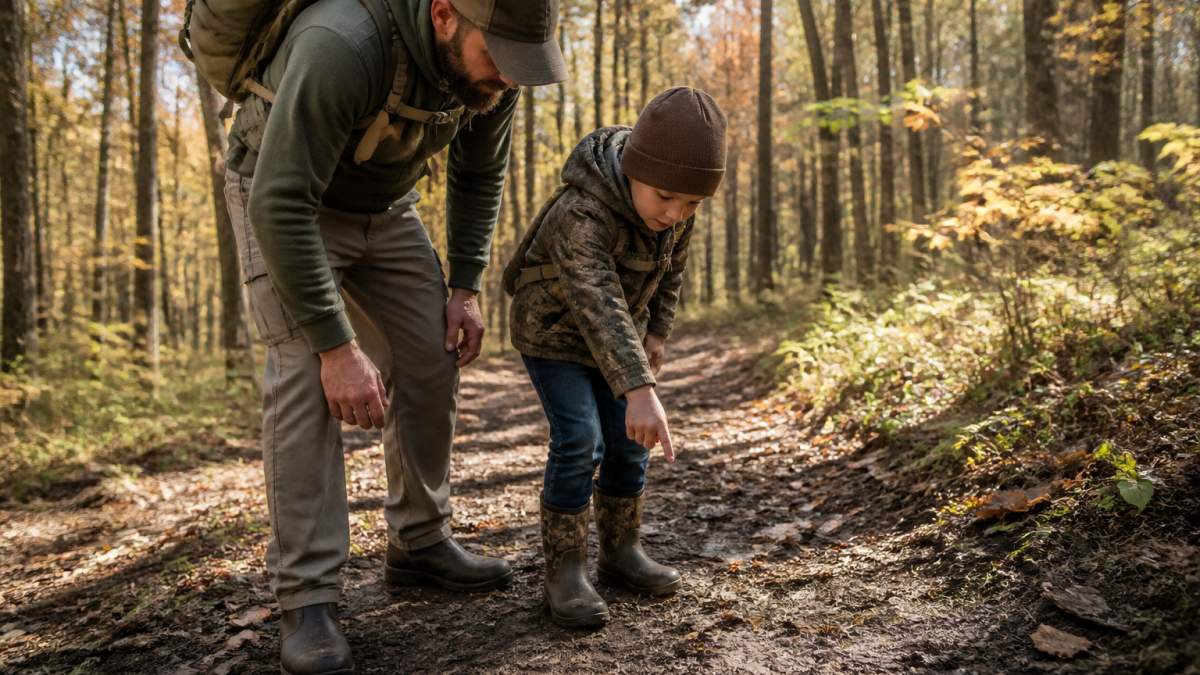
These moments teach the skills hunting actually requires. Patience. Observation. Respect for wildlife.
A common mistake is turning every outing into a lesson. Let kids lead sometimes. If your child wants to throw rocks in a creek instead of tracking deer, that's still a win. They're outside, and they're happy.
Age-by-Age Activity Ideas (Not Legal Hunting Ages)
Use these ranges as suggestions for learning activities. They are not legal hunting ages, and they are not rules.
Age Range |
Activity Focus |
What Success Looks Like |
|---|---|---|
3-5 |
Backyard nature time, animal sounds, simple tracks |
Child enjoys being outside |
6-8 |
Short hikes, wildlife watching, camp chores |
Child can stay quiet for a few minutes |
9-11 |
Tracking, habitat basics, supervised range time |
Child follows safety rules consistently |
12+ |
Hunter education, mentored hunts where legal |
Child shows patience and real interest |
Every child moves at their own pace. Some skip ahead. Some need more time.
Your Child Hunting Readiness Checklist
A child hunting readiness checklist takes the guesswork out of timing. Go through it honestly before you plan anything bigger.
- Listens and follows directions the first time
- Can sit still and quiet for 15-20 minutes
- Shows real interest, not just wanting to please you
- Understands that wildlife deserves respect
- Follows safety rules without reminders
- Handles disappointment without a meltdown
- Asks questions about animals and habitat
- Wants to go again after a boring outing
If your child consistently shows these skills, you can consider the next age-appropriate learning activity, with safety and state regulations guiding the way.”
For more on youth safety and training standards, the National Shooting Sports Foundation safety resources offers guidance for families.
Firearm and Archery Safety Around Kids
Safety comes before everything else. No exceptions, no shortcuts.
Start with these habits:
RACK & RIDGE Raised on Deer Camp Toddler Boys' Long-Sleeve Tee →
- Store all firearms locked and unloaded, with ammo stored separately
- Never let a child handle equipment without a qualified adult present
- Teach the basics early: stop, don't touch, leave the area, tell an adult
- Model safe handling yourself, every single time
Archery safety follows the same logic. A bow is not a toy. Kids should learn range rules before they ever draw one.
Hunter education courses cover this ground well, and many states offer youth-friendly formats. But the real teaching happens at home, long before a class.
Hunter Education Requirements for Youth: What Parents Should Know
Hunter education requirements for youth vary by state. There is no single national rule.
Some states also offer apprentice or mentored hunting programs. These let a child hunt alongside an adult before completing a course.
Here's what to check with your state wildlife agency:
- Minimum age to enroll in hunter education
- Whether a mentored or apprentice license exists
- Supervision rules for young hunters
- Any method-specific rules for firearms or archery
The National Rifle Association hunter education programs and your state agency are both good starting points. Always confirm current rules directly, because they change.
Hunting With Kids Tips for a Positive First Experience
Short and sweet beats long and miserable. That's the whole game with a first hunt.
Keep these hunting with kids tips in mind:
- Plan outings around 1-2 hours, not all day
- Dress for the weather, with layers and dry boots
- Bring snacks, water, and a quiet activity
- Take breaks before your child asks for one
- Celebrate the experience, not the harvest
If your child sees a deer and stays quiet, that's a win. If they don't see anything and still had fun, that's also a win.
The goal of a first hunt is a second hunt. Everything else comes later.
A Rack & Ridge kids' [tee like the RACK & RIDGE Raised on Deer Camp Toddler Boys' Long-Sleeve Tee](https://www.rackandridge.com/products/toddler-long-sleeve-tee-raised-on-deer-camp-kids-hunting-shirt) can make camp mornings feel special for little ones tagging along.

What If My Child Loses Interest?
Let it go, and don't force it. Kids cycle through interests, and hunting may come back around later.
Keep inviting them outside in other ways. Fishing, hiking, and campfires all keep the door open. Many kids return to hunting in their teens on their own terms.
Conclusion: Passing Down the Tradition at Their Pace
The best age to start teaching kids to hunt is the age when your child is ready, not the age on a calendar. Build the foundation first, then let the legal side follow when the time is right.
Rack & Ridge exists for families who want to pass these traditions down. Our outdoor-inspired apparel and gear are made for the woods, the water, and deer camp. Explore our kids' collection and find something for your little hunter, and join our email list for more tips from The Ridge Journal.
Frequently Asked Questions
What is the best age to start teaching a child to hunt?
There is no single best age because readiness depends on maturity, attention span, and interest rather than a birthday. Many families begin outdoor introductions around ages 4 to 6 through nature walks and wildlife watching, then move toward mentored hunts in the preteen years. The best age to start teaching kids to hunt is when your child can follow safety instructions, sit still for short periods, and shows genuine curiosity about the outdoors.
Can a child go hunting with an adult?
In many states, children can accompany an adult hunter, but the rules vary widely. Some states allow youth to observe or participate in mentored hunts before they can hunt independently, while others require completion of hunter education first. Always check your state wildlife agency's current regulations before taking a child into the field, and confirm whether a mentor license or supervision requirement applies.
Does a child need hunter education before hunting?
Most states require hunter education before a youth can buy a license or hunt without direct supervision, but the minimum age and exceptions differ by state and hunting method. Some states offer apprentice or mentored hunting programs that let kids try hunting under close adult supervision before completing a course. Visit your state wildlife agency's website for the exact hunter education requirements for youth in your area.
What should I do if my child loses interest in hunting?
Let it rest without pressure. Kids cycle through interests, and pushing too hard can turn a lifelong tradition into a chore. Keep inviting them on low-key outdoor activities like campfires, scouting walks, or helping at deer camp, and let them re-engage on their own timeline. Many kids who step away in elementary school come back with real enthusiasm in their teens when the choice is theirs.