

Table of Contents
- Why People Are Choosing a Simple Country Lifestyle
- Finding a Slower Pace in Rural Living
- Connecting with Nature and the Seasons
- Maintaining Family Traditions Outdoors
- Slow Living Benefits and Work-Life Balance
- Tips for a Simpler Lifestyle: Getting Started
- The Real Challenges of Rural Life
- Frequently Asked Questions
Last Updated: October 1, 2026
Why People Are Choosing a Simple Country Lifestyle
For some people, a simple country lifestyle offers a chance to slow things down and reconnect with what matters most: family, tradition, meaningful work, and time spent outdoors.
Living simply can mean being more intentional with your time, making the most of what you have, and building your days around the people and activities that matter to you. For hunters, anglers, and outdoor families, that often includes time in the woods, days on the water, passing skills to the next generation, and creating memories together.
People are drawn to country living for different reasons. Some want more space and a quieter pace. Others want easier access to the outdoors, room for a garden, or simply more opportunities to spend time outside with family.
Finding a Slower Pace in Rural Living
One of the appeals of rural living can be having more space, less traffic, and easier access to the outdoors. For some people, that quieter environment creates more opportunities to slow down and enjoy everyday moments.
Morning walks, evenings on the porch, time in the woods, or afternoons on the water can become part of the normal routine rather than something saved for a special occasion.
A slower lifestyle can also create more room for family traditions and time together. That might mean working around the property, fishing after dinner, gathering around a campfire, or simply spending an evening outside instead of rushing from one obligation to the next.
Country living doesn't automatically make life less busy or stressful, but it can offer a different rhythm — one built around home, family, seasons, and time outdoors.
Connecting with Nature and the Seasons
Living closer to the outdoors can make the changing seasons feel like a bigger part of everyday life. The weather, daylight, wildlife, and activities outside all change as the year moves along.
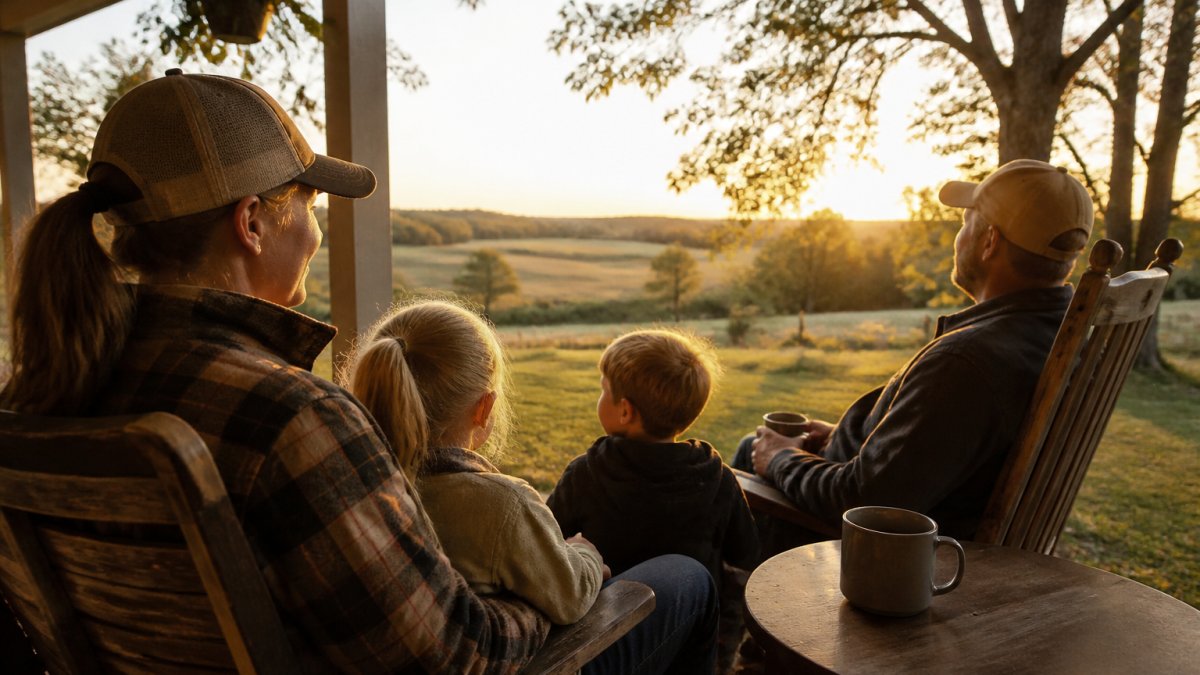
Spring might mean getting outside more and preparing for warmer days. Summer brings long evenings, fishing trips, campfires, and time on the water. Fall can mean hunting season, scouting, deer camp, and time in the woods. Winter brings its own traditions, from ice fishing and outdoor chores to quieter evenings around camp.
For families who hunt or fish, the seasons can also create opportunities to learn more about wildlife, habitat, and where food comes from. Kids can take part in those experiences in many ways — scouting, fishing, helping around camp, learning animal signs, or simply spending time outside.
Over time, these seasonal activities can become traditions families look forward to year after year.
Maintaining Family Traditions Outdoors
Outdoor traditions don't have to begin with a big hunting or fishing trip. Sometimes they start with something as simple as taking the kids along to scout the woods, helping stack firewood at deer camp, fishing from the dock, or spending an evening around the campfire.
Parents and grandparents can play an important role in passing those traditions along. Kids learn by being included — watching how someone reads the weather, spotting tracks and other wildlife signs, helping prepare camp, learning to fish, or simply listening to stories from years past.
And not every child has to hunt to be part of deer camp. There are plenty of ways to belong: helping with breakfast, playing cards with Grandpa or Grandma, drinking hot cocoa while the coffee is brewing, hiking through the woods, helping with firewood, or joining everyone around the table at the end of the day.
Those ordinary moments are often what turn outdoor activities into family traditions. The hunt or fishing trip may bring everyone together, but the conversations, laughter, lessons, and time spent together are what families carry with them.
The simple country lifestyle protects family time from constant interruption. Without urban entertainment and obligations pulling you away, time together happens naturally.

Slow Living Benefits and Work-Life Balance
Slow living isn't necessarily about working less. It's about being more intentional with how you spend your time and making room for the parts of life that matter outside of work.
Country living can offer opportunities for that kind of balance, but it doesn't automatically create it. Rural life comes with its own responsibilities — property maintenance, longer drives, outdoor chores, changing weather, and plenty of work that needs to get done.
The difference can be in how that time is spent. Cutting firewood with the family, working around camp, tending a garden, fishing after dinner, or taking an evening walk through the woods may still be work or responsibility, but those activities can also become part of the lifestyle you're trying to build.
For families, slowing down can simply mean protecting time together. It might be breakfast around the camp table before everyone heads outside, an afternoon on the water, kids helping stack firewood, or an evening playing cards while stories from past hunting seasons get told again.
If you work remotely or run a business from a rural area, reliable internet and cell service are practical considerations too. Availability can vary considerably by location, so it's worth checking actual service options before making a move or relying on a rural property for work.
A simpler lifestyle doesn't mean every day is easy or quiet. It's about deciding what deserves more of your time — and creating room for family, outdoor traditions, meaningful work, and the experiences you don't want to rush through.
Tips for a Simpler Lifestyle: Getting Started
Starting a simpler country lifestyle doesn't require changing everything at once. You can begin where you are by deciding what you want more of — and what you could use a little less of.
Start with a clear vision. Think about why a simpler lifestyle appeals to you. Maybe it's more family time, easier access to the outdoors, fewer commitments, or more opportunities to hunt, fish, camp, and spend time outside.
Simplify where you are. You don't have to move to the country to slow things down. Clear out what you don't use, protect some open space in your schedule, cook more meals at home, or make an evening outside part of your routine.
Choose your location carefully. If moving is part of your plan, think beyond the property itself. Consider work, schools, medical care, shopping, internet and cell service, and access to the outdoor activities you enjoy.
Build practical skills gradually. Cooking, basic property maintenance, gardening, outdoor skills, and learning to repair things can all become useful parts of a more self-reliant lifestyle.
Connect with your community. Get to know your neighbors and the people around you. Rural communities can be a great place to learn from others, share knowledge, and build relationships.
Choose outdoor gear you'll actually use. Whether you're heading to deer camp, fishing for the afternoon, working outside, or gathering around the fire, choose clothing and gear that fits the way you spend your time outdoors.
Invest in quality gear. For outdoor activities, good equipment matters. Reliable apparel and gear from trusted brands like Rack & Ridge makes time outside more enjoyable and sustainable.

The Real Challenges of Rural Life
A simple country lifestyle has plenty of appeal, but it isn't always simple. Rural living can come with tradeoffs that are easy to overlook when you're picturing quiet mornings, open land, and evenings around the fire.
Longer drives. Groceries, schools, medical care, work, and other services may be farther away depending on where you live. A little planning can become part of everyday life.
Property upkeep. More space can also mean more responsibility. Driveways need attention, grass needs cutting, snow needs moving, firewood may need stacking, and homes with wells or septic systems can require maintenance that isn't part of city living.
Internet and cell service. Coverage varies widely in rural areas. If you work from home or depend heavily on internet access, check available service before choosing a property.
Weather can change the routine. Snow, storms, muddy roads, power outages, and changing seasons can affect travel and outdoor work. Being prepared becomes part of living farther from town.
Some services may be farther away. Healthcare, contractors, shopping, and other services aren't always right around the corner. How much that matters depends on the location and your family's needs.
None of those challenges mean country living isn't worthwhile. They simply mean that a simpler lifestyle still requires planning, work, and realistic expectations. For many people, that's part of the appeal — learning to prepare, becoming more self-reliant, and making the most of the place they call home.
Property Maintenance and Self-Sufficiency:
Living in the country often means taking care of more things yourself. There may be grass to mow, driveways to maintain, firewood to cut and stack, snow to move, and small repairs that can't always wait for someone else. Over time, those responsibilities can build practical skills and become part of the rhythm of rural life. They can also create opportunities for the whole family to pitch in. Kids can help with age-appropriate chores, learn basic outdoor skills, and see firsthand what it takes to care for the place they call home.
Winter Can Be Harsh
Winter can change nearly every part of the daily routine in the country. Snow needs to be cleared, heating becomes a priority, outdoor chores take longer, and cold weather requires a little more planning before heading outside. Preparing ahead with firewood or other heating needs, keeping vehicles and driveways ready for winter weather, and dressing appropriately for the conditions can make the season more manageable. But winter also brings its own traditions — quiet mornings, time around the fire, ice fishing, snowy walks, hot coffee and cocoa, and evenings when everyone gathers inside after a cold day outdoors.
Frequently Asked Questions
What are the main benefits of living a simple country lifestyle?
A simple country lifestyle can offer more opportunities for time outdoors, family traditions, practical skills, and a closer connection to the changing seasons. For some people, a quieter setting and more space also create a slower pace of life. The experience varies depending on where you live, your responsibilities, and the lifestyle you choose to build.
How does a simple lifestyle impact family traditions?
A simpler lifestyle can create more opportunities for families to spend meaningful time together. Hunting, fishing, camping, scouting, preparing deer camp, working outside, and even quiet evenings around the table can become traditions kids remember. Parents and grandparents can pass along outdoor skills and stories while giving children different ways to participate at their own pace.
What should I know before moving to the country?
Think about the practical side as well as the lifestyle you're hoping to create. Consider distance to work, schools, healthcare, groceries and other services, along with internet and cell coverage, property maintenance, weather, and transportation. If a property has a well, septic system, private road, or other rural features, learn what maintenance they require before making a decision.
Can you work remotely and live in the country?
Yes, depending on the location and the type of work you do. Internet and cell service can vary considerably in rural areas, so check the actual options available at a specific property before relying on remote work. If your job requires video meetings, large uploads, or other high-bandwidth activities, make sure the available service meets those needs.